Bottlenose Dolphins Of Galveston Bay: Species, Population, And Where To Spot Them
Galveston Bay is home to exactly one dolphin species, the common bottlenose dolphin, and researchers now count the population in the hundreds, with a photo-ID catalog that has passed a thousand individuals.
Short answer
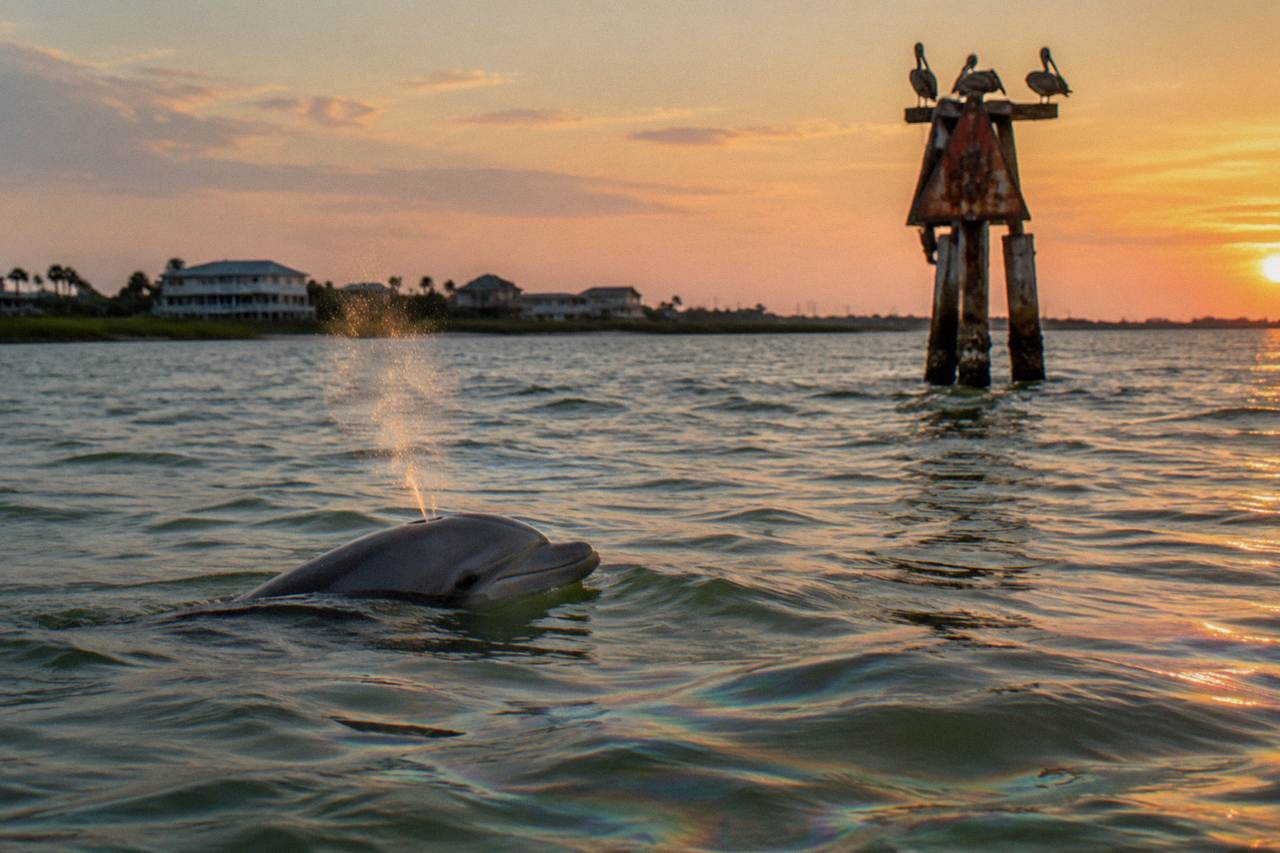
The only dolphin species observed in Galveston Bay is the common bottlenose dolphin, Tursiops truncatus. NOAA's best stock estimate is 842 animals, and the Galveston Bay Dolphin Research Program has cataloged over 1,000 individuals. Sightings are possible year-round, with activity peaking roughly May to October.
Galveston Bay holds a single resident dolphin species, and it is the same one travelers picture when they book a bay cruise: the common bottlenose dolphin, Tursiops truncatus. That fact is more useful than it first sounds. It means every dorsal fin cutting across the harbor channel, every wake-rider pacing the Bolivar ferry, and every mother-calf pair drifting past the jetties belongs to one population that NOAA Fisheries formally tracks as a stock. Researchers with the Galveston Bay Dolphin Research Program have photographed and cataloged over 1,000 individual dolphins in these waters, and their survey work gives Galveston some of the best-documented urban dolphins on the Gulf Coast. This guide pulls together what the science says about the dolphins themselves, how many there are, what they do around boats, and where the viewing is most reliable.
Which Dolphin Species Lives In Galveston Bay?
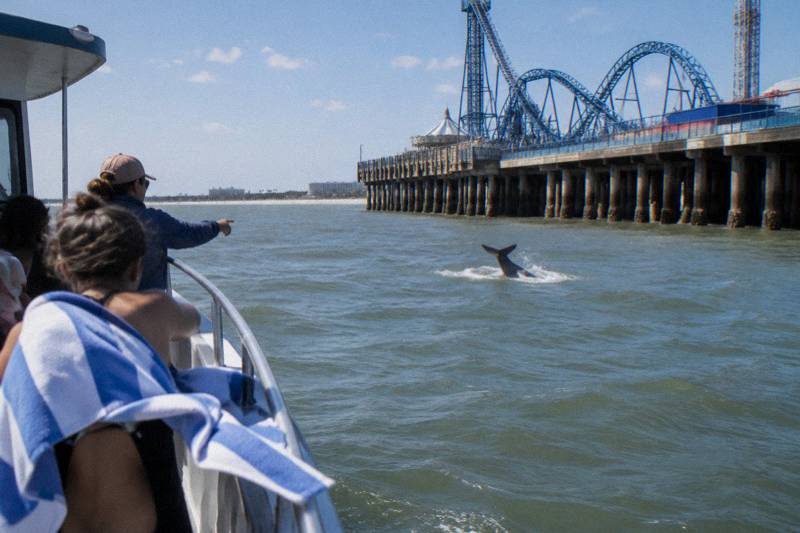
The common bottlenose dolphin, Tursiops truncatus, is the only cetacean species native to Texas bays and estuaries and the only one observed inside Galveston Bay, according to the Galveston Bay Dolphin Research Program. No other dolphin or whale species is part of the bay's regular fauna, so any dolphin seen from a Galveston boat tour, ferry, or shoreline is a bottlenose.
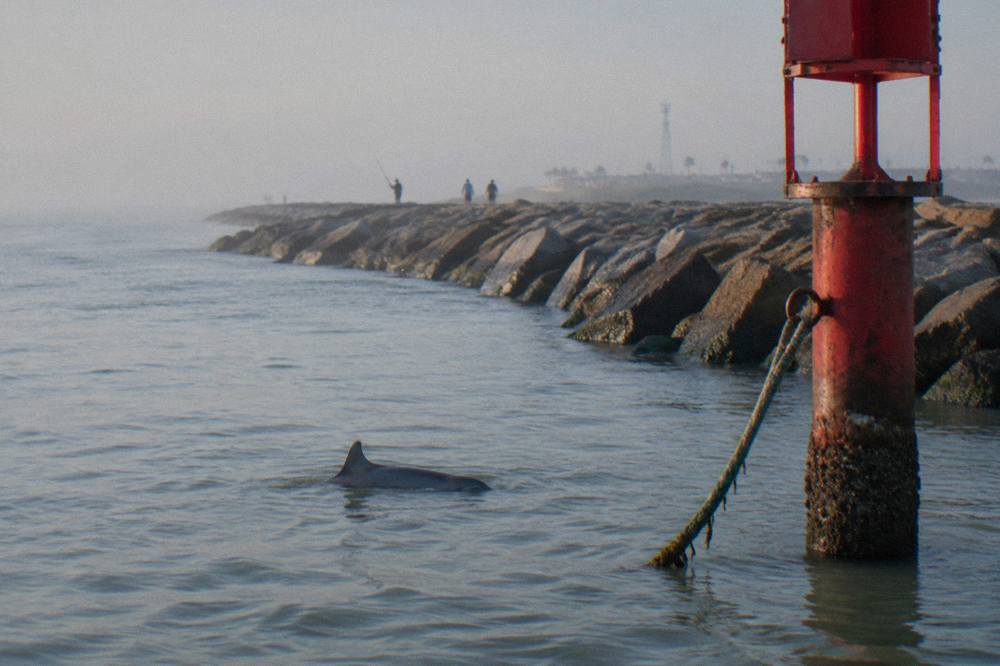
That single-species picture surprises people who have watched documentaries about orca pods or spinner dolphins elsewhere. Texas bays simply do not host a mixed cetacean community. The bottlenose dolphins here are the coastal, shallow-water ecotype, adapted to the bay's variable salinity, its shipping channels, and its shrimp fishery. They are gray, stocky, and typically 6 to 9 feet long as adults, with the short, stubby rostrum that gives the species its name. The dorsal fin, tall and curved, is the feature researchers rely on most, because nicks and notch patterns in the fin act like fingerprints and let survey teams tell one dolphin from another across years.
The Galveston Bay Dolphin Research Program, a partnership involving the Galveston Bay Foundation and the University of Houston-Clear Lake's Environmental Institute of Houston, maintains the photo-identification catalog that underpins nearly everything published about these animals. Historical studies from Texas A&M University at Galveston in the 1990s and early 2000s documented small resident communities in the western bay and near San Luis Pass, and the current program has built on that foundation with monthly surveys. For a traveler deciding whether a dolphin cruise is worth the ticket, the practical takeaway is simple: there is one species here, it is resident, and it is studied continuously.
How Many Bottlenose Dolphins Live In Galveston Bay?
NOAA Fisheries' 2022 Stock Assessment Report gives the Galveston Bay, East Bay, and Trinity Bay stock a best abundance estimate of 842 dolphins, derived from winter 2016 photo-ID capture-recapture surveys, with a minimum population estimate of 787. The Galveston Bay Dolphin Research Program's photo-ID catalog has recorded over 1,000 unique individuals in inshore waters.
The two numbers measure different things, and the difference is worth understanding. The NOAA figure of 842 comes with a coefficient of variation of 0.08 and a 95 percent confidence interval of 694 to 990 animals, meaning the true winter population most likely falls in that range. A separate summer 2016 estimate, which included some coastal waters, came out higher at 1,132, but NOAA treats the winter number as the best stock estimate because it is more conservative and reflects primarily resident animals. The minimum estimate of 787 is the statistical floor used for management. NOAA reports insufficient data to determine a population trend, so nobody can honestly claim the bay's dolphins are increasing or declining.
The GDRP catalog passing 1,000 individuals does not mean 1,000 dolphins live in the bay at once. It means the program's researchers have, over years of surveys, photographically identified more than a thousand distinct fins, including seasonal visitors and transients that pass through the bay's mouth. A published study of upper Galveston Bay, one of the most industrialized corners of the system, ran monthly photo-ID surveys from January 2016 through December 2019 and identified 442 distinct dolphins. Cluster analysis found roughly 43 percent of those, 192 animals, were year-round or long-term seasonal residents, about 32 percent were transients, and about 25 percent were short-term users of the area.
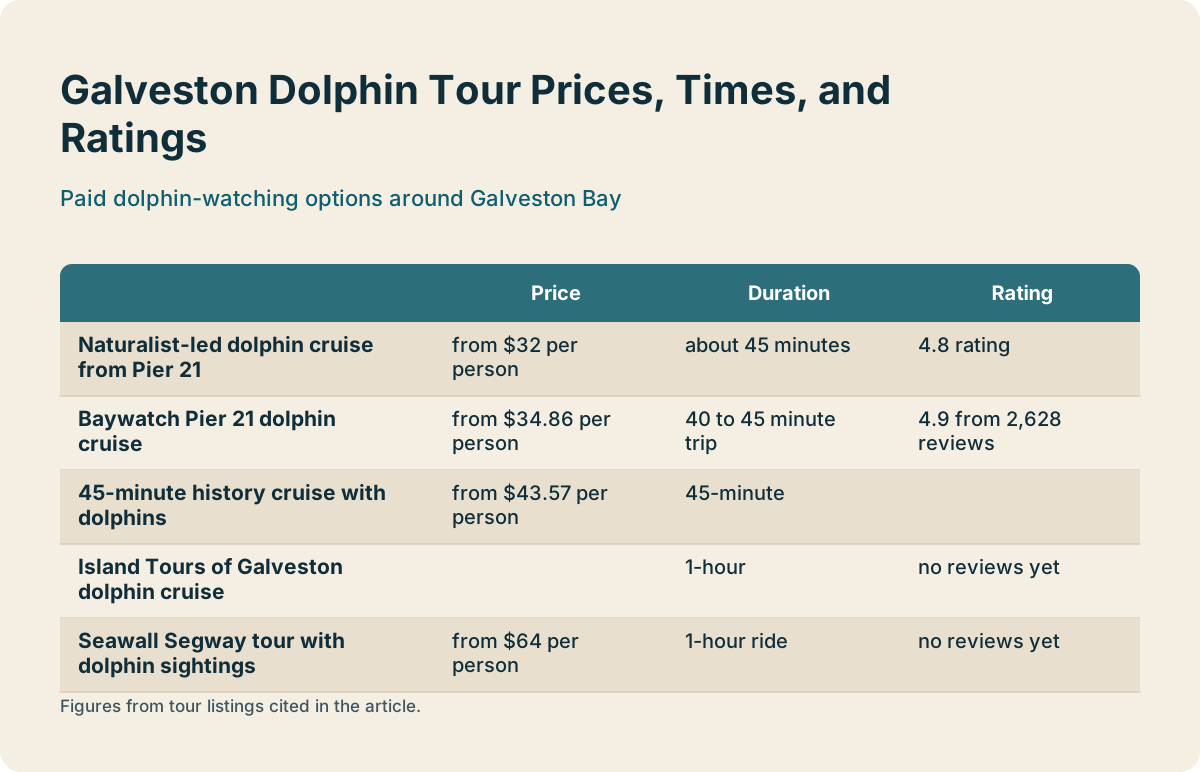
For visitors, the population numbers translate into genuinely good odds on the water. A bay holding several hundred resident dolphins, concentrated around channels, passes, and the ferry lane, supports frequent sightings from tour boats without any operator needing to promise anything. The naturalist-led dolphin cruise from Pier 21, which runs about 45 minutes and starts from $32 per person with a 4.8 rating across 282 reviews, is one of the listings that puts you in that habitat with a guide who knows it. You can Check availability if you want the naturalist version of the trip.
Can You See Dolphins In Galveston Bay?
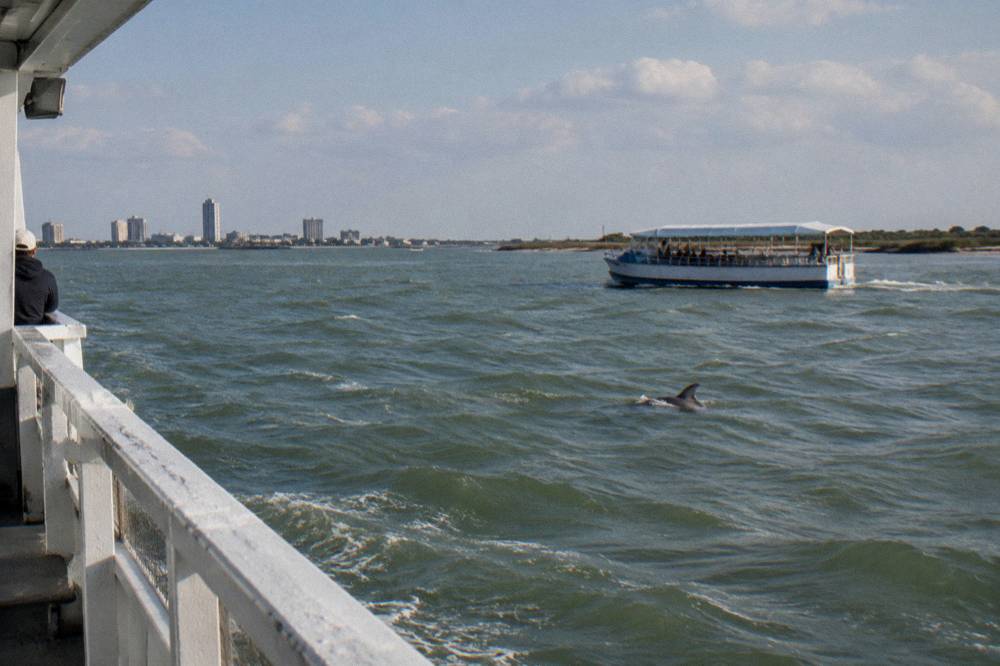
Yes, dolphins are seen in Galveston Bay year-round, and sightings are very likely on harbor cruises, ferry crossings, and from certain shore spots. No tour guarantees an encounter, because the dolphins are wild, but the bay's resident stock means the odds on any given cruise are good, especially around channels, passes, and the Galveston to Bolivar ferry lane.
The question sounds almost too basic for a research-heavy guide, but it is one of the most searched queries about the bay, and the honest answer has real texture. Sightings are possible in every month. Activity and abundance run higher in the warmer stretch, roughly May through October, while in cooler months the dolphins tend to concentrate in the lower bay and around the passes and channel mouths. Early morning, particularly the first hours after sunrise on an incoming tide, and late afternoon are the most reliable windows, because moving tides concentrate prey fish and the dolphins follow the food.
Where you look matters as much as when. The Galveston to Bolivar ferry, a toll-free TxDOT service that runs 24 hours a day, is a well-known free dolphin-watching platform, with dolphins commonly seen riding the ferry's wake in the crossing lane. On the shore side, Seawolf Park on Pelican Island is one of the most reliable spots, thanks to its position beside the ship channel, and the Bolivar Peninsula's bay side and the Seawall jetties also produce regular sightings. Our guides to the free Galveston to Bolivar ferry and to Seawolf Park dolphin watching cover both in detail.
On the paid side, the harbor cruise options all work the same productive water. The Baywatch Pier 21 dolphin cruise, a 40 to 45 minute trip rated 4.9 from 2,628 reviews and priced from $34.86 per person, runs a roughly 3-mile narrated route through the harbor, and the 45-minute history cruise with dolphins, from $43.57 per person, adds maritime narration. A separate operator, Island Tours of Galveston, runs a 1-hour cruise from a trailer outside Katie's Seafood House on Wharf Rd, from $29 per person, with no reviews yet on its listing. If price is the deciding factor, that longer island trip is the cheapest per minute on the roster.
That low price comes with trade-offs worth weighing before you book. The Island Tours listing has no reviews yet, so there is no traveler feedback to read, and the check-in setup, a trailer outside a seafood house rather than a kiosk at a hotel pier, is more bare-bones than the Pier 21 operations. What it does offer is the longest water time of the standard dolphin cruises at the lowest entry price, with life jackets included and free cancellation. For a traveler who wants a full hour on the bay and is comfortable with a newer listing, it is a legitimate pick; for someone who wants a proven operation, the reviewed Baywatch trips remain the safer bet.
What Dolphin Behaviors Do You See From A Galveston Boat?
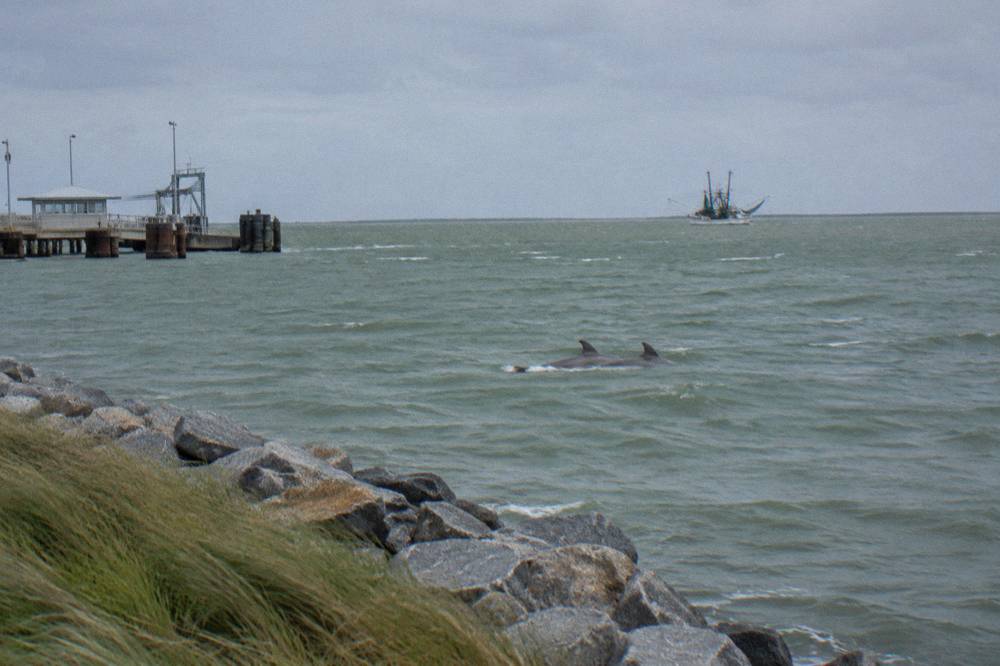
Boat watchers in Galveston Bay most often see bow riding, surface feeding, leaping, tail slapping, and mother-calf pairs, all documented by GDRP researchers on their surveys. Dolphins here also follow shrimp trawlers for easy meals, a habit that leaves scars on some animals, and they frequently pace the ferry wake in the Bolivar crossing lane.
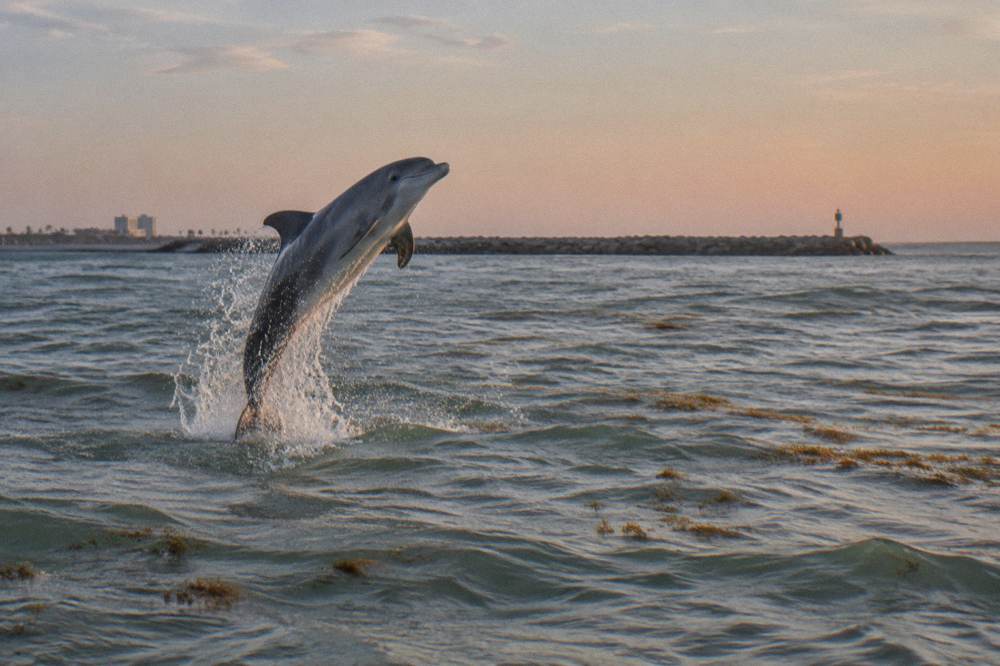
Bow riding is the crowd favorite, and the bay's dolphins oblige often. A dolphin positions itself in the pressure wave at a vessel's bow or in the wake, barely kicking its tail, and rides along for minutes at a time. GDRP researchers document this regularly, and ferry passengers see a version of it when dolphins escort the crossing. Feeding displays come next in drama: fish tossed at the surface, swirling water, fluke-out dives as a dolphin dives steeply with its tail flukes exposed. Leaping serves several purposes, from communication to remora removal to plain play, and tail slapping, sometimes belly-side-up in this bay, can signal communication or irritation.
The trawler association is the behavior that most marks these dolphins as bay animals rather than open-ocean ones. Dolphins follow active shrimp trawlers for concentrated, easy meals, and sometimes lift the trawler's lazy lines, the slow-moving tow ropes, which can scar a dorsal fin when the line drags across it. Researchers can read those scars in photo-ID work, and fishing line entanglement is one of the documented hazards this population faces. Calves are present in the survey record, and mother-calf pairs are a common sight on harbor trips, which is part of why the viewing rules matter so much here.
| Behavior | What It Looks Like | How Often Tours Report It |
|---|---|---|
| Bow riding | Dolphin holds position in the boat's pressure wave | Frequently reported on cruises and ferry crossings |
| Surface feeding | Fish tossed, swirling water, steep fluke-out dives | Common on moving tides |
| Leaping | Full jumps, sometimes repeated | Seen regularly, more in warmer months |
| Tail slapping | Tail lobbed on the surface, sometimes belly-up | Occasional |
| Trawler following | Dolphins pacing shrimp boats for discarded fish | Common in the bay's shrimping areas |
| Mother-calf pairs | Small calf swimming close to an adult | Documented in GDRP surveys, seen on tours |
A shore-based option also belongs in this conversation. The Seawall Segway tour with dolphin sightings, a 1-hour ride from $64 per person with safety training and photo stops, names dolphins as a possible sighting along the route, and its listing carries no reviews yet. It is a different way to cover the waterfront, literally, and it pairs the Seawall's channel views with a ride rather than a boat deck.
When Are Galveston Bay Dolphins Most Active?
Dolphin activity in Galveston Bay runs higher in the warmer months, roughly May through October, with sightings possible year-round. Early morning on incoming tides and late afternoon are the most reliable windows, because moving tides concentrate prey fish and the dolphins follow them into the channels and passes.
The seasonal pattern tracks the bay's biology. Summer and fall bring more dolphins and more surface activity, and the warmer half of the year is when tour reports most often mention multiple pods per trip. In the cooler months the population does not vanish; it shifts, concentrating in the lower bay, around the passes, and near the channel mouths where deeper water and steady tidal flow keep fish available. Winter cruises still produce sightings regularly, and the GDRP's own winter survey work, which produced the NOAA stock estimate, is built on January photo-ID data, proof enough that the dolphins are here in the cold.
Time of day is the variable travelers can actually control. The first hours after sunrise, especially when the tide is moving in, and the late afternoon hours are the windows researchers and operators both point to. Slack tide, the still water at the top or bottom of a tidal cycle, tends to scatter prey and quiet the surface. One practical weather reality: Galveston's bay is frequently choppy with northeast winds, and small craft advisories are common, so a cruise's comfort depends on the day's forecast. Our guide to Galveston weather and boat tour cancellations explains who calls off a trip and when, and the deeper season-by-season breakdown lives in our piece on the best time to see dolphins in Galveston.
What Rules Protect Galveston's Dolphins?
Federal law requires boats to stay at least 50 yards from dolphins, about half a football field, when viewing from watercraft, and it is illegal to feed, touch, chase, or attempt to swim with wild dolphins under the Marine Mammal Protection Act. NOAA does not support or authorize swimming with wild dolphins in Texas waters or anywhere else in the United States.
The 50-yard minimum comes straight from NOAA Fisheries' marine life viewing guidelines, and in some locations the minimum is 100 yards. Feeding a wild dolphin is harmful and illegal, full stop, and the prohibition on swimming with, petting, or closely interacting with dolphins is why no legitimate Galveston product offers an in-water dolphin encounter. Violations of the Marine Mammal Protection Act can carry civil and criminal penalties. Our dedicated page on swimming with dolphins in Galveston covers the legal picture in full.
Two clarifications matter for Galveston specifically. First, no Galveston operator has been verified as a participant in NOAA's Dolphin SMART recognition program, so any tour advertising that credential here should raise a question rather than confidence. Second, the rules do not criminalize dolphins approaching boats. Dolphins that choose to ride a ferry's wake or pace a slow cruise are acting on their own, and licensed tour captains are expected to put the engine in neutral when dolphins are near and move away cautiously if the animals show disturbance. The responsibility sits with the people, not the dolphins.
| Rule | Source | What It Means for Visitors |
|---|---|---|
| Stay 50 yards away | NOAA viewing guidelines | Boats keep distance; dolphins may still choose to approach |
| Never feed dolphins | NOAA, MMPA | Feeding is illegal and harms the animals |
| No swimming with wild dolphins | NOAA, MMPA | Not authorized in Texas waters; no legal in-water tour exists |
| No touching, chasing, or harassing | MMPA | Includes pursuing dolphins with any vessel |
| Engine in neutral near dolphins | NOAA viewing guidance | Standard practice for responsible tour operators |
How Do Researchers Study The Bay's Dolphins?
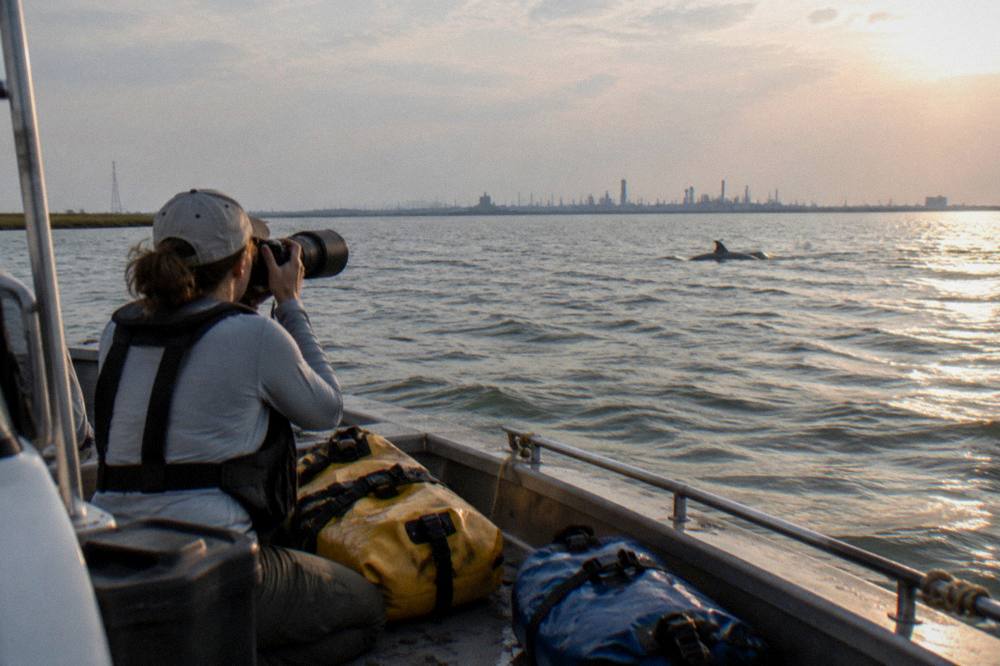
The Galveston Bay Dolphin Research Program studies these dolphins through dorsal-fin photo identification, boat surveys, remote biopsy sampling, and expanding land-based monitoring, running 39 boat surveys in 2025 that recorded data on 249 dolphin groups totaling 2,487 dolphins, and completing its 300th boat survey that year.
Photo-ID is the backbone. Each dolphin's dorsal fin collects nicks, notches, and scars, and a clear photograph lets a researcher match that fin against the catalog of over 1,000 individuals, some of them tracked across nearly a decade. That is how the program could classify upper-bay dolphins into residents, transients, and short-term users, and how NOAA's stock estimate was built from capture-recapture math on winter survey photos. The 2025 field year, reported in the program's January 2026 newsletter, added 35 remote biopsy samples collected under a NOAA RESTORE project, which support health and stressor studies on animals living in a heavily industrialized estuary.
The research also reaches the shore. Land-based monitoring expanded in 2025, including at Seawolf Park, and volunteer hours for the program doubled from the prior year. For a visitor standing at the Seawolf Park rail watching a dorsal fin cross the channel, there is a real chance a researcher has photographed that same fin from a survey boat, given how consistently the park's stretch of channel produces sightings. The program's partners include the Galveston Bay Foundation, the University of Houston-Clear Lake's Environmental Institute of Houston, and, in the historical studies, Texas A&M University at Galveston.
One roster listing connects directly to this research angle, in spirit if not in affiliation. The small-group sea kayak tour, a 4-hour harbor paddle from $266 per person limited to 5 participants, run by OAK GeoSciences, is the closest thing on the booking page to a field-trip format: small group, long duration, quiet vessels, and dolphins described on the listing as an if-you-are-lucky sighting. It must be booked 1 to 2 weeks ahead, and it is not a dolphin tour in the cruise sense, but for a traveler who wants to be on the water at water level, it is the distinctive option.
How Does The Bay's Dolphin Population Compare Across The Region?
Galveston Bay's stock of 842 dolphins is a distinct, resident bay population, not part of the Gulf's nearshore coastal stock, and its size is typical for a Texas bay system, with the GDRP catalog showing heavy overlap between resident and transient animals. Historical studies of western Galveston Bay found small resident communities of 28 to 34 animals across survey years.
The distinction between bay stocks and coastal stocks is the piece most travel content skips. NOAA manages the Galveston Bay, East Bay, and Trinity Bay dolphins separately from nearshore Gulf dolphins because the two groups do not freely interbreed; the bay animals are behaviorally and genetically distinct enough to count as their own unit. That is why a dolphin seen off the beach may belong to a different population from the one riding the ferry wake two miles away, and it is why the bay's dolphins warrant their own monitoring program. The historical Texas A&M Galveston work found resident groups in the western bay and San Luis Pass vicinity numbering 28 to 34 animals per study year, with total abundance estimates including non-residents of 28 to 38, small communities that the current program's much larger catalog has since built upon.
Mixing happens at the margins. Many dolphins found in the bay's mouths and passes are classified as transients, animals that move along the coast and dip into the bay without settling. The published upper-bay study's finding, that about a third of identified dolphins were transients and another quarter were short-term users, describes an estuary that is both a permanent home and a corridor. For the traveler, none of this changes the sighting odds, but it changes what you are looking at: a self-sustaining resident population, not a random sampling of the Gulf's dolphins.
| Measure | Figure | Source |
|---|---|---|
| Best stock abundance estimate | 842 dolphins | NOAA Stock Assessment Report, May 2022 |
| Minimum population estimate | 787 dolphins | NOAA Stock Assessment Report |
| Photo-ID catalog | Over 1,000 individuals | Galveston Bay Dolphin Research Program |
| Upper-bay residents, 2016 to 2019 | 192 of 442 identified dolphins | Published GDRP-linked study |
| Western-bay resident communities, historical | 28 to 34 animals per year | Texas A&M Galveston studies |
| 2025 survey effort | 39 surveys, 249 groups, 2,487 dolphins | GDRP newsletter, January 2026 |
What Is The Best Way To See Galveston's Dolphins?
A 45-minute harbor dolphin cruise from Pier 21 is the most reliable paid option, pairing a resident-population habitat with a narrated route, and the free Galveston to Bolivar ferry is the best no-cost alternative, with dolphins commonly seen in the crossing lane. Shore viewing at Seawolf Park rounds out the three strongest approaches.
We compared the listings, and the pattern is consistent: the products that work the harbor and channel water, where the resident dolphins actually live, are the ones with the review pools to show for it. The featured naturalist-led cruise from Pier 21, from $32 per person, rated 4.8 across 282 reviews, is wheelchair accessible with advance notice and carries a captain and naturalist guide, which suits a traveler who wants the behavior explained rather than just pointed at. The Baywatch Pier 21 cruise, from $34.86 and rated 4.9 from 2,628 reviews, is the volume leader, a 40 to 45 minute trip with a group max of 39. The 45-minute history cruise with dolphins, from $43.57 per person and rated 4.7 from 118 reviews, splits the difference for visitors who want Galveston's maritime story alongside the fins.
The Galveston Dolphin Tours homepage carries a three-question decision picker that sorts these options by budget, time, and interest, and it is the fastest way to narrow the roster if this guide has not already done it. Whatever you choose, book around the morning or late-afternoon windows, check the live listing for departure times before you plan the day, and hold the 50-yard rule in mind: these are wild animals in a working harbor, and the good operators treat them that way. Sightings are very likely here, but no honest listing will promise them, and the ones that do not promise are the ones to trust.
Common Questions About Bottlenose Dolphins In Galveston Bay
What kind of dolphins are in Galveston Bay?
The common bottlenose dolphin, Tursiops truncatus, is the only cetacean species observed in Galveston Bay and the only one native to Texas bays and estuaries. Every dolphin seen from a Galveston tour, the ferry, or the shore is a bottlenose.
How many dolphins live in Galveston Bay?
NOAA's best estimate for the Galveston Bay, East Bay, and Trinity Bay stock is 842 dolphins, with a minimum estimate of 787. The Galveston Bay Dolphin Research Program's photo-ID catalog has recorded over 1,000 individual dolphins, including seasonal visitors and transients.
Can you see dolphins in Galveston Bay?
Yes. Sightings are possible year-round and are very likely on harbor cruises, ferry crossings, and from reliable shore spots like Seawolf Park. No tour guarantees sightings, because the dolphins are wild animals.
When is the best time to see dolphins in Galveston?
Activity runs higher roughly May through October, but dolphins are present all year. Early morning on an incoming tide and late afternoon are the most reliable daily windows, because moving tides concentrate prey fish.
Is it legal to swim with dolphins in Galveston?
No. Under the Marine Mammal Protection Act it is illegal to swim with, feed, touch, chase, or harass wild dolphins, and NOAA does not authorize such activities in Texas waters. Viewing from a boat at 50 yards or more is the legal approach.
Do Galveston dolphins ride the ferry wake?
Frequently. Dolphins are commonly seen escorting the Galveston to Bolivar ferry in its crossing lane, a documented and recurring behavior. The ferry is toll-free, which makes it a popular free way to watch for them, though sightings are never guaranteed.