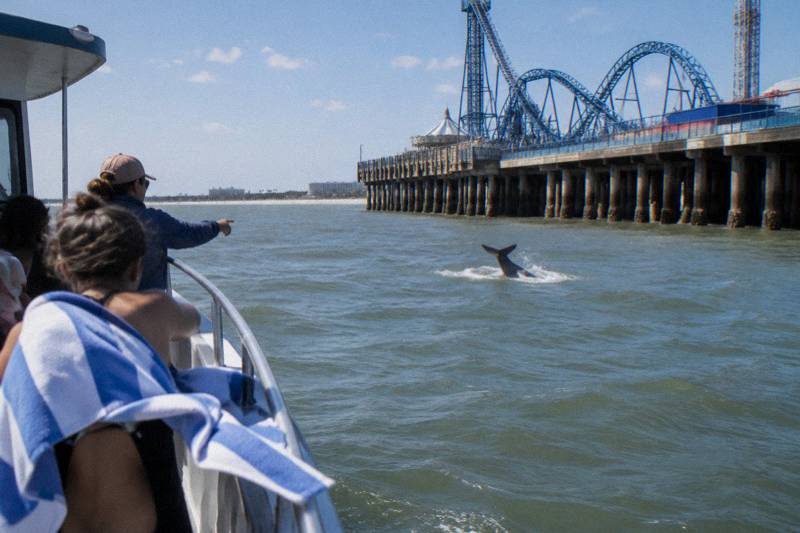
Seawolf Park And Pelican Island Dolphin Watching In Galveston
Seawolf Park on Pelican Island is one of the most reliable free places to watch dolphins in Galveston, and researchers monitor it from land for a reason. Here is what the shore view gives you, what it cannot, and when a boat is worth adding.
Short answer
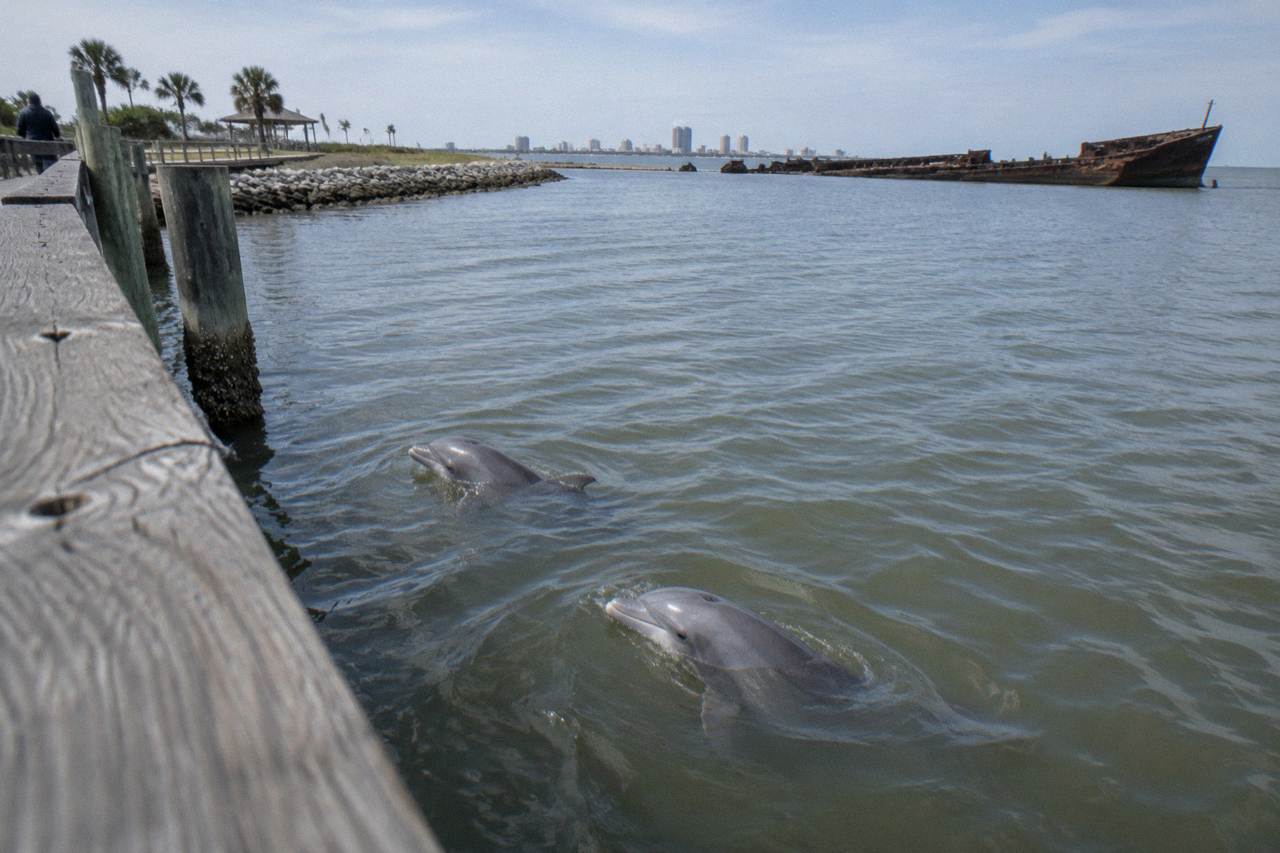
Seawolf Park on Pelican Island sits beside the Galveston ship channel, where bottlenose dolphins feed and ride wakes so often that the Galveston Bay Dolphin Research Program runs land-based monitoring there. Watching from shore is free; a 45-minute boat cruise from Pier 21 runs from $32 per person.
Seawolf Park sits on the northern tip of Pelican Island, a short bridge from Galveston's historic harbor, and it has quietly become one of the best free dolphin-watching perches on the upper Texas coast. The park's fishing pier and shoreline look straight down the Galveston ship channel, the corridor where shrimp trawlers, tugs and the Bolivar ferry push through all day, and where common bottlenose dolphins follow the easy meals. Local researchers have noticed the same thing visitors do: the Galveston Bay Dolphin Research Program expanded its land-based monitoring to include Seawolf Park because the dolphins show up there that dependably. If you'd rather be out on the water at golden hour, our guide to Galveston sunset cruise options and late-day dolphin trips covers what actually sails near dusk.
This guide covers what the shore view at Seawolf Park and Pelican Island actually delivers, how close you can honestly expect to get, the other free spots around the island worth knowing about, and how a boat tour changes the picture. The short version: the shore is free and frequently rewarding, the boat is closer, and neither one guarantees anything, because these are wild animals in a working harbor.
Where Is Seawolf Park And How Do You Get There?
Seawolf Park sits on Pelican Island, directly across the Galveston ship channel from the Port of Galveston terminals, reached by a bridge off Harborside Drive a few minutes northeast of the historic Strand district. The park has a fishing pier, shoreline railings and open bay views facing the channel where dolphins feed. There is no ferry ride needed to reach it; it is drivable from downtown Galveston.
Pelican Island is a small island in Galveston Harbor, connected to the main island by bridge, and it hosts Seawolf Park along with the historic ships and maritime attractions at the island's edge. From the Strand area you head northeast along Harborside Drive, cross onto Pelican Island, and follow the road to the park entrance. The drive is short, but give yourself time on cruise-ship days, when port traffic on Harborside can slow the approach, a pattern covered in detail in our Galveston cruise port day guide.
The park itself is a classic Texas shore park: a long fishing pier, grassy banks, picnic areas and railings along the water. For dolphin watching, the appeal is geometry. The pier and shoreline face the ship channel and the harbor entrance, which is exactly the route that vessel traffic, and the dolphins that shadow it, use all day. You are not scanning an empty bay hoping for luck; you are watching a busy corridor.
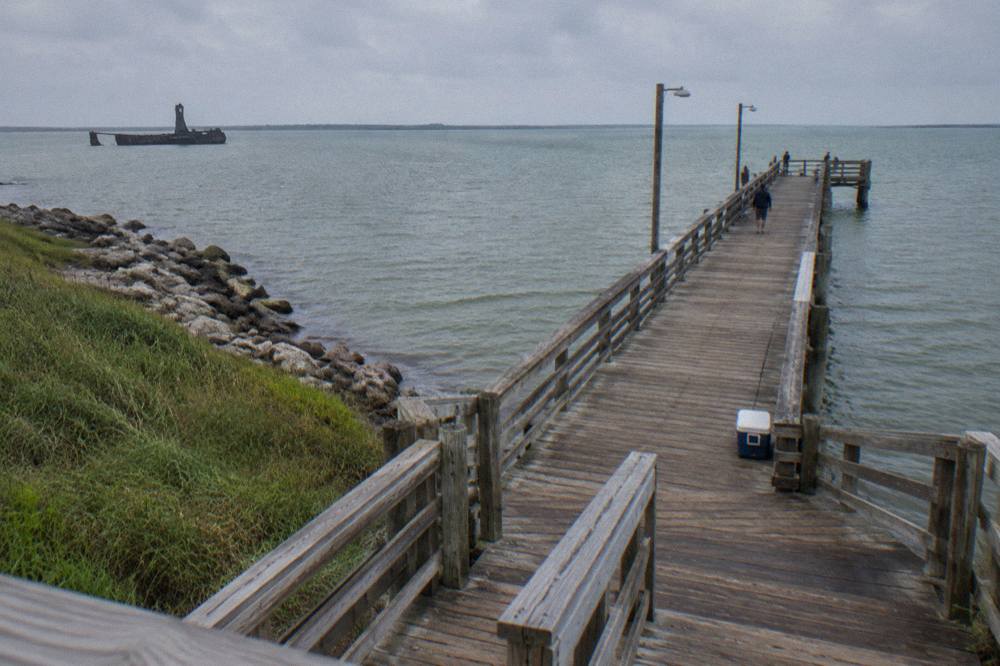
Bring what you would bring to any shore watch: water, sun protection, binoculars if you have them, and patience. The park is also a working fishing pier, so the railings can be busy with anglers, and the best dolphin vantage shifts with where the boats are passing. There is no bad seat facing the channel; there are only better and worse hours, which we get to below.
Why Are The Dolphins At Seawolf Park So Dependable?
Bottlenose dolphins concentrate at Seawolf Park because the ship channel and harbor entrance concentrate their food and their entertainment: fish stirred up by vessel wakes, discards behind shrimp trawlers, and the pressure waves that dolphins ride for fun. The Galveston Bay Dolphin Research Program counts dolphins from the park's shoreline, and its surveys logged 2,487 dolphins across 249 groups in 2025 alone.
The biology here is well documented. Common bottlenose dolphins are the only cetacean species observed in Galveston Bay, and the resident stock is real: NOAA's stock assessment puts the best abundance estimate for the Galveston Bay, East Bay and Trinity Bay stock at 842 animals, while the Galveston Bay Dolphin Research Program's photo-identification catalog has logged more than 1,000 unique individuals by dorsal fin. These are not occasional wanderers; a meaningful share of the upper-bay population is resident year-round.
What draws them to a spot like Seawolf Park is the channel itself. Dolphins in this bay are documented bow riding, following active shrimp trawlers for easy meals, tossing fish at the surface, and socializing in leaping, splashing groups. A working channel with constant vessel traffic is a dolphin buffet and playground in one. Researchers with the dolphin program note bow riding and trawler association as among the most commonly observed behaviors on their surveys, which is precisely what a visitor at the park rail is hoping to see.
The practical takeaway for a shore watcher is simple: you are not waiting for a random passage of animals. You are watching a known feeding and traveling corridor, which is why the spot has a reputation for dependability and why researchers set up there. Sightings are very likely, especially in the warmer months and around moving tides, but no shore spot and no tour can promise them.
If you want the view from the water instead, the naturalist-led cruise from Pier 21 puts a guide on the microphone and a boat in that same channel, and you can check availability on the live listing before you pick a departure time.
How Close Do Dolphins Actually Come To Shore Watchers?
From the Seawolf Park rail or pier, dolphins typically pass at distances of tens to a couple of hundred yards, close enough to see dorsal fins, blows, leaps and wake riding clearly, but rarely close enough for the frame-filling photos a boat gets. NOAA guidelines ask watercraft to stay at least 50 yards from dolphins, and that distance is a fair mental model for the shore view too: good watching, not proximity.
Honesty about distance is the difference between a satisfying shore watch and a disappointing one. Dolphins in the channel at Seawolf Park are frequently visible with the naked eye, and binoculars or a modest camera zoom turn distant fins into identifiable behavior: a mother and calf pair surfacing together, a dolphin riding a tug's bow wave, fish being tossed at the surface. What the shore rarely gives you is the close pass. The animals choose their own lines, and the channel's traffic keeps them in the middle of the corridor.
That is also the law's shape, not just the animals' preference. NOAA's marine life viewing guidelines are blunt: stay at least 50 yards from dolphins when viewing from watercraft, never feed them, and never attempt to swim with, touch or chase them. The Marine Mammal Protection Act backs those guidelines with real penalties. From shore you are already compliant; the rule mainly matters if you are considering a kayak or any vessel, a point our swimming and interaction guide covers in full.
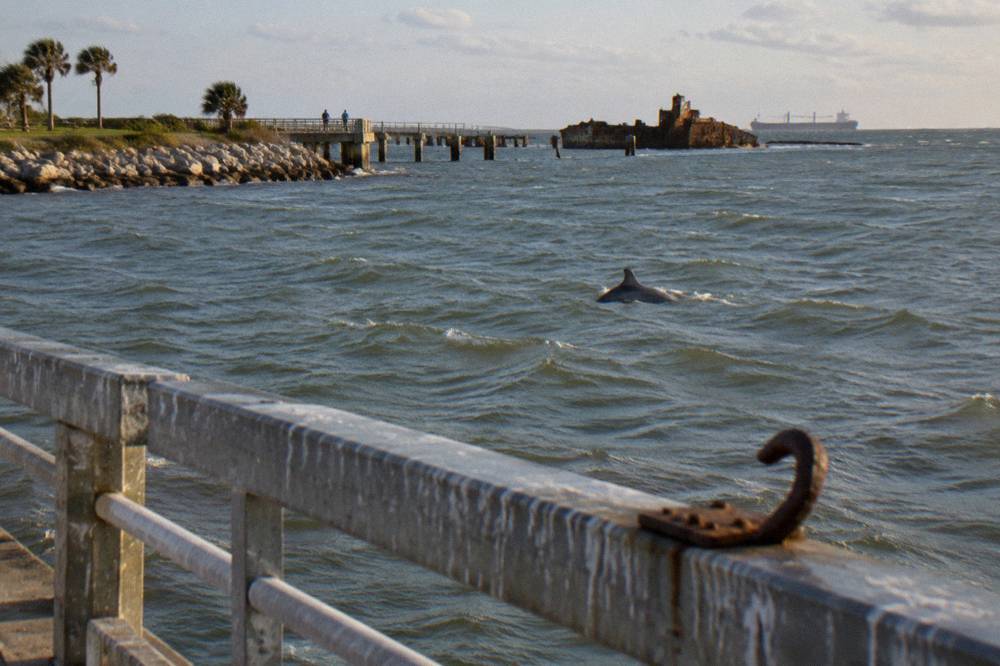
So set expectations honestly. Shore watching at Seawolf Park is free, easy and frequently rewarded with visible dolphins doing visible things. It is not an encounter, and any shore spot or operator promising close interaction is promising something the law and the animals both decline to deliver. If proximity is what you are after, a boat is the closer view, and the naturalist-led Pier 21 cruise is the gentlest way to get it; the live listing shows current times and prices.
What Are The Best Free Shore Spots For Dolphins Around Galveston?
The three most dependable free dolphin-watching shores in Galveston are Seawolf Park on Pelican Island, the bay-side shoreline of the Bolivar Peninsula, and the Seawall jetties and piers, especially near the 29th Street jetty area. All three sit beside channels or passes where dolphins feed and ride wakes, all are free to visit, and none guarantees a sighting. If you're curious whether one stretch of sand actually outperforms the rest, our guide to which Galveston beach reliably has the most dolphins compares the shore options and explains when a boat tour gets you closer.
The table below compares the shore spots on the factors that actually matter: what you are looking at, when it works best, and what each spot asks of you.
| Shore spot | What you watch | Best conditions | Notes for visitors |
|---|---|---|---|
| Seawolf Park, Pelican Island | Ship channel traffic and dolphin feeding corridors | Early morning or late afternoon, moving tides | Fishing pier and railings; drivable from downtown |
| Bolivar Peninsula bay side | Bay feeding grounds on the north shoreline | Warmer months, calmer water | Reached via the free Bolivar ferry |
| Seawall jetties and piers | Dolphins patrolling near jetties and the ferry lane | Early morning on incoming tides | Free public beachfront access along the Seawall |
The Bolivar Peninsula bay side deserves its own note because getting there is half the experience. The Galveston to Bolivar ferry is a toll-free service run by the Texas Department of Transportation, operating around the clock with one vessel overnight and more added as traffic builds, and dolphins are commonly seen riding the ferry's wake on the roughly 20-minute crossing. The crossing is about 2.7 miles, and walk-ons board without the vehicle line. Our full Galveston to Bolivar ferry guide covers schedules, waits and what the ride is like; the short version is that the ferry itself is one of the best free dolphin watches in Texas on a good day.
The Seawall jetties round out the list. Dolphins patrol the rocks where fish gather, and early morning watchers along the seawall report fins in the ferry lane and near the channel mouth. None of these spots costs anything, which is why our free things to do in Galveston round-up leads with them.
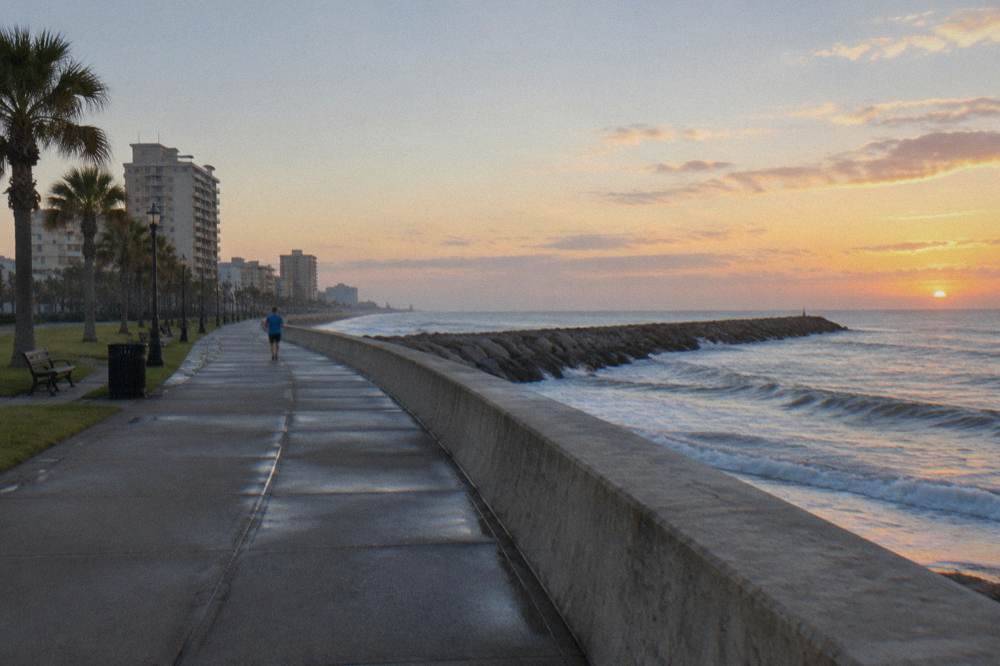
One habit ties all three spots together: watch the birds. Diving pelicans and terns mark feeding fish, and feeding fish attract dolphins. Shore regulars scan for bird activity first and let it point them to the water. It is the single best free trick in this whole guide.
When Should You Go Dolphin Watching From Shore?
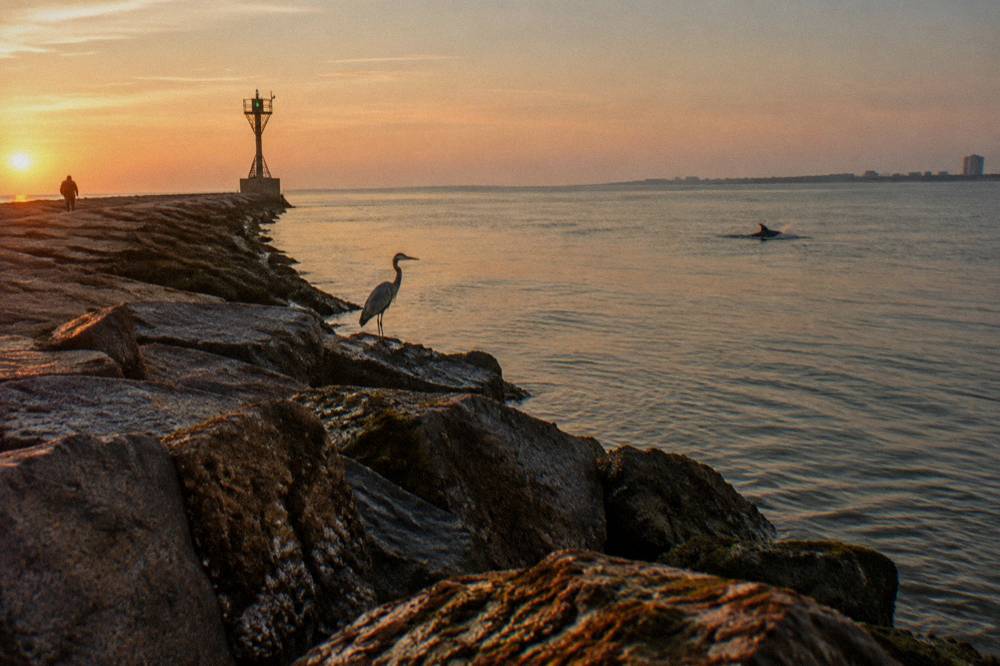
The best shore-watching windows in Galveston are the first hours after sunrise and the late afternoon, ideally on a moving tide rather than slack water, with the highest overall activity from roughly May through October. Sightings remain possible in every month of the year, including winter, when dolphins tend to concentrate in the lower bay and channel areas.
The seasonal pattern comes from the research data as much as from anecdote. Warmer months bring higher dolphin abundance and activity in the bay, and cooler months concentrate animals in the lower bay, around the passes and the channel, which happens to be exactly where Seawolf Park looks. In other words, winter does not end the watching at this particular park; it can sharpen it, a nuance our best time to see dolphins in Galveston guide develops month by month.
| Time window | What to expect from shore | Why |
|---|---|---|
| First hours after sunrise | The most reliable window | Calmer water, active feeding on incoming tides |
| Midday | Hit or miss | Boat traffic is heavy, glare is high, tides often slack |
| Late afternoon | Strong second window | Feeding resumes as tides move again |
| Warmer months, May to October | Highest activity overall | Peak abundance in the bay, more calves reported |
| Cooler months | Fewer but concentrated sightings | Animals gather in lower bay and channel areas |
Tide matters more than most first-time watchers expect. Moving water concentrates prey, and concentrated prey concentrates dolphins. Slack tide, the still water at the top or bottom of a tide cycle, is the quietest watching of the day. If you can only pick one factor beyond the season, pick a moving tide in the early morning. The wider set of guides lives on Galveston Dolphin Tours.
Weather is the other honest caveat. Northeast wind is a constant on this coast, and choppy water hides dorsal fins that calm water would show plainly. Boat tours cancel for weather, and shore watching simply gets harder; neither the park nor any operator promises conditions, and forecasts come from the National Weather Service, not from anyone selling tickets. Our weather and cancellation guide explains how operators handle rough days.
How Does A Boat Tour Compare With Watching From Seawolf Park?
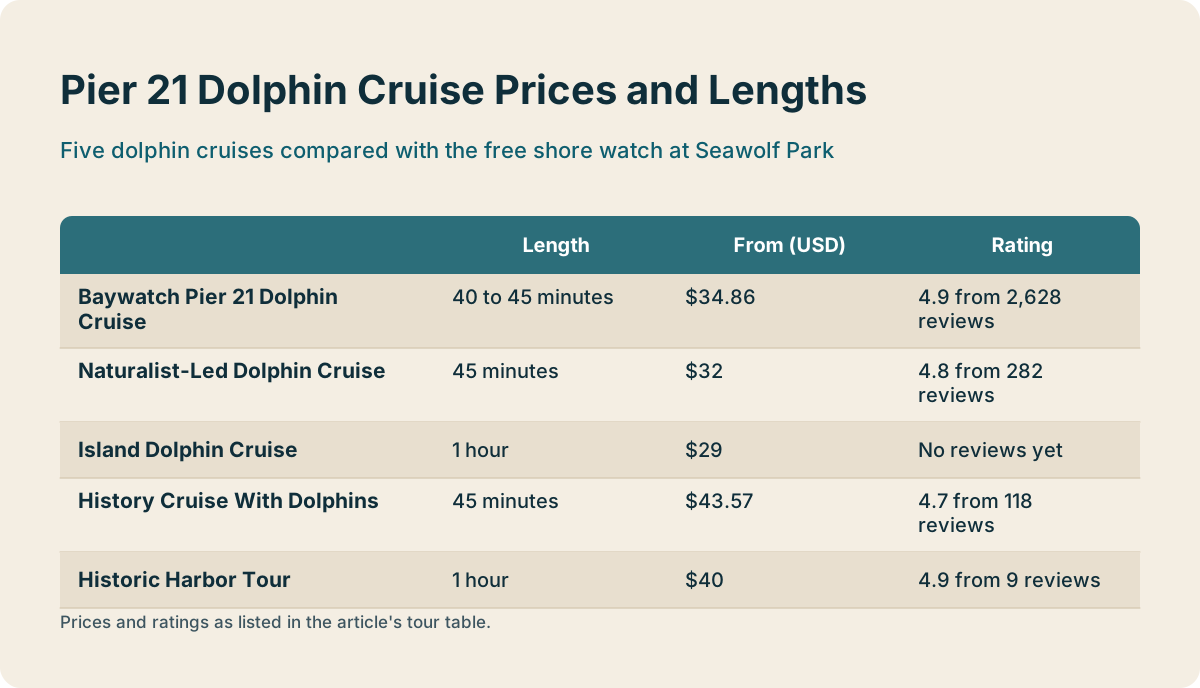
A boat tour puts you inside the channel the shore only overlooks: the same dolphins, seen from water level, at distances the rail cannot match, with narration and a captain who reads the harbor. The trade-offs are money, schedule and weather dependence. Dolphin cruises from Pier 21 run from $32 to $43.57 per person and last 45 minutes to an hour, against a free shore watch you control entirely.
The comparison is genuinely a matter of what you want from the day. Here is the bookable roster as it stands, with prices and ratings from the live listings.
| Tour | Operator | Length | From (USD) | Rating |
|---|---|---|---|---|
| Baywatch Pier 21 Dolphin Cruise | BayWatch Dolphin Tours | 40 to 45 minutes | $34.86 | 4.9 from 2,628 reviews |
| Naturalist-Led Dolphin Cruise | Baywatch Dolphin Tours | 45 minutes | $32 | 4.8 from 282 reviews |
| Island Dolphin Cruise | Island Tours of Galveston | 1 hour | $29 | No reviews yet |
| History Cruise With Dolphins | BayWatch Dolphin Tours | 45 minutes | $43.57 | 4.7 from 118 reviews |
| Historic Harbor Tour | Baywatch Dolphin Tours | 1 hour | $40 | 4.9 from 9 reviews |
BayWatch Dolphin Tours is the established operator here, locally owned and running harbor excursions from Pier 21 since 2005, on a roughly 3-mile narrated route that mixes dolphin watching with maritime history. The naturalist-led version adds a guide whose job is the dolphins themselves, which pairs well with what you learned at the park rail: you will recognize the bow riding and the trawler-following because you have already watched it from land.
The history cruise leans the other way, giving equal weight to Galveston's harbor story with dolphins as a frequent bonus, and it has an on-board restroom (bottled water is not included). Families weighing the whole question of whether a cruise is worth the ticket should read our is a dolphin cruise worth it piece; the short answer is that the harbor's sighting record makes it a better bet than most.
There are also formats beyond the conventional boat. A Segway ride along the Seawall covers shoreline miles with dolphin sightings named as a possible highlight, and a small-group sea kayak tour paddles the harbor itself over four hours. The kayak deserves a special honesty note: it is the only roster option that puts you on the water under your own power, which means the NOAA 50-yard viewing distance becomes your personal responsibility, and the operator describes dolphins as an "if you're lucky" element rather than a headline. It is limited to five participants and must be booked one to two weeks ahead.
The Segway tour, meanwhile, is less a dolphin tour than a Seawall tour with dolphins as a bonus, which is a fair description of shore watching in general. It runs an hour from the Seawall with safety training and photo stops.
What Should You Bring For A Shore Watch At Pelican Island?
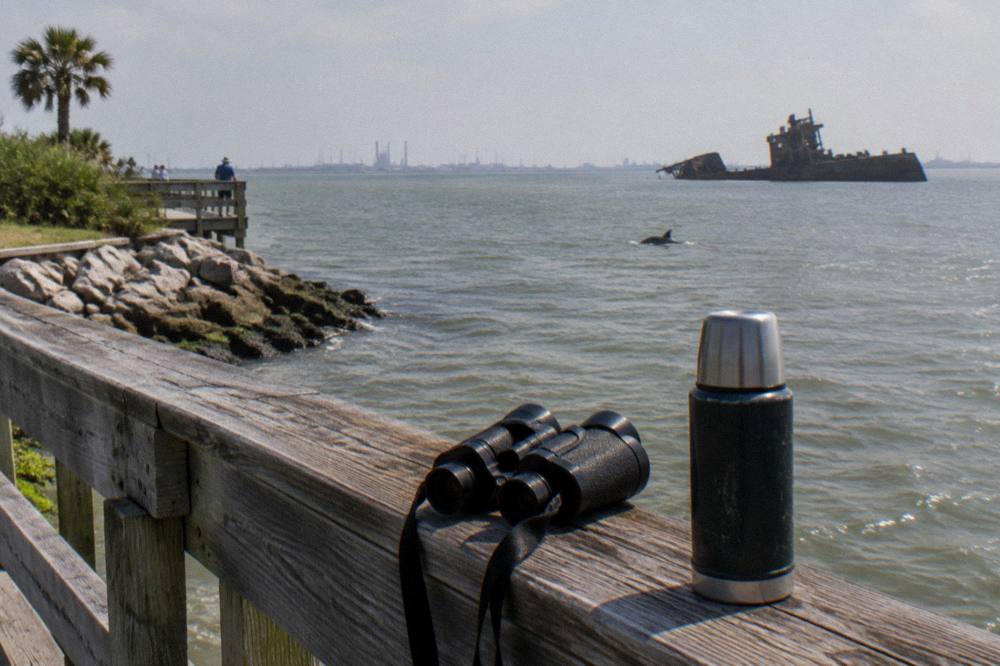
Bring binoculars, sun protection, water, a camera with zoom if you have one, and low expectations about proximity, and you have everything a Seawolf Park dolphin watch requires. The park is a fishing pier and shoreline, not a developed attraction, so there are no rentals or conveniences to fall back on, and the best vantage moves with the boat traffic in the channel.
The kit list is short because the activity is simple. What follows is what shore regulars actually carry, and why each item earns its place.
| Item | Why it matters at Seawolf Park |
|---|---|
| Binoculars | Turns distant fins into identifiable behavior |
| Hat, sunscreen, sunglasses | The railings offer little shade; glare off the channel is constant |
| Water and snacks | Nothing is sold at the vantage itself; plan for an hour or two |
| Camera with zoom | The honest shooting distance is tens of yards, not feet |
| Tide chart | Moving water concentrates prey and dolphins; slack tide goes quiet |
| Layer or windbreaker | Wind off the channel is steady even in warm months |
Dress for wind more than for temperature. The channel funnels breeze across the point, and a calm morning downtown can be a blustery one at the pier. Our what to wear on a dolphin boat tour guide covers the on-water version of the same logic, and most of it applies doubled on an exposed point of land.
If you are pairing the shore watch with a boat departure, note that the Pier 21 dock is back across the harbor, and check-in at the kiosk in front of the Harbor House Hotel is 30 minutes before departure for the Baywatch cruises. Parking and boarding logistics at Pier 21 are covered in our Pier 21 parking and boarding guide, which is worth reading before a cruise-ship day, when the harbor district fills up.
Can You Combine Seawolf Park With A Full Galveston Day?
Yes, and the geography cooperates: Seawolf Park and Pelican Island sit minutes from the Strand, the ferry terminal and the cruise port, so a shore watch slots easily into a morning of historic districts or a pre-cruise afternoon. Visitors with one full day can watch dolphins at the park at sunrise, walk the Strand by late morning, and ride the free Bolivar ferry in the afternoon, with dolphins a common sight from the deck.
The practical sequence matters. Early morning is the best dolphin window and the coolest walking weather, so start at the park rail, then let the day warm into the Strand's shops and the harbor district. The ferry is the natural afternoon move: it is free for both walk-ons and vehicles, runs around the clock with one vessel overnight and a second entering service at 6:30 a.m., and adds vessels as traffic demands. The crossing takes roughly 18 to 20 minutes, and the ferry's own wake is a documented dolphin magnet, with passengers and the ferry's own service account reporting sightings alongside the ride.
For day-trippers, the math is friendly. Galveston is close enough to Houston for a single-day visit, and our day trip from Houston and how many days you need pieces lay out itineraries with and without overnight stays. A dolphin shore watch costs nothing and fits any of them.
The one planning rule worth keeping: check the cruise schedule before you route yourself through Harborside. Embarkation days bring heavy traffic to the streets between the Strand and the port terminals, and a five-minute drive to Pelican Island can stretch when several ships are boarding. Nothing about the dolphins changes on those days; only your patience in traffic does.
Common Questions About Seawolf Park Dolphin Watching
Is Seawolf Park free for dolphin watching?
The dolphin watching itself is free: the park's shoreline and railings face the ship channel, and no ticket is required to stand at them and scan the water. Check the park's own channels for current entry or pier details before you go, since pier access policies can change.
How likely am I to see dolphins from Seawolf Park?
Sightings at Seawolf Park are frequent enough that the Galveston Bay Dolphin Research Program monitors from the shore there, and dolphins are very likely in the channel on any given day, especially from May through October and around moving tides in the early morning or late afternoon. They are wild animals, so no spot can guarantee them.
Can you see dolphins from the Galveston to Bolivar ferry?
Yes, dolphins are commonly seen riding the ferry's wake on the roughly 20-minute, 2.7-mile crossing, and the ferry is a toll-free service operated around the clock. Sightings are frequent but not guaranteed, and the ride costs nothing either way.
How close do the dolphins come to the Seawolf Park pier?
Typically tens to a couple of hundred yards, close enough for clear views of fins, blows, leaps and wake riding, but not for close-up photos. Boat tours in the channel get the closer view, and even they keep at least 50 yards from the animals under NOAA viewing guidelines.
Is a boat tour better than watching from shore?
A boat is closer and comes with narration, while the shore is free, flexible and under your own schedule. Cruises from Pier 21 run from $32 per person for 45 minutes to an hour. Many visitors do both: watch from the rail in the morning and ride the channel later.
What is the best month for dolphin watching in Galveston?
Warm months, roughly May through October, bring the highest dolphin activity in the bay, but sightings are possible year-round and cooler months concentrate dolphins in the lower bay and channel areas, which is exactly where Seawolf Park looks. There is no bad month, only better hours.