Riding The Galveston Ferry To Bolivar: Free Crossing, Dolphin Spotting And What To Expect
The Galveston ferry to Bolivar is one of the few genuinely free things left on a Texas beach trip, and it doubles as a dolphin-watching platform on the 2.7-mile crossing.
Short answer
The Galveston ferry is a toll-free TxDOT service running 24 hours a day between Galveston Island and the Bolivar Peninsula. The crossing covers 2.7 miles in about 20 minutes, one vessel runs overnight with more added as traffic builds, and bottlenose dolphins are frequently seen from the rail on the way across.
The Galveston ferry to Bolivar is a toll-free service operated by the Texas Department of Transportation, and it may be the best zero-dollar activity on the upper Texas coast. The crossing links the north end of Galveston Island to Port Bolivar across the ship channel, covers 2.7 miles of open bay water, and takes about 20 minutes dock to dock. Along the way, common bottlenose dolphins frequently ride the ferry's wake, which turns a routine transportation link into one of the most reliable free wildlife viewing platforms in the region. This guide covers the crossing itself, the wait, boarding rules, and how to stack the ferry with a dedicated dolphin cruise for the full experience. For the broader picture of paid options, start with our Dolphin Tours in Galveston, Texas overview.
What Is The Galveston Ferry And Where Does It Go?
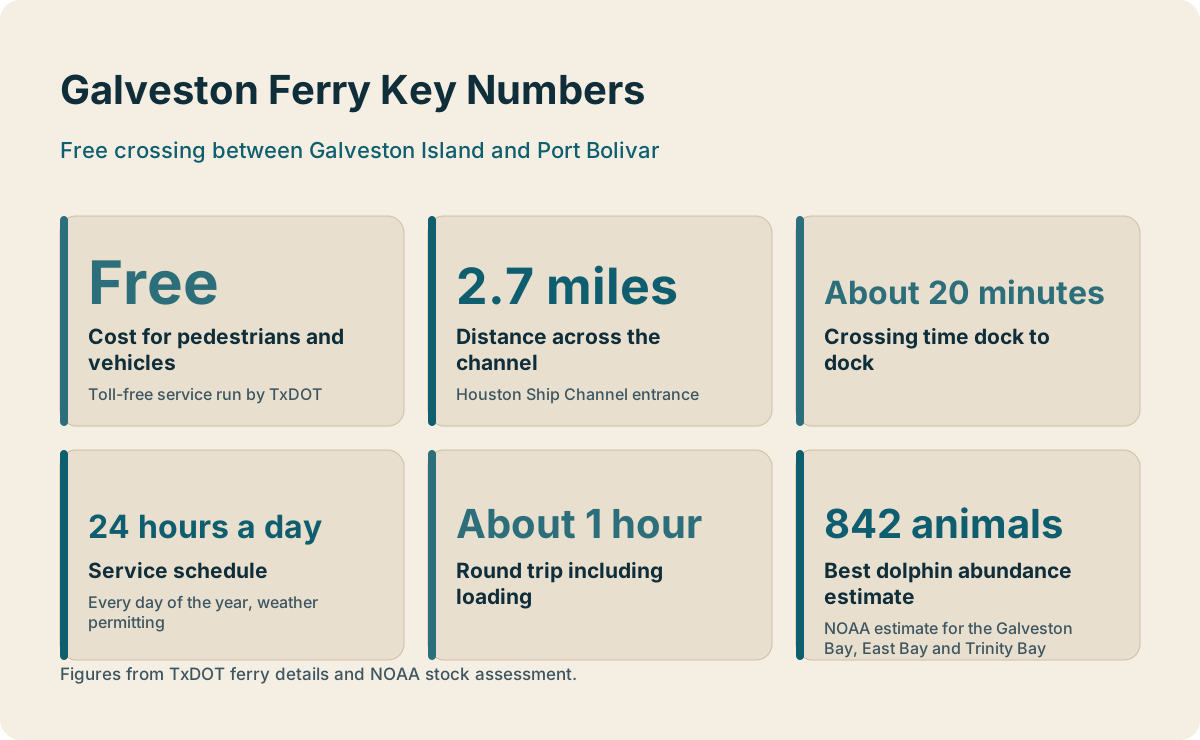
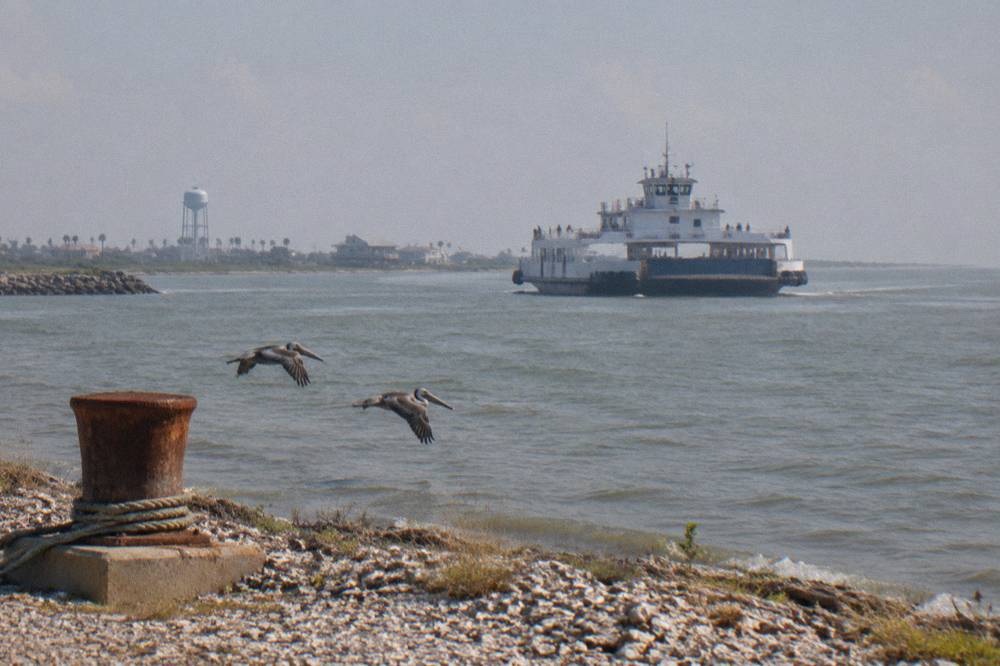
The Galveston ferry is a free, drive-on boat service run by TxDOT that connects Ferry Road on the north tip of Galveston Island with Port Bolivar on the Bolivar Peninsula, crossing 2.7 miles of the Houston Ship Channel entrance in about 20 minutes. It runs 24 hours a day, every day of the year, weather and safety permitting, and carries both walk-on passengers and vehicles of nearly every type.
The route exists because there is no bridge between Galveston and Bolivar. The channel that big ships use to reach Houston cuts the two landmasses apart, so the ferry is the only way to drive between them without a long detour around the bay. TxDOT runs it as a toll-free service, which surprises first-time visitors: no ticket, no tap, no charge for pedestrians, cyclists, motorcycles, cars or trucks. Free parking is available in lots on both sides if you would rather walk on and leave the car behind.
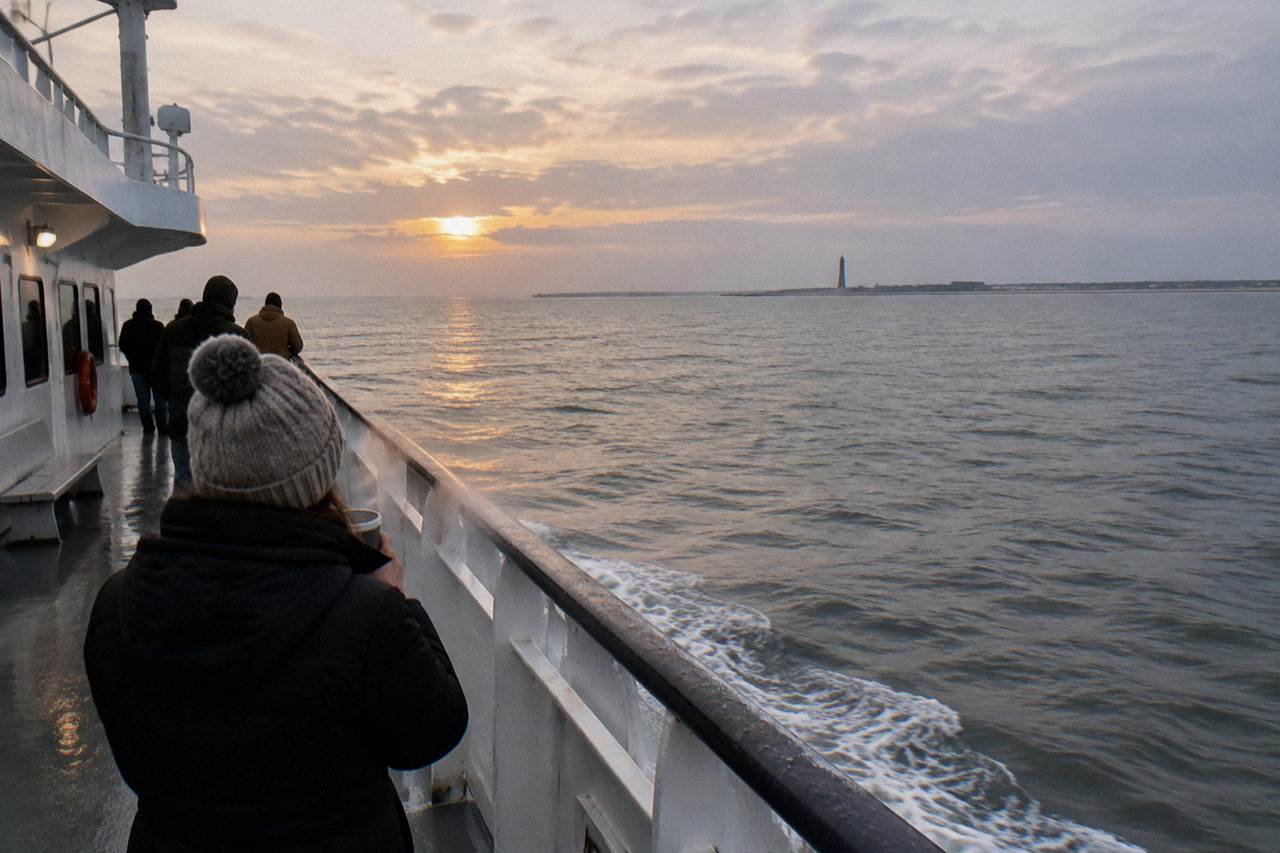
The ride itself is part of the appeal. You cross open water with container ships and cruise vessels frequently passing in the adjacent channel, pelicans working the surface, and the Bolivar lighthouse coming into view on the approach. Round trip, including loading and unloading, runs about an hour, which makes it an easy add-on to a Galveston day even if you have no errand on the far side. Riders who want the full free-spending day can pair it with our Free Things to Do in Galveston rundown.
| Ferry basic | What to know |
|---|---|
| Operator | Texas Department of Transportation (TxDOT) |
| Route | Galveston Island (Ferry Road) to Port Bolivar |
| Distance | 2.7 miles across the channel |
| Crossing time | About 20 minutes dock to dock |
| Schedule | 24 hours a day, 7 days a week, year-round |
| Cost | Free for pedestrians and all vehicles |
| Parking | Free lots at both terminals |
| Round trip | About 1 hour including loading |
Is The Galveston Ferry Really Free, And Who Can Ride It?
Yes, the ferry is completely free. TxDOT operates it as a toll-free service for walk-on passengers and for vehicles including cars, motorcycles, bicycles and trucks, and parking in the terminal lots while you ride is also free. There is no reservation system and no fare of any kind; you simply drive or walk into the queue and board the next available vessel.
The free fare is the single biggest reason the ferry shows up on every budget itinerary for the island. A family of five pays nothing for a round trip that includes open-water views, ship traffic and a real chance of dolphins, which is hard to beat against almost any paid attraction in town. Cyclists and motorcyclists are welcome, and pedestrians who park on either side get the same ride at the same price, which is zero.
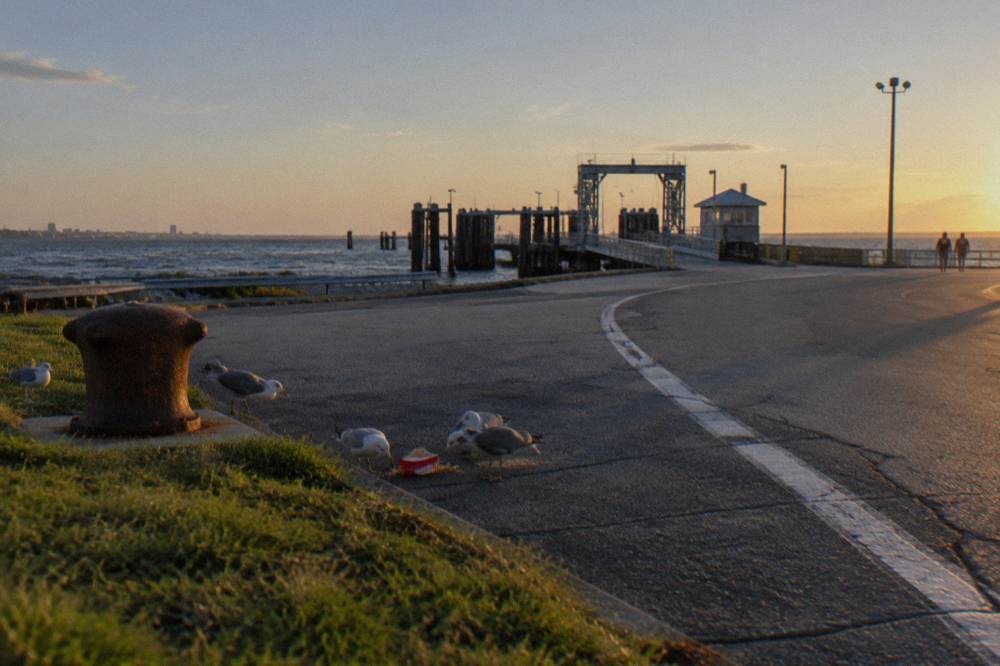
A few operating rules frame the experience. Federal regulations allow random vehicle inspections at the terminals, so an occasional security check is normal rather than a sign of trouble. Seagulls gather around the boats, and TxDOT asks that any feeding happen from the rear deck only. Severe weather may reduce or stop service entirely; the operator announces those changes, and the TxDOT ferry page is the authoritative source for status before you drive to the terminal.
Because the crossing is free and unscheduled, it pairs naturally with other no-cost spots. The most productive pairing is on the far side of the channel: our Seawolf Park and Pelican Island Dolphin Watching guide covers a shore spot where dolphins are seen so regularly that researchers treat it as a monitoring station.
How Many Ferries Run, And How Often Do Boats Leave?
One vessel runs overnight and around the clock, a second typically enters service at 6:30 a.m., and additional boats are added as traffic builds, with up to five or more vessels in operation during summer and holiday peaks. There is no fixed timetable; boats depart as soon as they are full, which in practice means roughly every 15 to 20 minutes when demand is steady.
The vessel count is the key to understanding the wait. Overnight, when only one boat is running, departures are spaced far apart, but almost nobody is in line. From mid-morning onward, especially on summer afternoons and holiday weekends, TxDOT scales the fleet up toward its maximum, because that is when cars stack up at both landings. The system is demand-responsive rather than scheduled, which is why TxDOT does not publish a departure timetable the way a train line does.
What this means for planning: the ferry is a queue, not a booking. You arrive, you line up, and you board the next boat with space for your vehicle or your party. Walk-on passengers almost always board faster than cars because the vehicle line is the constraint. If your plans are tight, the practical move is to check conditions before you leave, ride at an off-peak hour, and budget a cushion rather than a precise departure time.
| Period | Typical vessels | What it means for riders |
|---|---|---|
| Overnight | One | Long gaps between crossings, very short lines |
| Early morning (from 6:30 a.m.) | Two | Steady service, light traffic |
| Midday, off-peak | Two to three | Frequent departures, moderate lines |
| Summer and holiday afternoons | Up to five or more | Maximum capacity, but the heaviest queues |
TxDOT publishes current operating information, including service alerts, on its official Galveston-Port Bolivar ferry page, and that page is the right place to confirm anything time-sensitive before you go.
Do You Stay In Your Car On The Galveston Ferry?
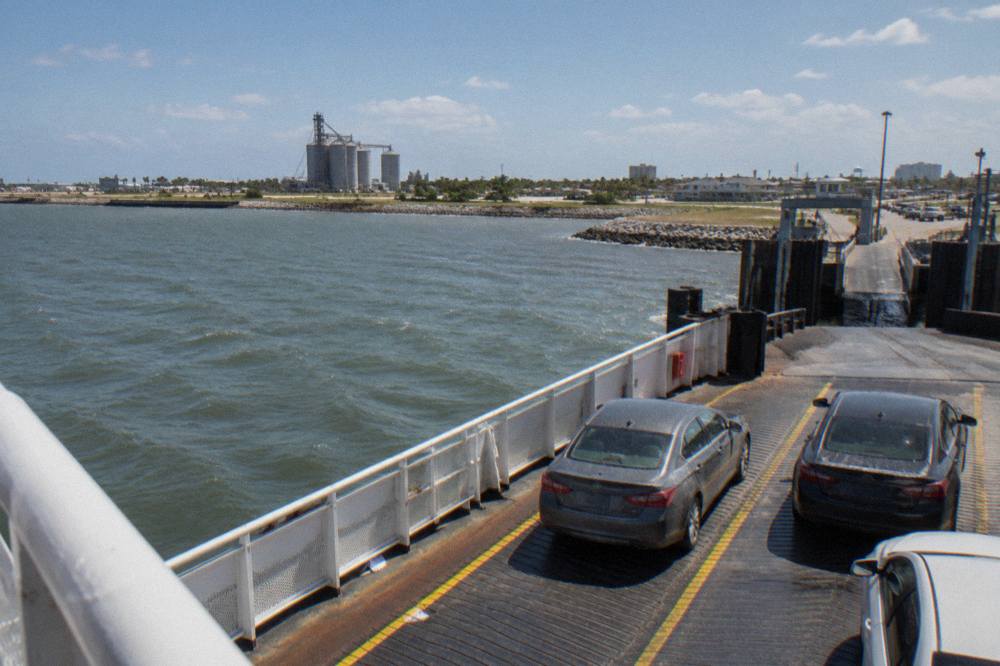
Most riders get out of their cars, and that is the better choice. Vehicles park on the lower deck in rows directed by crew, and passengers are free to climb to the upper decks for the crossing, where the views, the rail-side dolphin watching and the seating all are. Staying in the driver's seat is allowed but means missing nearly everything the ride offers.
Boarding is simple and quick to learn. Crew members wave vehicles on and pack the car deck in order, directing each driver into a lane; you shut off the engine, set the brake, and head for the stairs. There is no assigned parking, no premium spot, and no fee for any position on the deck. On arrival, cars leave in roughly the reverse order of loading, and the whole unload takes only a few minutes.
The upper deck is where the crossing happens. Open-air side decks run the length of the vessel, giving you sightlines over the channel in both directions, and the bow view toward the oncoming shore is the classic photo angle. On windy or choppy days the rail is still workable, though spray can reach the forward sections, so stand a few feet back if the breeze is up. Passengers with limited mobility can confirm current boarding assistance directly with TxDOT, which publishes the operating details for the service.
A practical note for dolphin watchers: the stern and side rails are the productive positions. Dolphins that ride the ferry wake tend to appear just off the rear quarter and along the hull, and they surface in short, unpredictable arcs, so a clear stretch of rail beats a crowded spot at the bow.
How Long Is The Wait For The Galveston Ferry?
There is no single answer, and no honest figure can be printed here: waits range from walking straight on to an hour or more at summer and holiday peaks, and they change hour to hour. TxDOT does not publish fixed wait times; the live queue has to be checked through the official TxDOT ferry information before you drive to the terminal.
What drives the wait is simple: the vehicle line. Walk-on passengers usually board the current or next vessel regardless of how long the car queue is, because the car deck fills first and the passenger deck rarely does. Drivers face the real variability. A Tuesday morning in February can mean boarding the boat in front of you; a Saturday afternoon in July, with beach traffic on both sides of the channel, can mean a long line at both landings at once, since the ferry serves two queues with the same boats.
| Factor | Shorter wait | Longer wait |
|---|---|---|
| Time of day | Early morning | Afternoon and early evening |
| Day of week | Weekdays | Weekends |
| Season | Fall, winter, spring weekdays | Summer and holidays |
| Direction | Either, off-peak | Both landings at peak, since one fleet serves both |
| Passenger type | Walk-on | Vehicle in line |
| Weather | Calm | Service reductions possible in severe weather |
The honest planning advice is to treat the wait as a range, not a number. If you have a hard commitment on the other side, ride early, check the official status before leaving, and build in a cushion. If the ferry is the activity rather than the transport, the line is a minor cost for a free crossing. Riders who want a scheduled, guaranteed departure time instead of a queue should look at the paid cruise side of the ledger, where a booked ticket is a fixed time; our Galveston Boat Tours Compared guide walks through those options side by side.
Can You See Dolphins From The Galveston Ferry?
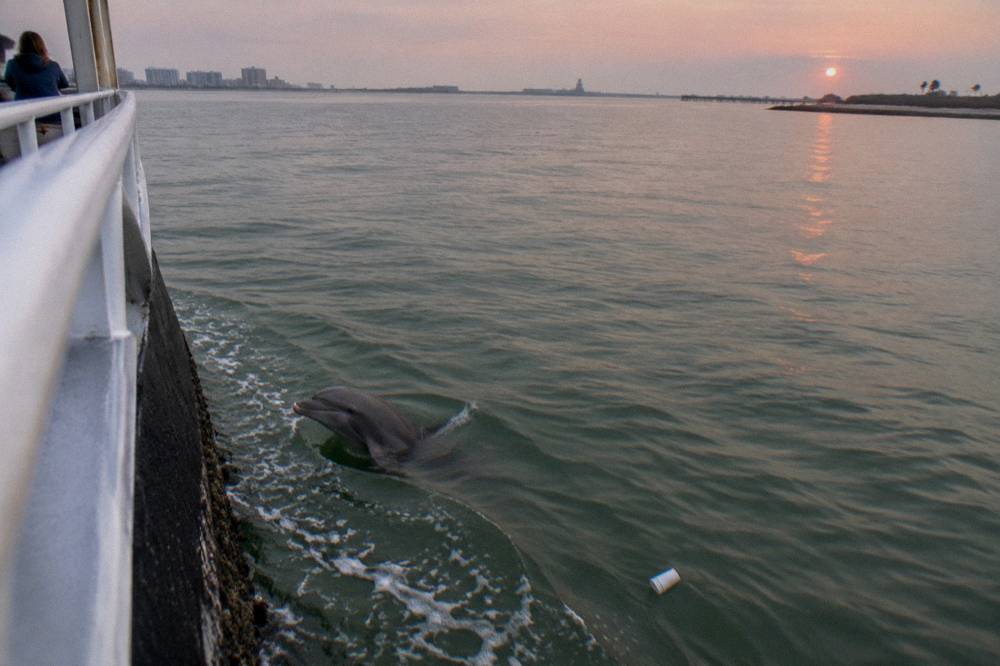
Yes, frequently. Bottlenose dolphins are commonly seen from the ferry, often riding the wake or escorting the vessel along the crossing, and the ferry lane is a documented, recurring place to encounter them. Sightings are never guaranteed because these are wild animals, but riders report them often enough that the crossing has a reputation as a free dolphin-watching trip.
The reason is geography. The ferry crosses the entrance to the Houston Ship Channel and the mouth of Galveston Bay, which is prime feeding water. The only cetacean species observed in the bay is the common bottlenose dolphin, and the local stock is substantial: the NOAA stock assessment puts the best abundance estimate for the Galveston Bay, East Bay and Trinity Bay stock at 842 animals, and the Galveston Bay Dolphin Research Program has cataloged over 1,000 unique individuals by dorsal fin photographs. That many dolphins in a compact waterway means the odds of an encounter on any given crossing are genuinely good.
From the rail, the behaviors are easy to read once you know them. Dolphins bow-ride the pressure wave of a moving hull, which is why they appear alongside the ferry within the first minutes of the crossing. They follow shrimp trawlers for easy meals, toss fish at the surface while feeding, and travel in mother-calf pairs, with the calves surfacing close beside an adult. A swirl of terns and pelicans diving on the water is often the giveaway that fish, and therefore dolphins, are working below.
| Behavior | What it looks like from the ferry |
|---|---|
| Wake riding | Dolphins holding position in the stern quarter, surfacing in rhythm |
| Feeding | Swift swirls, fish tossed at the surface, diving birds above |
| Traveling | Steady surfacing in one direction, often in small pods |
| Mother and calf | Two animals surfacing close together, the smaller one inside |
| Socializing | Leaps, splashes, tail slaps, animals rolling at the surface |
One rule matters more than any sighting tip. NOAA's marine life viewing guidelines require staying at least 50 yards from dolphins when viewing from watercraft, and feeding wild dolphins is illegal as well as harmful. From the ferry this is automatic: the boat keeps its course, the dolphins choose to approach, and you watch without interfering. Swimming with wild dolphins is not legal in Texas waters, a topic our Swimming With Dolphins in Galveston, Texas guide covers in full, along with the NOAA viewing guidelines that set the 50-yard standard.
When Is The Best Time To Ride The Ferry For Dolphins?
Sightings are possible on any crossing, year-round, but the odds improve in the warmer months, roughly May through October, and in the first hours after sunrise and the late afternoon, especially when the tide is moving. Early morning crossings combine the shortest lines with the most active water, which makes them the single best ferry ride for wildlife.
The seasonal pattern comes straight from the research data. Dolphin activity and abundance in the bay run higher in the warmer half of the year, and cooler months concentrate animals in the lower bay and channel-mouth areas, which happens to be exactly where the ferry runs, so winter crossings still produce sightings, just with somewhat different distribution. The time-of-day pattern is about prey and tide: moving water concentrates baitfish, and dolphins feed hardest around those windows, which is why an early or late crossing often outperforms a midday one even in July.
For scheduling, the two goals line up neatly. The quietest ferry queues are early weekday mornings, and early morning is also the best wildlife window. A sunrise-adjacent crossing gives you a short line, a calm deck, active water and a real chance of dolphins for free. The late afternoon crossing is the second-best choice, though it collides with the heavier traffic of the day, so expect more company on the car deck. Our Best Time to See Dolphins in Galveston guide unpacks the seasonal and tidal patterns in more depth.
Free Shore Spotting Around The Ferry Route
You do not need to be on the water to watch dolphins for free. Seawolf Park on Pelican Island, the Bolivar Peninsula bay side and the Seawall jetties and piers near the ferry approach are the reliable shore spots, and all of them sit within a short drive of one or both ferry landings. Bird activity over the water is the tell: diving pelicans and terns mark feeding fish, and dolphins follow the fish. If you want to narrow down which shoreline gives you the best odds, the guide to the most reliable dolphin beaches in Galveston compares the top spots.
Seawolf Park deserves its reputation. Researchers use the area for land-based monitoring because dolphins appear there so consistently, thanks to the channel location and the steady ship and ferry traffic that keeps water moving past the point. The Bolivar side rewards the bay-facing shoreline rather than the surf side, since the calmer bay water holds the feeding activity. Back on Galveston, the jetty areas near the ferry landing and the pier overlooks along the Seawall give you water close enough to scan without a boat. Once you've spotted dolphins from shore, the full rundown of Galveston's essential sights explains how the ferry, Seawolf Park and the harbor cruise fit together in a single day.
The technique is the same everywhere. Pick a spot with open sightlines over channel or bay water, watch for bird action, and scan the surface in slow sweeps rather than staring at one patch. Bring binoculars if you have them, because a distant swirl resolves into a dorsal fin with glass and stays a smudge without it. Morning light is flat and helpful; midday glare hides more than it shows.
| Shore spot | Where it is | Why it works |
|---|---|---|
| Seawolf Park | Pelican Island, near the ferry route | Channel location; dolphins seen so regularly that researchers monitor from there |
| Bolivar bay side | North and bay-facing shoreline of the peninsula | Calmer bay water holds feeding activity |
| Seawall jetties | Near the Galveston ferry approach | Dolphins patrol the jetty lines, especially early |
| Pier overlooks | Along the Galveston Seawall | Elevated sightlines over near-shore water |
None of these spots carries a fee, and none guarantees a sighting, because the animals are wild and go where the fish go. What they offer is a free second and third chance at an encounter on a day when the ferry crossing itself comes up empty. For the full free-activity itinerary, the Free Things to Do in Galveston guide sequences them.
A Dedicated Dolphin Cruise As The Close-Up Alternative
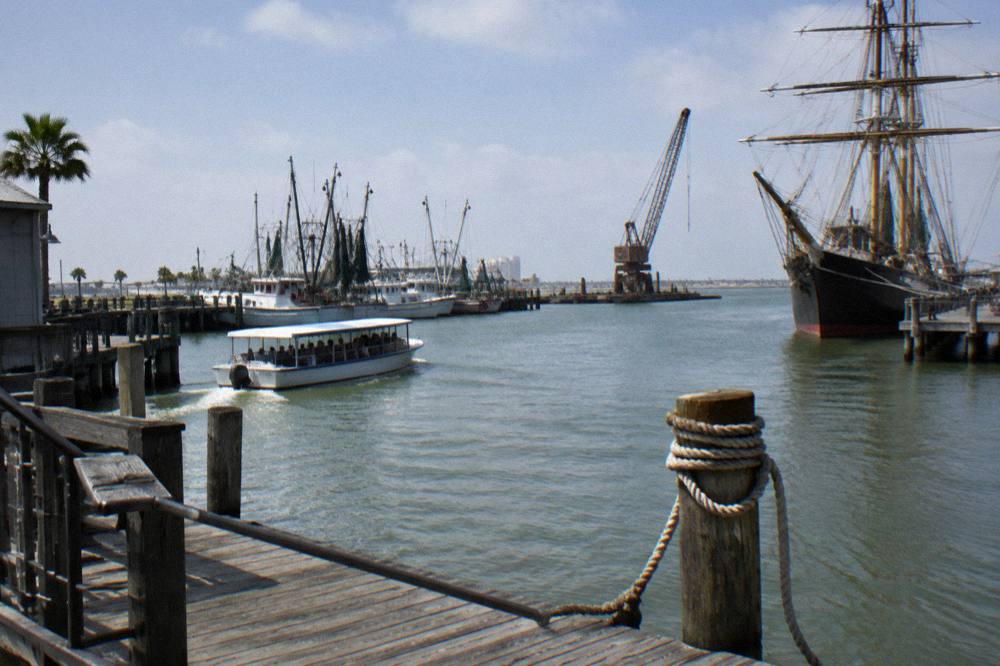
The ferry is a free, incidental view from a moving vessel on a fixed route; a dedicated dolphin cruise is a booked trip whose whole purpose is finding the animals, with a captain who works the harbor daily. If the ferry ride hooks you, the natural upgrade is a narrated cruise from Pier 21, where the operator has run harbor excursions since 2005 and the boats cover a 3-mile route built around both history and dolphins.
The difference is not just proximity, it is intent. A ferry captain is transporting cars across a channel; a dolphin cruise captain is reading the water for feeding signs, working known pod areas and slowing the boat when dolphins appear. The Baywatch Pier 21 cruise, the featured tour on this site, runs 40 to 45 minutes from the kiosk in front of the Harbor House Hotel, holds up to 39 passengers, and carries a 4.9 rating across 2,628 reviews, with fares from $34.86 per person and free cancellation on the live listing. Check in is at the kiosk 30 minutes before departure, which is a firmer schedule than the ferry's queue will ever give you.
The two experiences stack well rather than compete. Ride the ferry first, free, and see what the channel offers from a distance; if the sighting bug bites, book a cruise for the close-up with commentary. The same operator also runs a naturalist-led version, a 45-minute trip from the same Pier 21 kiosk with a captain and naturalist aboard, from $32 per person, rated 4.8 across 282 reviews, wheelchair accessible with advance notice and carrying an on-board restroom. A separate operator, Island Tours of Galveston, runs a one-hour cruise from a trailer outside Katie's Seafood House on Wharf Road, from $29 per person, with life jackets included and free cancellation; that listing has no reviews yet, so judge it on price and duration rather than reputation.
| Option | Cost | Duration | What you get |
|---|---|---|---|
| Galveston ferry | Free | About 20 minutes each way | Channel crossing, wake-riding dolphins when present |
| Baywatch Pier 21 cruise | From $34.86 per person | 40 to 45 minutes | Narrated 3-mile harbor route, 4.9 from 2,628 reviews |
| Naturalist-led cruise | From $32 per person | 45 minutes | Captain plus naturalist, on-board restroom, 4.8 from 282 reviews |
| Island Tours one-hour cruise | From $29 per person | About 1 hour | Longer ride from Katie's Seafood House, no reviews yet |
Prices and ratings live on the listings and can change, so read the live listing before booking any of them. What will not change is the structural trade: the ferry is free, unscheduled and incidental; the cruise is paid, scheduled and purposeful. Many visitors do both in one day, and the Pier 21 kiosk sits a short drive from the ferry landing, which makes the pairing easy on a single afternoon.
Planning A Ferry Day: A Simple Sequence
A good ferry day runs in one direction: check the official status in the morning, ride an early crossing for the short line and the active water, spend the middle of the day on the Bolivar or Pelican Island side, and return late afternoon, or swap the return leg for a booked dolphin cruise from Pier 21. The whole sequence costs nothing until you choose the paid cruise.
The morning check matters because the ferry is weather-exposed. Severe weather may reduce or stop service, and TxDOT is the announcing authority, so the official page is the first stop of the day. An early crossing then buys you the day's quietest queue and its best wildlife window at the same time. On the far side, the Bolivar bay shoreline and the drive toward Pelican Island fill the middle hours, with Seawolf Park as the anchor stop if dolphin watching is the goal.
The afternoon fork depends on your appetite. Riding back is free and takes about 20 minutes plus whatever the line costs at peak. Booking a cruise instead converts the day's incidental sightings into a narrated close-up, with a fixed departure time and a captain whose job is to find the animals. Either way, the day ends where it started, near the Harborside drive corridor, with dinner options within walking distance of the Pier 21 kiosk.
One honest caution to close the planning loop: the ferry is transportation, not a tour. Nobody on board is working to find dolphins for you, the route is fixed, and the animals choose to appear or not. Riders who accept that framing are rarely disappointed, because a free 20-minute crossing with a chance of dolphins is a good deal on its own terms, and Galveston Dolphin Tours exists for the days you want more certainty of effort behind the sighting.
Common Questions About The Galveston Ferry
Is the Galveston ferry free?
Yes. TxDOT operates the Galveston-Port Bolivar ferry as a toll-free service for pedestrians and for all vehicles, and parking in the terminal lots while you ride is also free.
How long does the Galveston ferry crossing take?
About 20 minutes dock to dock across 2.7 miles. A round trip, including loading and unloading, runs about an hour.
Do you stay in your car on the Galveston ferry?
You can, but almost nobody does. Vehicles park on the car deck and passengers head upstairs to the open rails, where the views and the dolphin watching are.
How long is the wait for the Galveston ferry?
It varies widely, from boarding immediately off-peak to long lines at summer and holiday peaks. TxDOT does not publish fixed wait times, so check the official TxDOT ferry information before you go.
Can you see dolphins from the Galveston ferry?
Frequently, yes. Bottlenose dolphins commonly ride the ferry wake along the crossing, though no sighting is guaranteed because they are wild animals.
When does the Galveston ferry run?
24 hours a day, 7 days a week, year-round, weather and safety permitting. One vessel runs overnight, a second typically joins at 6:30 a.m., and more are added as traffic builds.