Best Time To Visit Galveston: A Month By Month Planning Guide
Galveston rewards timing. The island's weather swings from mild winter days to humid late-summer heat, and the best month for your trip depends on what you want from the water.
Short answer
October to November and March to April are the classic shoulder windows: warm, less humid, and lighter on crowds. Dolphin sightings run year-round, with activity generally higher from May to October. Hurricane season lasts June 1 to November 30, so fall travelers should watch forecasts.
Galveston sits on a barrier island in the Gulf of Mexico, and its seasons shape everything a visitor does here: beach days, harbor cruises, ferry rides, and the odds of watching bottlenose dolphins work the ship channel. The island never freezes solid and never bakes dry, but the difference between a March morning and an August afternoon is real, and it changes what a trip feels like. Picking the right window is the single most consequential planning decision for this destination, and it costs nothing to get right.
The short version: October to November and March to April are the widely cited shoulder seasons, warm without peak heat, with moderate crowds and prices. Summer brings the warmest water and the busiest calendar. Winter is quiet, cooler, and cheapest. Dolphin sightings are possible in every month, with activity generally higher from May through October. Hurricane season runs June 1 through November 30, which is a fact to plan around, not a reason to skip the island.
This guide walks through the seasons, month by month, with the climate patterns and dolphin behavior that are documented in official and research sources.
When Is The Best Time To Visit Galveston?
For most travelers, the best time to visit Galveston is the shoulder window of October to November or March to April, when air temperatures are warm but not at summer peaks, humidity eases, and crowds and prices sit below their summer highs. Dolphin cruises run year-round, so the choice is mostly about comfort and traffic rather than whether the animals are present.
The shoulder season recommendation comes up repeatedly in travel planning coverage of the island, and the climate record explains why. Long-term temperature averages show October highs around 79 to 82 degrees and November highs around 70 to 72, with overnight lows in the 60s and high 50s respectively. March and April land in a similar comfort zone from the other direction, warming from about 69-degree March highs toward the upper 70s by late April. Those are beach-walk temperatures, harbor-cruise temperatures, and historic-district walking temperatures all at once.
Summer, roughly May through September, is the busiest and most humid stretch. Water temperatures reach their warmest, which helps swimming and helps dolphin activity, but air temperatures climb into the upper 80s and low 90s with high humidity and the year's heaviest visitor traffic. Winter, December through February, is the quietest and cheapest period: highs mostly in the low 60s, occasional freezes, and water too cold for comfortable swimming for most people.
One planning note specific to this island: Galveston is a major cruise homeport, so downtown and the Harborside corridor see heavy traffic on embarkation days regardless of season. If your trip is built around a harbor activity like a dolphin cruise, the timing that matters most is time of day, not just month. Early morning and late afternoon are the most reliable windows for dolphin activity, since the animals feed on moving tides and are often more active in the first hours after sunrise. If you'd rather build your whole visit around that morning departure window, the day trip guide built around one dolphin cruise shows how to time the drive from Houston, where to park near the harbor, and what to do once you're back on land.

How Does Galveston Weather Change Through The Year?
Galveston has four distinct but mild seasons: winter highs mostly in the low 60s with occasional freezes, a fast spring warm-up from March through May, a hot and humid summer from June through September with highs in the upper 80s to low 90s, and a gradual fall cool-down from October into December. Rainfall tends to peak in late summer and fall, partly because that is when tropical systems are possible.
The long-term monthly averages, drawn from standard climate normals records, look like this. January runs about 61 to 63 for a high and 48 to 50 overnight. February edges up to the mid 60s. March reaches about 70, April the mid 70s, and May the low 80s. June, July, and August all sit in the upper 80s to around 90, with August typically the warmest month of the year. September stays warm in the mid to upper 80s, October falls back to around 80, November to around 70 to 72, and December to the mid 60s. Sea surface temperatures in the area range roughly from the low 60s in winter to the mid 80s in late summer.
| Month | Typical High (F) | Typical Low (F) | What It Feels Like |
|---|---|---|---|
| January | 61 to 63 | 48 to 50 | Cool, brisk, occasional freeze |
| February | 63 to 65 | 51 to 53 | Cool, slowly warming |
| March | 69 to 70 | 58 to 59 | Mild, pleasant |
| April | 74 to 77 | 63 to 66 | Warm and comfortable |
| May | 80 to 83 | 72 to 73 | Warm, turning humid |
| June | 86 to 88 | 77 to 79 | Hot and humid |
| July | 88 to 90 | 79 to 81 | Hot and humid |
| August | 88 to 91 | 79 to 81 | Hottest month of the year |
| September | 85 to 89 | 76 to 78 | Hot, wettest-risk month |
| October | 79 to 82 | 68 to 70 | Warm, drier, pleasant |
| November | 70 to 72 | 58 to 59 | Mild, quiet |
| December | 64 to 65 | 50 to 53 | Cool, festive, calm |
Two caveats keep this honest. First, these are long-term averages, not a forecast for any specific week; a cold front can drop March into the 50s and a warm spell can push a December day near 80. Second, precipitation in Galveston is uneven and often comes in short heavy bursts rather than all-day rain, and the late summer and fall months carry the extra variable of tropical systems. Annual rainfall totals for the area run roughly 45 to 52 inches, and the September to October stretch is often the wettest because of that tropical influence.
For boat-based activities, the number that matters more than air temperature is wind. The bay is frequently choppy with northeast winds, and small craft advisories are common enough that tour operators build flexibility into their schedules. Every cruise on this site's roster carries free cancellation, which is the practical answer to Galveston's changeable weather: book the trip you want, and know you can move it if a front rolls through. For a deeper look at how operators handle weather, see how Galveston weather affects boat tour cancellations.
What Does Each Month Offer For A Galveston Trip?
Each month trades something: spring months deliver warming water and rising dolphin activity, summer months deliver the warmest Gulf and the biggest crowds, fall months deliver warm water with thinner crowds and the best overall value, and winter months deliver quiet streets, low prices, and dolphins that never leave. There is no bad month, only different tradeoffs.
Here is the month-by-month logic in one place, focused on what a planner actually decides: comfort, crowds, water temperature, and dolphin odds.
| Period | Comfort | Crowds | Water and Swimming | Dolphin Activity |
|---|---|---|---|---|
| January to February | Cool, jacket weather | Lowest of the year | Too cold for most swimmers | Possible year-round, cooler months concentrate near the bay mouth |
| March to April | Mild and pleasant | Moderate, spring break spikes | Warming but still cool | Activity rising into spring |
| May to June | Warm to hot, humid | Building toward peak | Comfortable for swimming | Higher activity period begins |
| July to August | Hottest and most humid | Peak of the year | Warmest water of the year | Generally high activity |
| September | Hot, wetter, tropical risk | Drops after Labor Day | Still warm, often the warmest bay water | High activity continues |
| October to November | Warm then mild, drier | Low to moderate | Warm early, cooling by November | Good activity, easing into winter patterns |
| December | Cool and calm | Low, holiday events downtown | Cold for swimming | Possible, quieter bay |
A few of these rows deserve expansion. The September row is the interesting one: the Gulf and bay water is often at its warmest of the year in early fall, since the sea has absorbed heat all summer, and post-Labor Day crowds thin noticeably. The tradeoff is tropical weather risk, covered in the next section. The winter rows are underrated: the bay's dolphins do not migrate away, and the animals concentrate in the lower bay and near passes in cooler months, which is exactly where most harbor cruises travel. The water is cold and the wind can bite on a fast boat, so layers matter, but a winter dolphin cruise is a real and often excellent option, and the boats are far less full.
The spring break window in March deserves a flag for families: island traffic spikes for a couple of weeks, and hotel rates follow. If your dates are flexible, the weeks on either side of that spike give you the same mild weather with a fraction of the crowd. If you are coming specifically for the water, our month-by-month dolphin breakdown goes deeper in which month is best for dolphin watching.
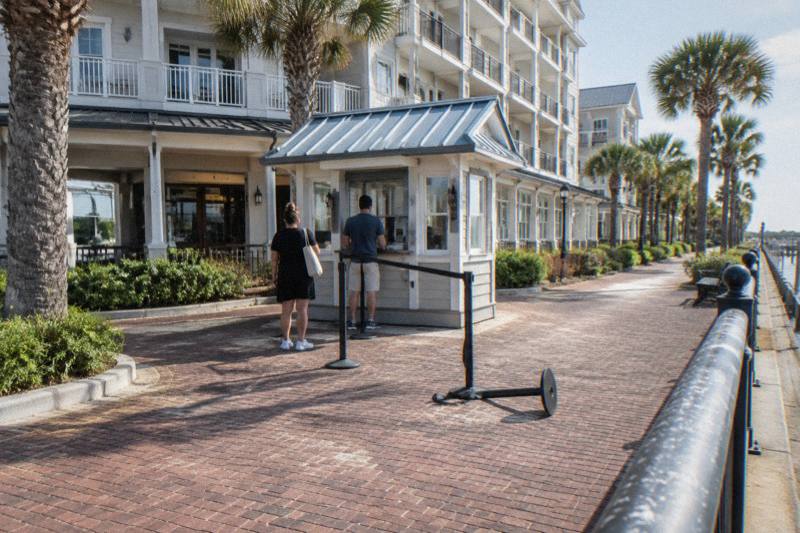
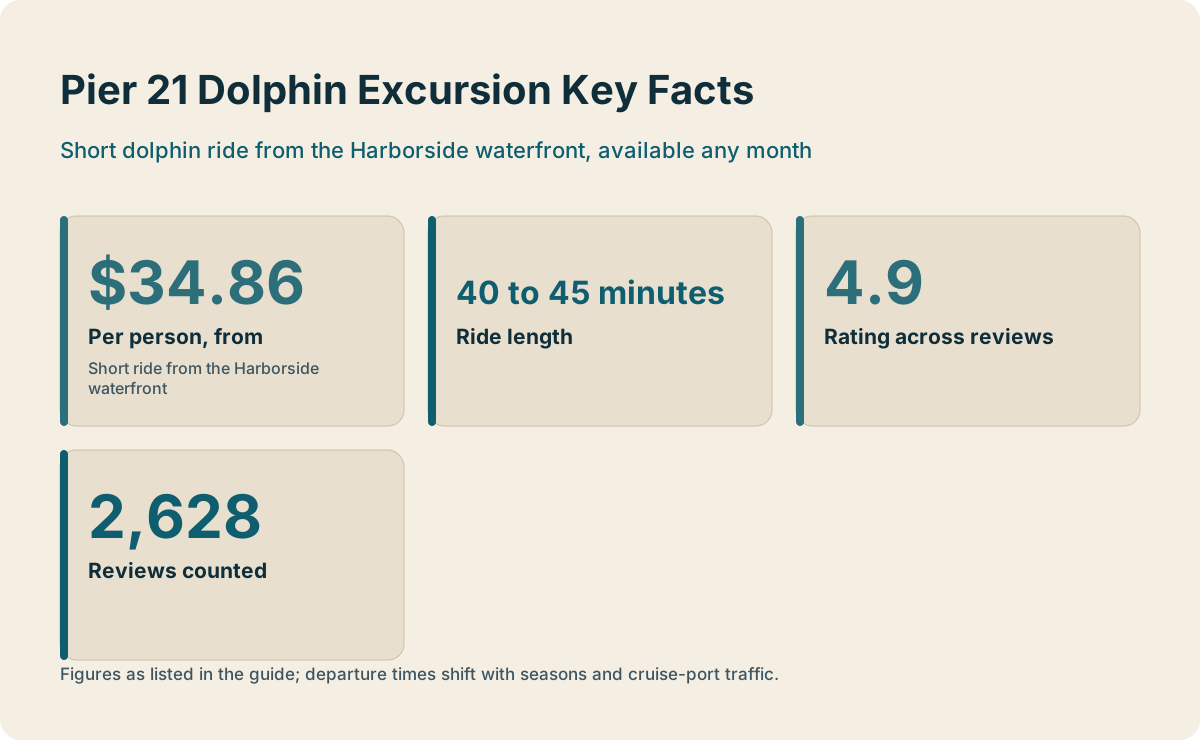
For travelers anchoring the trip around a cruise, the featured Pier 21 dolphin excursion is a natural fit in any month: it is a short 40 to 45 minute ride from $34.86 per person, it holds a 4.9 rating across 2,628 reviews, and it checks in at a kiosk on the Harborside waterfront. Check availability on the live listing for the date you are weighing, since departure times shift with the seasons and with cruise-port traffic days.
How Does Hurricane Season Affect A Galveston Trip?
Hurricane season in the Atlantic and Gulf runs June 1 through November 30, with peak activity typically from mid-August to late September, and Galveston as a major Gulf port sits inside that risk zone. The practical impact for most visitors is small: tours and cruises get rescheduled or refunded when weather forces cancellation, and travelers who watch forecasts a few days ahead rarely lose a trip.
The season's structure is well documented. Storm risk climbs through August and September, and the historical peak of activity falls in that mid-August to late-September window, then tapers through October and November. Galveston's port is one of the larger cruise homeports on the Gulf, and when storms threaten, the standard pattern is rerouting and itinerary changes rather than outright cancellation; full cancellations are rare but they do happen, and they normally come with refunds or future credits.
For a dolphin cruise or any small-boat tour, the weather variable is more immediate than a named storm. Day-to-day wind and chop in Galveston Bay drive go and no-go decisions, and operators call those based on current marine forecasts from the National Weather Service. The operator announces any cancellation or schedule change; that is who makes the call, and free cancellation on the booking is what protects your money. Our guide to weather and boat tour cancellations covers what to do when a departure gets bumped.
The planning takeaway is not to avoid fall, which is otherwise the island's best-value window. It is to book refundable activities, keep a little flexibility in your itinerary, and check the forecast in the two or three days before a boat trip. NOAA's marine life viewing guidance is also worth knowing before any trip on the water: vessels should stay at least 50 yards from dolphins, and feeding or swimming with wild dolphins is illegal under federal law.
Where Do Dolphin Cruises Fit In Each Season?
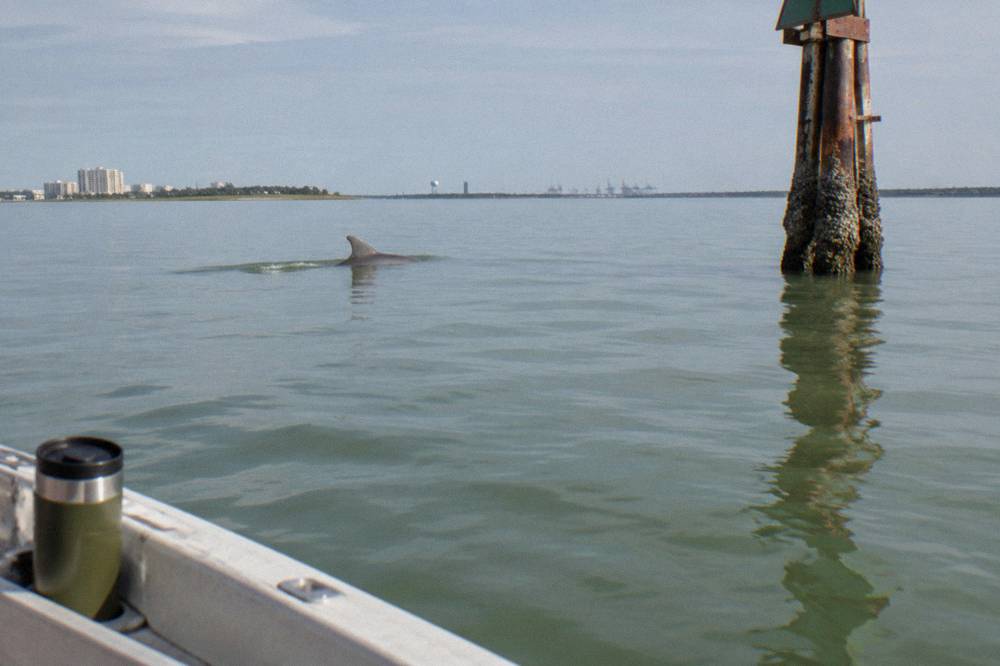
Dolphin cruises run in every month in Galveston, because the bay's bottlenose dolphins are resident year-round; activity is generally higher from May through October, and the cooler months concentrate animals near the lower bay, channels and passes, which is precisely where the harbor cruise routes go. Early morning and late afternoon departures are the most reliable time slots in any season. For a deeper look at how sightings shift through the year, our month-by-month guide to dolphin watching in Galveston covers which weeks tend to deliver the best shows.
The biology behind this is well studied. The Galveston Bay, East Bay and Trinity Bay stock of common bottlenose dolphins has a best available abundance estimate of 842 animals from NOAA's stock assessment work, and the Galveston Bay Dolphin Research Program has photo-identified more than 1,000 individuals across its catalog. In 2025 alone, the program's 39 boat surveys recorded 249 dolphin groups and counted 2,487 dolphins, completing its 300th survey. These are animals that live here, not a seasonal migration passing through.
Seasonally, researchers and tour operators report higher activity and abundance in the warmer months, roughly May through October, with sightings still possible in every month of the year. In cooler periods the animals tend to concentrate in the lower bay and around the mouths and passes, where prey holds in moving water. That maps neatly onto the standard Pier 21 cruise route, which runs a roughly 3-mile loop through the harbor and channel. No tour guarantees sightings, and honest operators say so; what the location does guarantee is that you are cruising through the dolphins' home range.
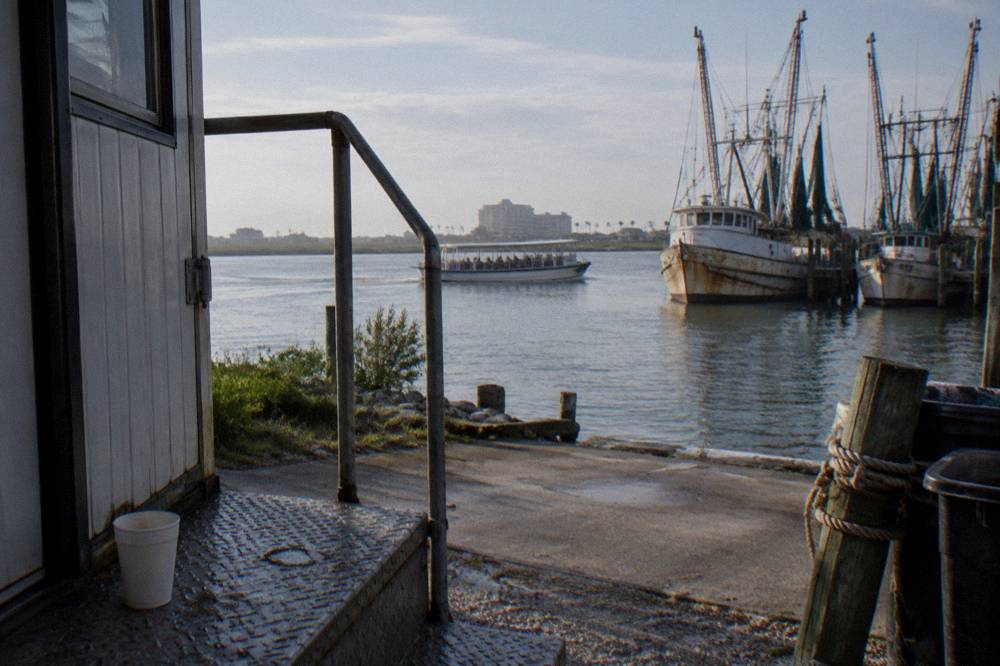
For planning, pair the season with the right product. In summer heat, a short covered-boat cruise beats a long open deck: the featured Baywatch Pier 21 cruise runs 40 to 45 minutes from $34.86 per person, and the naturalist-led 45-minute version from $32 adds a guide who explains what the animals are doing. In the cooler shoulder months, the 45-minute history cruise with dolphins, from $43.57, adds harbor history when the harbor itself is the attraction. And if you want the animals with almost no commitment, the Galveston to Bolivar ferry is a toll-free TxDOT service that runs 24 hours a day, and dolphins are frequently reported riding its wake; our Galveston to Bolivar ferry guide covers how to ride it well.
The research program behind those dolphin numbers is worth a look for anyone curious about what is actually in the bay; the Galveston Bay Dolphin Research Program publishes its survey work and photo-ID catalog publicly.
Shoulder Season Or Summer: Which Is Better For Your Trip?
Shoulder season wins for most trip types: October to November and March to April deliver warm air, drier skies than late summer, thinner crowds, and lower rates, while summer wins only where warm-water swimming, peak events and maximum dolphin activity are the priority. A family that wants beach time may still rationally choose July; a couple built around harbor cruises and the historic district should not.
The honest comparison is about what you give up in each direction. Summer's argument is the water: sea temperatures peak in the mid 80s, every beach amenity is fully open, and dolphin activity sits in its higher band. The cost is heat in the upper 80s and 90s with heavy humidity, the year's biggest crowds, peak lodging rates, and the heart of hurricane season. Shoulder season's argument is balance: October water is still warm from the summer, November air is mild, March and April warm steadily, and crowds and prices sit well under their summer peaks. The cost is that nothing is at its absolute peak; the water cools through November, and spring weather is more variable.
| Trip Type | Best Window | Why |
|---|---|---|
| Beach and swimming focus | June to September | Warmest water of the year, full beach season |
| Dolphin cruise focus | May to October, early or late departures | Higher seasonal activity, comfortable boat time |
| Historic district and walking | March to April, October to November | Mild air, low traffic, walkable all day |
| Budget trip | December to February | Lowest rates, quiet island, dolphins still present |
| Cruise port pre-embarkation day | Any month, mind embarkation traffic | Cruises sail year-round; see our port-day guide |
| Avoiding crowds above all | Late November, January to February | Quietest stretches of the year |
Winter deserves one more word, because it is the season mainland Texans overlook. Highs in the low 60s with sun are common, the Strand's shops and museums are open, and the harbor is at its calmest and least crowded. A winter dolphin cruise can be genuinely good: the animals concentrate in the channel, the boats are not full, and the covered vessels used by the Pier 21 operator keep the wind off. Pack layers and a windproof shell, and the ride is comfortable. For what to bring in each season, our what to wear on a dolphin boat tour piece covers it in detail.
How Should You Time A Galveston Day Trip?
For a day trip, the timing levers that matter are weekday versus weekend, morning versus afternoon, and cruise-ship traffic days: weekdays and mornings give you the shortest lines at ferries, parking and piers, while weekend afternoons in summer bring the island's heaviest congestion. Anchor the day around one timed activity, a morning dolphin cruise or a ferry ride, and let everything else flex around it. If one timed anchor sounds good but you're wondering whether a single day is enough, our guide to how many days you need in Galveston compares what one day, a weekend, and a longer stay can each cover.
Most day-trippers arrive from Houston, and the drive is short enough that a morning start is realistic. The single best structure is a morning dolphin cruise from Pier 21, since dolphin activity is most reliable in the first hours after sunrise on moving tides, followed by the Strand and lunch downtown, with the ferry or the Seawall in the afternoon. That order puts your most weather- and wildlife-dependent activity in the most favorable window and leaves the flexible items for later.
The ferry deserves its slot in any timing plan because it costs nothing. The TxDOT service is toll-free for both walk-ons and vehicles, runs 24 hours a day year-round, and crosses the 2.7-mile channel in about 18 to 20 minutes. Waits vary enormously: minimal off-peak, and 30 minutes to an hour or more at summer and holiday peaks, so a weekday morning ferry ride is a different experience from a Saturday afternoon one. The official TxDOT ferry page posts schedules and service notices, and it is the authority on any weather-related reduction.
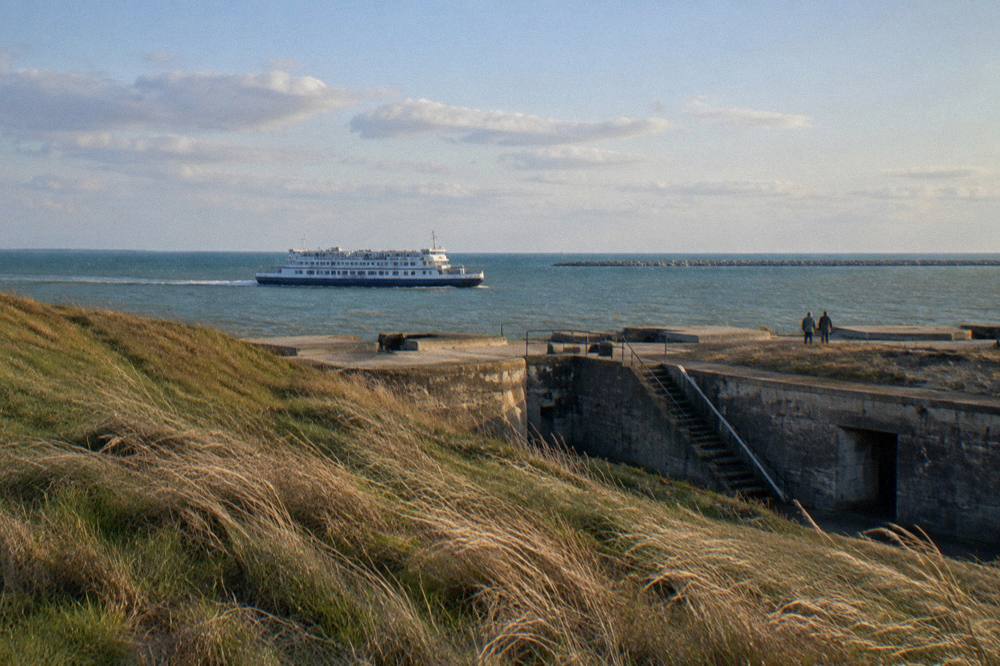
For shore-based dolphin watching as a free alternative or a backup, Seawolf Park on Pelican Island is one of the most reliable spots on the island, thanks to its position on the channel, and the Seawall jetties and piers produce sightings especially early in the morning. Our Seawolf Park and Pelican Island dolphin watching guide maps the spots. One seasonal note for any shore plan: red tide and sargassum conditions on Gulf beaches vary by week and by wind, and the Texas Parks and Wildlife Department is the agency that reports them; check its current status rather than assuming.
Common Questions About The Best Time To Visit Galveston
What is the best month to visit Galveston?
October is the strongest single month for most trips: highs near 80, water still warm from summer, post-Labor Day crowds, and dolphin activity still in its higher band. April runs a close second from the other direction. If your trip is dolphin-focused rather than beach-focused, any month from May to October works well.
Can you see dolphins in Galveston in winter?
Yes. The bay's bottlenose dolphins are resident year-round, and in cooler months they concentrate near the lower bay, channels and passes, which is where harbor cruises travel. Sightings are possible on any winter cruise, though no tour guarantees them.
When is hurricane season in Galveston?
June 1 through November 30, with peak activity typically from mid-August to late September. Fall travelers should book refundable activities and watch forecasts a few days ahead; tour operators announce any weather cancellations.
Is summer too hot for a Galveston dolphin cruise?
Not usually. Summer cruises run through the hottest months, and the covered vessels used on the Pier 21 routes keep sun and wind manageable. A 40 to 45 minute cruise is short enough that heat is rarely a problem, though morning departures are cooler.
What is the cheapest time to visit Galveston?
December through February, when lodging rates hit their lows and the island is quietest. Winter highs mostly sit in the low 60s, cool for swimming but fine for cruises, the Strand and the ferry.
Do I need to book a dolphin cruise in advance?
In shoulder and winter months, a day or two ahead is usually enough. In summer, on holiday weekends and on cruise embarkation days, booking ahead is wise since boats fill. Every cruise on this site's roster carries free cancellation, so early booking carries little risk.
Whether your window is an October morning with warm water and thin crowds, a July afternoon with the bay at full energy, or a quiet February weekday when the boats are half empty, the dolphins are in the channel. The featured Pier 21 cruise and its alternatives run year-round, and the timing advice on this page, from Galveston Dolphin Tours, is built to help you pick the day the island is at its best for you.