What Month Is Best For Dolphin Watching?
The honest month-by-month answer for dolphin watching in Galveston, Texas: sightings happen year-round, activity runs higher from May to October, and time of day matters as much as the calendar.
What Month Is Best For Dolphin Watching?
There is no single best month for dolphin watching in Galveston, Texas, because sightings are possible in every month of the year. That said, dolphin activity in Galveston Bay runs higher roughly from May through October, when warmer water concentrates fish and brings more dolphins, including mothers with calves, into the harbor and channels. If a visitor has to pick one window, early fall, September and October, pairs that elevated activity with calmer weather and thinner crowds than midsummer. If you're weighing whether the island deserves a trip at all, our honest take on whether Galveston is worth visiting covers what it does well and where it falls short.
The question sounds simple, and most search results answer it with a single confident month. The real answer for Galveston is more useful: the population of common bottlenose dolphins in Galveston Bay does not leave in winter, it shifts. Researchers with the Galveston Bay Dolphin Research Program have cataloged over 1,000 individual dolphins by dorsal fin photographs, and their survey work shows animals present in the bay across all seasons. What changes month to month is where the dolphins are, how many are near the harbor, and how active they are at the surface, where a tour boat can find them.
That matters for planning. A dolphin cruise in February is not a wasted ticket; it is a different trip, often with fewer boats on the water and dolphins concentrated in the deeper, warmer channels near the harbor mouth and the ferry lane. A cruise in July is a different trip again: more dolphins, more surface activity, more calves, and also more heat, more humidity, and more competition for seats. This article walks through what each part of the year actually delivers, based on the research and operator records available, so a reader can match the month to what they want from the trip.
Why Warmer Months Bring More Dolphin Activity
From about May through October, Galveston Bay holds its highest seasonal dolphin activity. Warmer water temperatures, roughly matching the Gulf's summer range, concentrate baitfish in the harbor, channels, and passes, and the dolphins follow the food. Survey data and operator reports both describe more pods, more surface feeding, and more mother-calf pairs during these months than in the cooler half of the year.
The biology drives the calendar. Bottlenose dolphins in Galveston Bay feed heavily on the fish that gather in warm, productive water, and the bay's surface temperatures climb through spring into the mid-80s by late summer. When prey is abundant and close to the surface, dolphins spend more time where a 45-minute harbor cruise can reach them: the ship channel edges, the pier lines, the ferry route. The Galveston Bay Dolphin Research Program's 2025 field year alone logged 39 boat surveys covering 249 dolphin groups and 2,487 individual dolphins counted, a scale of activity that reflects how many animals move through these waters during the productive part of the year.
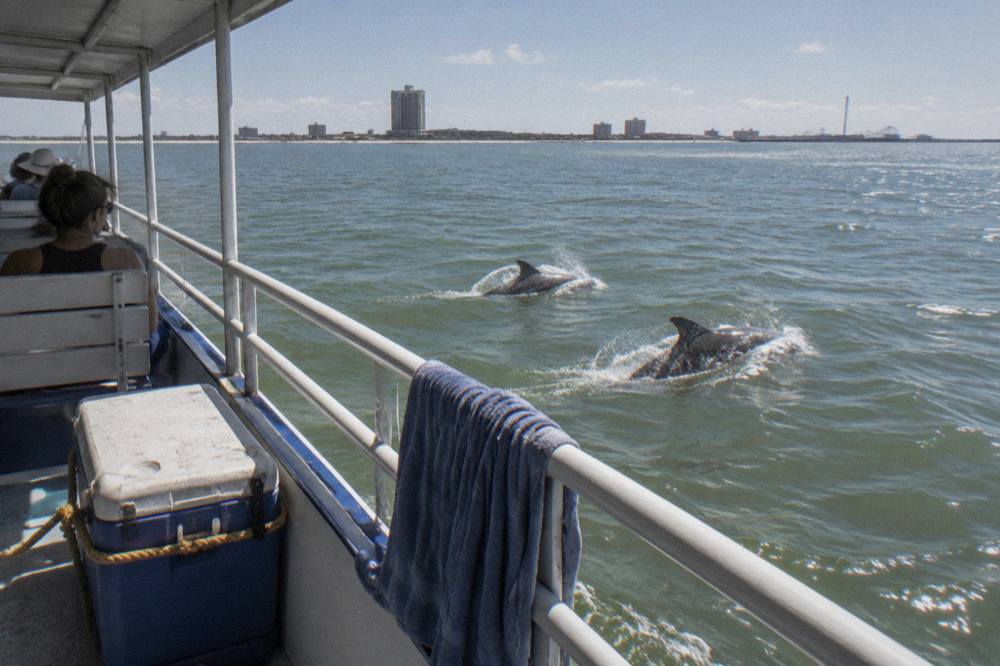
Calves are a big part of the warm-season appeal. Mother-calf pairs are documented in the bay's survey data, and summer and early fall are when guests most often report seeing small dolphins staying close to an adult. For families choosing a month, that is the window with the best odds of the sighting that kids remember: a calf rolling beside its mother in the ferry wake or alongside a slow-moving tour boat.
It is worth being precise about what "more activity" does not mean. It does not mean guaranteed sightings. No tour in Galveston guarantees dolphins, because they are wild animals that come and go on their own schedule, and the operators here are honest about that. A higher-activity month raises the odds; it does not cash them in. Readers who want the full picture on that point can read the companion piece on whether dolphin tours guarantee sightings.
Can You See Dolphins In Galveston In Winter?
Yes, dolphins are seen in Galveston through the winter months, roughly December through February. The animals do not migrate away; the resident stock shifts toward the lower bay, the harbor mouth, the passes, and the ferry lane, where deeper water holds steadier temperatures and fish remain available. Winter cruises run, sightings are reported regularly, and the odds are real, just more location-dependent than in summer.
The NOAA Fisheries stock assessment for the Galveston Bay, East Bay, and Trinity Bay stock actually used a winter survey, January 2016, as its best abundance estimate: 842 animals, with a minimum population estimate of 787. That is a quiet, technical fact with a loud implication for winter travelers. The federal government's best count of this dolphin stock comes from photo identification work done in the coldest month of the year. The dolphins were not just present in January; they were present in numbers large enough and predictable enough to build a population estimate around.
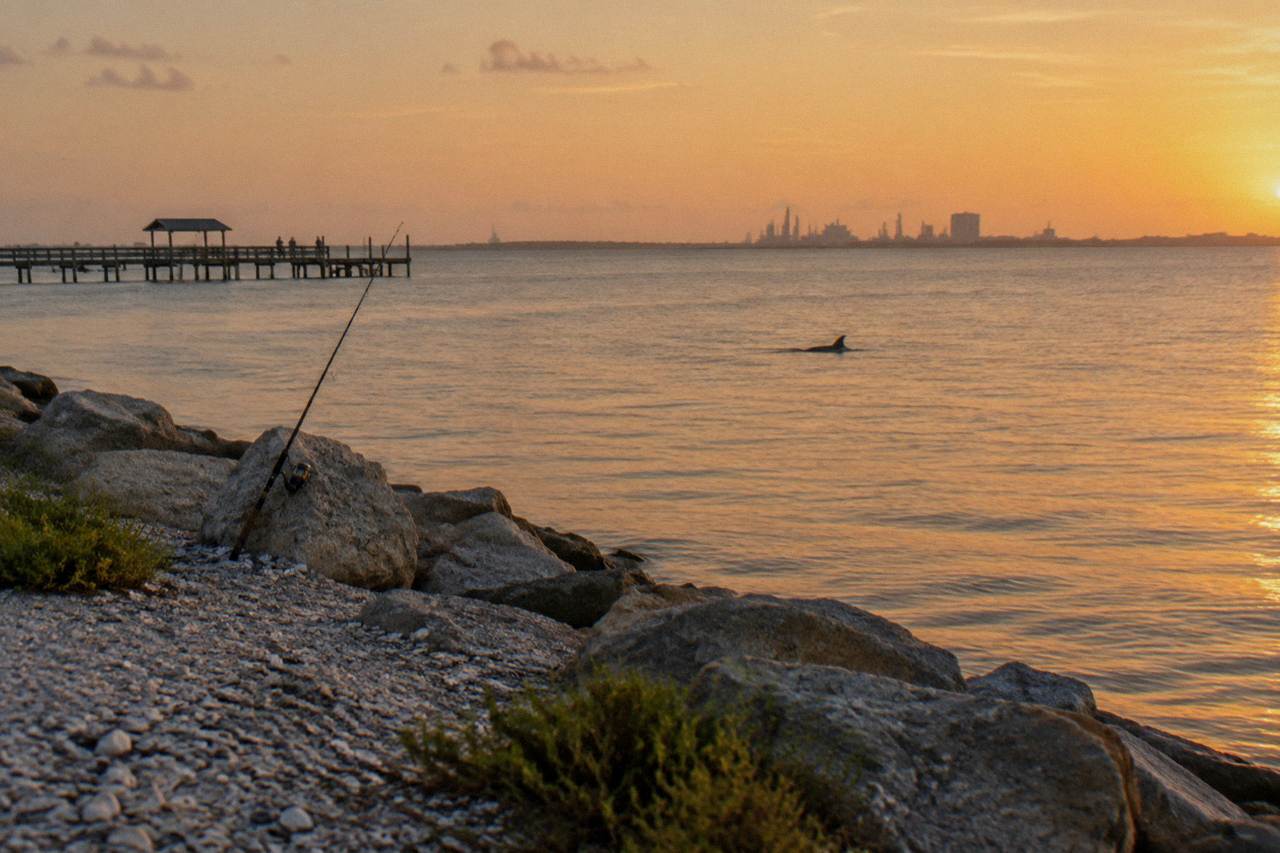
Winter watching in Galveston rewards a slightly different strategy. Because the animals concentrate near the harbor, the ship channel, and the Bolivar ferry route, the shorter harbor-based cruises tend to be the right product for the season, and the free shore spots, Seawolf Park on Pelican Island and the ferry crossing itself, hold up well. A winter visitor who rides the ferry as a walk-on passenger has a real chance of dolphins in the wake without spending a dollar, a point covered in detail in the guide to the Galveston to Bolivar ferry.
The trade-offs are practical, not biological. Winter air temperatures in Galveston average lows in the upper 40s to low 50s Fahrenheit and highs in the low 60s, so a boat ride is a jacket experience rather than a sunscreen one. Crowds are thinner, and the water is calm more often than in the windy spring. For a traveler who wants a quiet harbor, a covered boat, and a fair chance of dolphins, January and February are underrated months. The deeper dive on this is in can you see dolphins in Galveston in winter.
What Time Of Day Matters As Much As The Month
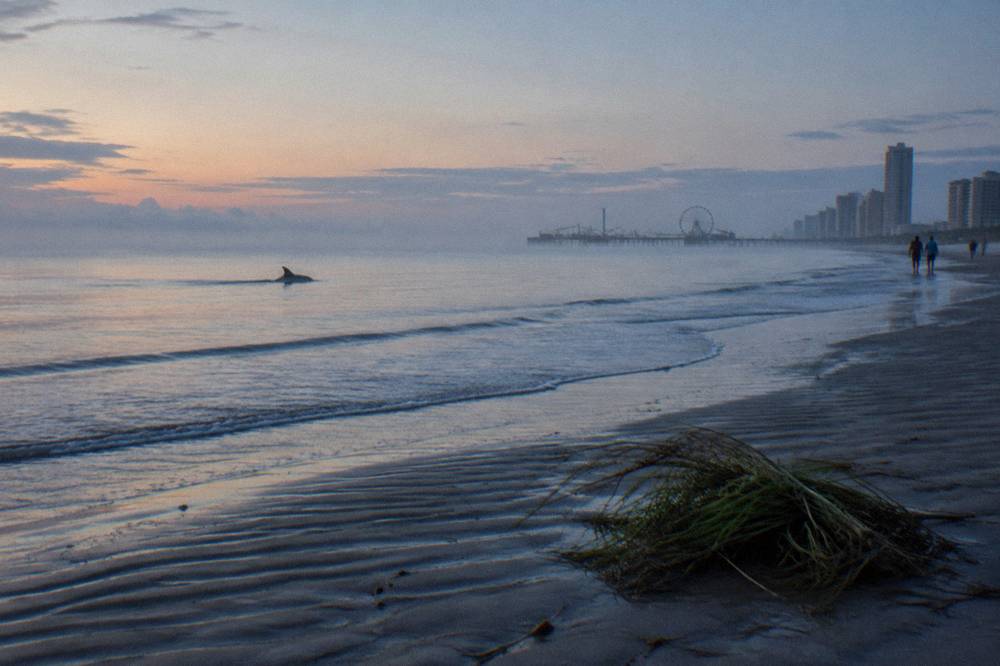
Early morning and late afternoon are the most reliable times of day for dolphin sightings in Galveston, in any month. Dolphins feed most actively in the first hours after sunrise and again toward evening, especially when the tide is moving rather than slack. A 9 a.m. departure in February can outperform a 2 p.m. departure in July, because a moving tide with feeding fish beats a warm calendar date with still water.
This is the detail that separates a good answer from a lazy one. Plenty of advice stops at "go in summer." But the researchers and operators who spend the most time on this water consistently point to the tidal clock over the wall calendar. Moving tides concentrate prey fish, and concentrated prey draws dolphins into the channels and harbor edges where tours operate. Slack tide, the still water between movements, scatters the feeding and the sightings with it.
The practical takeaway is to book the earliest or latest departure the season offers. In summer, that also solves the heat problem: a morning cruise avoids the midday Gulf humidity that can wear down kids and older guests. In winter, midday is actually the comfortable slot, since temperatures peak in the early afternoon, so the calculus flips. There is no single rule that beats checking the tide table for the date of the trip and pairing it with the first or last departure of the day.
How The Dolphin Population Shifts Through The Year
Galveston Bay's dolphins split into residents, seasonal users, and transients, and the mix changes with the seasons. Research in the upper bay found roughly 43 percent of identified dolphins were year-round or long-term seasonal residents, about 32 percent transients, and about 25 percent short-term users. In practice, that means the bay never empties of dolphins, but the number near the harbor rises in the warm months as seasonal animals move in.
The Galveston Bay Dolphin Research Program, a partnership involving the Galveston Bay Foundation and university researchers, maintains the catalog of over 1,000 individual dolphins identified by the nicks and notches in their dorsal fins. That photo identification work is what allows statements about residency to be made at all: a dolphin photographed in upper Galveston Bay in January and again in July is demonstrably a resident; one photographed once and never again is a transient passing through. The program's public pages at galvestonbaydolphin.org describe this work in plain language, and they are the best primary source for anyone curious about the animals behind the sightings. The wider set of guides lives on Galveston Dolphin Tours.
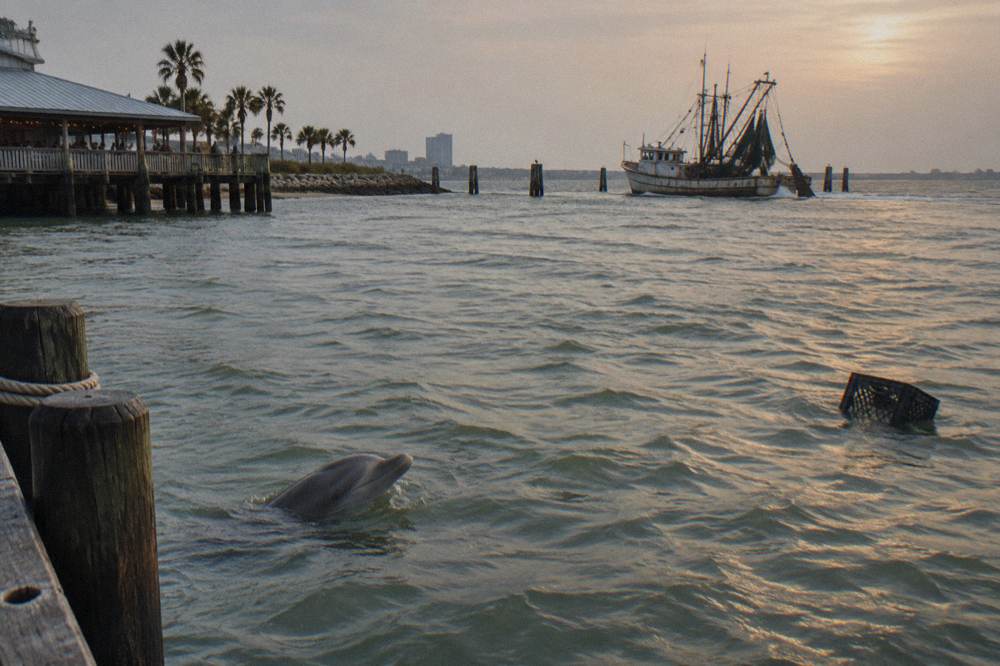
For a visitor choosing a month, the population structure explains a pattern that otherwise looks contradictory. Winter tours do find dolphins, because the residents are there. Summer tours find more dolphins, because the residents are joined by seasonal visitors and the whole population is feeding harder in warm water. And behavior changes too: bow riding, wake riding behind the ferry, and following shrimp trawlers for easy meals are all documented behaviors that guests are more likely to witness when activity is high.
The month-by-month picture, drawn from the research and operator experience rather than guesswork, looks like this:
| Months | Dolphin activity | What to expect on the water |
|---|---|---|
| March to April | Warming, building | Activity picks up as water temperatures rise; spring break crowds are the main obstacle |
| May to June | High | Strong feeding activity, first reliable calf sightings, warm but not peak heat |
| July to August | Peak activity, peak heat | Most pods and surface action, but humid midday rides and the busiest tour schedules |
| September to October | High, calming | Elevated activity continues with cooler air, lighter crowds, and calmer mornings; the best overall balance |
| November to February | Present, concentrated | Residents hold near the harbor, channel, and ferry lane; quieter boats and cooler air |
Planning Around Galveston Weather And Hurricane Season
June through November is Atlantic hurricane season, and the peak usually falls from mid-August to late September, so summer and early fall dolphin trips carry a small but real cancellation risk from tropical systems. Operators cancel for safety when conditions warrant, and every cruise on this site's roster offers free cancellation, so a weather scrubbed trip does not strand the money.
The honest framing is that weather, not dolphins, is the real variable in the late summer months. A September cruise has excellent dolphin odds and a real chance of a windy day with choppy bay water, because the National Weather Service office for Houston and Galveston frequently posts small craft advisories when northeast winds push 15 to 20 knots. Operators watch those forecasts and will reschedule or refund rather than run an uncomfortable or unsafe trip. The full mechanics of that are covered in the guide to Galveston weather and boat tour cancellations.
Shoulder seasons are where the planning math works best. October and November, and again March and April, are the stretches when Galveston is warm without being at its most humid, crowds are moderate, and the dolphin activity is either still high (fall) or climbing (spring). Visitors weighing the whole island, not just the boat, can pair this with the broader guide to the best time to visit Galveston.
One seasonal note that belongs here rather than anywhere else: red tide and sargassum conditions on the beaches change week to week and are announced by Texas Parks and Wildlife and federal forecasters, not by tour operators. A dolphin cruise runs in the harbor and bay, which is a different water body from the beach surf, so a beach condition does not automatically scrub a boat trip. Check the official status pages rather than assuming, and never treat a blog post, this one included, as a live conditions report.
Free Ways To Scout The Season Before You Book
The Galveston to Bolivar ferry is a toll-free service run by TxDOT, and dolphins are frequently reported from the crossing, so a free ride is a legitimate way to test the waters before paying for a cruise. Seawolf Park on Pelican Island and the Seawall jetties are the other reliable free watching spots. Neither guarantees dolphins, but both cost nothing and both are mentioned again and again in local reports.
The ferry deserves its reputation. It runs 24 hours a day, year-round, weather permitting, with one vessel overnight and more added as traffic demands, and the crossing takes about 20 minutes over roughly 2.7 miles of channel where dolphins are known to ride the wake. TxDOT's official ferry page posts the schedule details and the live webcams, and the ferry's own social account posts dolphin sightings from the crossing regularly. A visitor with a free afternoon can ride across and back, watch for dorsal fins off the rail, and decide from evidence rather than advertising whether to buy a ticket.
Seawolf Park, on Pelican Island next to the ferry channel, is the other free standout. Local reporting and the research community's own land-based monitoring both treat it as one of the most dependable shore spots on the island, because the channel location funnels boat traffic and dolphins past a single watchable point. The guide to Seawolf Park and Pelican Island dolphin watching covers it in full.
There is a limit to this scouting strategy, and it should be stated plainly. A free sighting from a ferry deck or a park pier is not the same experience as a narrated cruise that slows down, holds position, and explains what the animals are doing. The shore spots answer the question "are the dolphins around this week?" The cruise answers "what are these animals and why are they doing that?" Many visitors do both in one day: a morning ferry ride to read the season, an afternoon cruise to actually meet it.
Which Tour Fits The Month You Pick
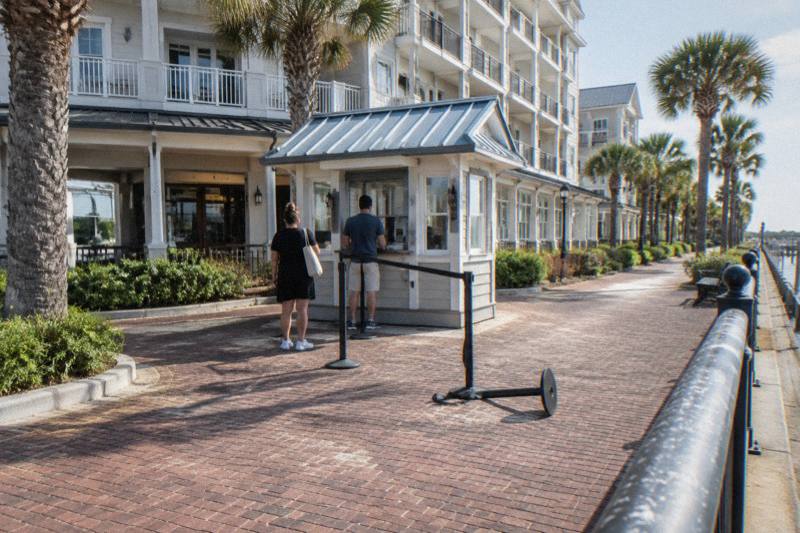
The month choice shapes which tour format makes sense. In peak summer, the short, frequent harbor cruises from Pier 21 fit the heat and the crowds, with 40 to 45 minute run times that keep kids engaged. In winter and shoulder seasons, the longer narrated options, including the hour-long history cruise with dolphins possible, reward a slower pace and add context when surface activity is more intermittent.
The featured cruise on this site, the Baywatch Pier 21 dolphin cruise, runs 40 to 45 minutes from Galveston Harbor, from $34.86 per person, rated 4.9 across 2,628 reviews, with free cancellation and check-in at the kiosk 30 minutes before departure. That format works in every month, which is part of why it anchors the roster. A family visiting in July can take the morning departure, see the harbor, and be off the boat before the worst of the afternoon heat. The same family in November gets a quieter vessel and a covered ride if the north wind picks up.
Travelers who want a naturalist aboard rather than straight sightseeing have a specific option: the naturalist-led dolphin cruise, 45 minutes, from $32 per person, rated 4.8 from 282 reviews, wheelchair accessible with advance notice. In the high-activity months, a guide who can read the water and the animals adds the most value, because there is simply more behavior to explain. And for a budget-conscious month-picker, the Island Tours one-hour dolphin cruise from Katie's Seafood House runs from $29 per person, a different operator on a different part of the harbor, worth a look for anyone comparing prices; see the live listing for times.
A note on booking lead time, since the best months are also the busy ones. Summer weekends and holiday weeks fill the popular departure slots first, and the operators here run free-cancellation bookings, which makes an early reservation low risk. The full decision framework is in do I need to book a Galveston dolphin tour in advance.
Putting The Calendar Together
The best single answer, if a reader wants one: book September or October. Those months keep the elevated dolphin activity of the warm season while shedding the peak heat, the peak crowds, and most of the tropical-storm risk, and the early morning and late afternoon departures line up with the best feeding windows. May and June are a close second, and winter is a legitimate choice for travelers who value quiet boats and concentrated harbor sightings.
For readers who want the sighting odds maximized above all else, the formula is simple: pick a date between May and October, book the first or last departure of the day, and check the tide table for that morning. For readers who want the best overall Galveston day, not just the best dolphin odds, the fall shoulder season wins on the combined score, and spring break season, March, is the one warm-weather window where crowds can genuinely interfere with a good trip.
The last word belongs to honesty. Every figure in this article describes probability, not promise. The dolphins of Galveston Bay are wild, protected by federal law, and answer to tides and fish, not to calendars. The month a visitor chooses shifts the odds, and the time of day shifts them again, but the animals make the final call. That is also, fairly, part of the appeal: a sighting earned on a wild animal's terms is worth more than one staged on a schedule.
Common Questions About Dolphin Watching Months
What month is best for dolphin watching?
There is no single best month, because dolphins are present in Galveston Bay year-round, but activity runs higher roughly from May through October. If one window must be chosen, September and October combine elevated dolphin activity with cooler air, lighter crowds, and lower storm risk than midsummer.
Can you see dolphins in Galveston in winter?
Yes. The resident dolphin stock stays in the bay through winter, concentrated near the harbor, the ship channel, and the ferry lane. In fact, the federal abundance estimate for this stock was built from January survey data, which shows the animals are findable in the coldest month.
Do dolphin tours guarantee you will see dolphins?
No tour in Galveston guarantees sightings. Dolphins are wild animals protected under the Marine Mammal Protection Act, and no operator can promise them. Higher-activity months and early or late departures improve the odds, but the animals make their own schedules.
Is morning or afternoon better for a dolphin cruise?
Both edges of the day beat midday. The first hours after sunrise and the late afternoon align with active feeding, especially when the tide is moving rather than slack. In summer, morning also avoids the worst heat; in winter, midday is the most comfortable slot.
Does hurricane season affect dolphin tours?
It can. Hurricane season runs June 1 through November 30 with peak activity from mid-August to late September, and operators cancel or reschedule when weather conditions are unsafe. Every cruise on this site's roster offers free cancellation, so a weather-related change does not cost the booking.
Can you watch dolphins in Galveston for free?
Yes. The Galveston to Bolivar ferry is a toll-free TxDOT service and dolphins are frequently reported from the crossing, and Seawolf Park on Pelican Island is a reliable shore spot. Neither guarantees a sighting, but both cost nothing.