Swimming With Dolphins In Galveston: What Is Actually Legal
The short answer is no: swimming with wild dolphins is not legal in Galveston or anywhere else in United States waters, and no permitted wild swim program exists on the island. Here is what the Marine Mammal Protection Act actually says, what it prohibits, and the lawful ways to get near these animals instead.
Short answer
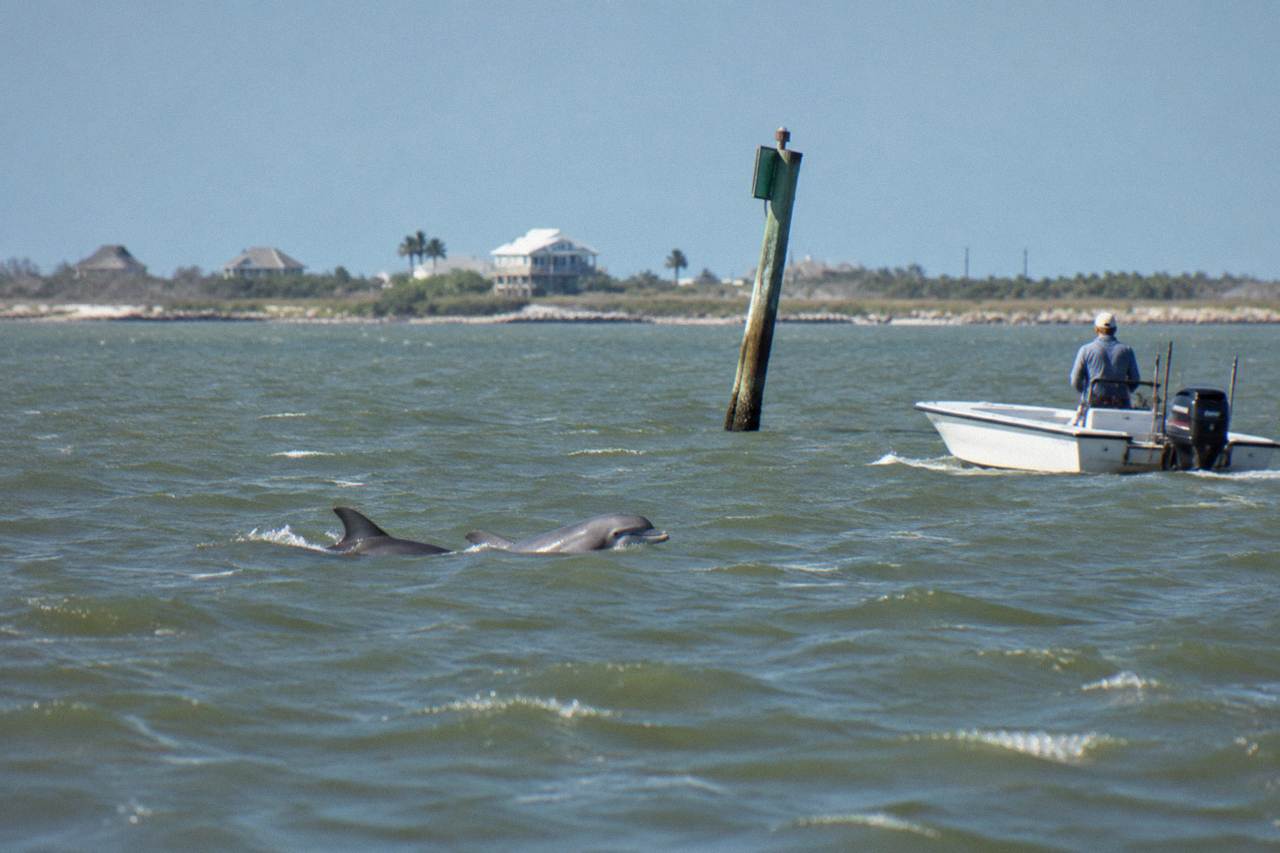
No. The Marine Mammal Protection Act makes it illegal to swim with, feed, touch or chase wild dolphins, with no permits issued for recreational swimming. NOAA advises staying at least 50 yards away from watercraft viewing. The legal alternative in Galveston is a guided dolphin cruise, from $29 to $34.86 per person.
Galveston's harbor holds one of the most accessible wild bottlenose dolphin populations on the Texas coast, and every week visitors ask some version of the same question: can I get in the water with them? The answer comes from federal law, not from any local operator's policy. The Marine Mammal Protection Act, enforced by NOAA, prohibits swimming with, feeding, touching or harassing wild dolphins in United States waters, and no exception exists for Galveston Bay. This guide explains what the law actually says, why the rules are written the way they are, what happens to people who ignore them, and the legal ways to get remarkably close to these animals on the water. If you're wondering what else shares that water, our guide to alligators in Galveston Bay explains where these freshwater reptiles actually live and how to spot them safely.
Is It Legal To Swim With Dolphins In Galveston?
No, swimming with wild dolphins is not legal in Galveston or anywhere else in United States waters. The Marine Mammal Protection Act prohibits swimming with, feeding, touching, chasing or harassing wild dolphins, and NOAA issues no permits for recreational interaction. No wild swim-with-dolphin program exists on Galveston Island, and any business offering one would be operating outside the law.
The confusion usually starts with captive facilities. Several vacation destinations in other countries, and a small number of American marine parks, run captive dolphin encounter programs where guests touch or swim with animals in tanks. Visitors who have done one of those, or seen it advertised, reasonably assume the same thing exists on the Texas coast. It does not. The dolphins in Galveston Bay are wild animals, and the law that protects them draws a hard line between watching and interacting.
The rule comes from the federal level, which means it applies in every bay, channel and shoreline in the country. NOAA's marine life viewing guidance is direct on the point: the agency does not support or authorize attempting to swim with, pet or touch wild dolphins, and the Marine Mammal Protection Act and Endangered Species Act allow no permits for recreational viewing or interaction. Texas state law adds no loophole. Whether you are on a boat, a kayak or a paddleboard, the same prohibition follows you onto the water.
That leaves a real question of degree. Watching dolphins from a vessel is not just legal, it is the foundation of Galveston's harbor tour economy. The line the law draws is between observation and pursuit, and it is a line every visitor can respect without giving up anything that makes the experience worthwhile. The rest of this guide is about staying on the right side of it.
Why Federal Law Keeps You 50 Yards From Wild Dolphins
NOAA's viewing guidance asks boaters to stay at least 50 yards from dolphins, roughly half a football field, and in some locations the minimum is 100 yards. The distance rule exists because close approaches change dolphin behavior: it disrupts feeding, separates mothers from calves and can push animals away from the habitat they need. Harassment under the law includes any act that disturbs them.
The 50-yard figure is not an arbitrary buffer. It comes from decades of observation of how dolphins respond to vessels, and the research community in Galveston Bay has contributed directly to that body of knowledge. The Galveston Bay Dolphin Research Program, a partnership involving the Galveston Bay Foundation and the University of Houston-Clear Lake, has run monthly photo-identification surveys in these waters since 2016, and its researchers document exactly how the local population uses the harbor, the ship channel and the bay's feeding grounds. Their work, summarized at the program's population page, shows a community of resident and transient animals that depends on predictable routines.
Close approach disrupts those routines. A mother with a calf that is repeatedly approached by swimmers or vessels may abandon a feeding area, and a dolphin that learns to associate people with food changes its foraging behavior in ways that shorten its life. That is why the feeding ban is absolute: NOAA states plainly that feeding a wild dolphin is harmful and illegal, full stop. A fed dolphin begins approaching boats, which raises its risk of propeller strikes and entanglement in fishing gear.
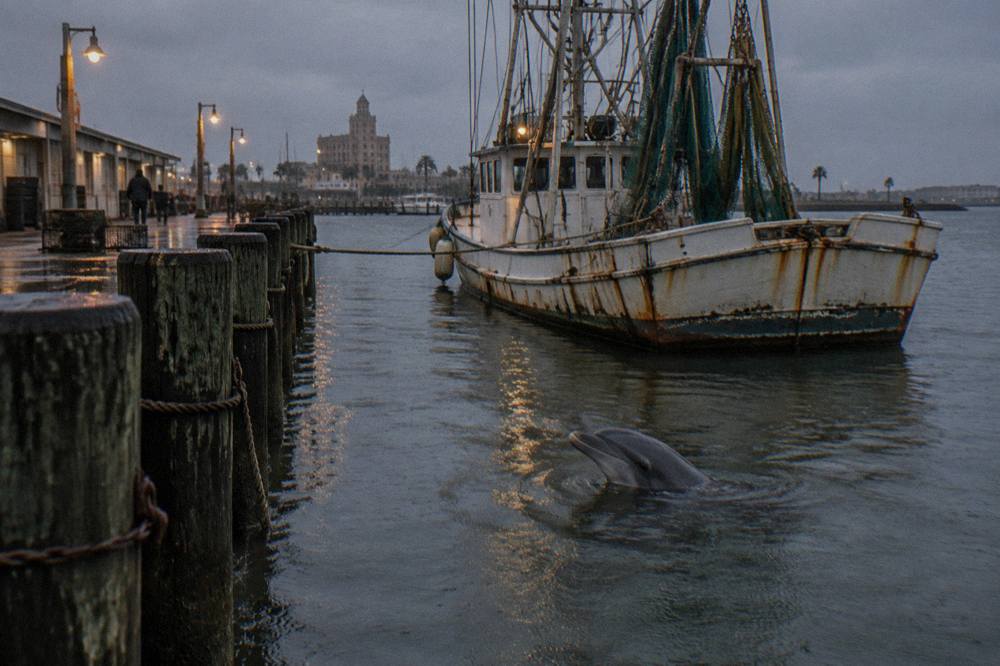
The rules are published on NOAA's official marine life viewing guidelines page, which is the primary source for every distance and conduct figure in this section. The guidance also covers what responsible viewing looks like from a boat: put the engine in neutral when dolphins are near, move away cautiously if the animals show disturbance, and never position a vessel so that a dolphin group is boxed in. Licensed tour captains in Galveston operate under these rules every day, which is one quiet argument for taking a guided cruise rather than piloting your own craft.
For visitors weighing their options on the water, three harbor cruises dominate the legal, well-run end of the market:
Each of those is a viewing cruise, not an interaction experience, and that distinction is the entire point of this guide. If you want a fuller comparison of the island's cruise options, including history-focused departures, our guide to Galveston boat tours compared walks through the differences in route, narration and price.
What The Law Actually Prohibits: Feeding, Touching, Chasing
The Marine Mammal Protection Act prohibits feeding, touching, swimming with, chasing and harassing wild dolphins, and it applies equally to swimmers, boaters, kayakers and people standing on a dock. Violations carry civil and criminal penalties, with fines that can reach $100,000 and possible jail time. No Galveston operator is licensed to offer contact with wild dolphins.
The word that carries the legal weight is harassment. Under the act, harassment means any act of pursuit, torment or annoyance that has the potential to injure a marine mammal or disrupt its behavioral patterns, including migration, breathing, nursing, breeding, feeding or sheltering. That definition is broad on purpose, and it covers conduct that many people would not think of as harmful. Reaching over a rail to touch a dolphin riding the bow wave is harassment. Tossing a fish to a dolphin hanging around a fishing pier is harassment. Getting in the water and swimming toward a pod is harassment, and it is also dangerous for the swimmer.
| Conduct in the water or from a boat | Legal status under federal law | What it does to the dolphin |
|---|---|---|
| Watching from a vessel at 50 yards or more | Legal and encouraged | No disruption to feeding or travel |
| Riding past dolphins with the engine in neutral | Legal, when done cautiously | Minimal disturbance |
| Feeding a wild dolphin any food | Illegal, always | Rewires foraging, draws animals to boats and props |
| Touching or petting a dolphin | Illegal | Habituation, stress, risk of injury to both parties |
| Swimming with or toward dolphins | Illegal | Disrupts nursing and resting, danger to the swimmer |
| Chasing or circling a pod in a vessel | Illegal | Separates groups, exhausts calves |
The penalties are not theoretical. NOAA's Office of Law Enforcement has pursued cases against swimmers and boaters in other Gulf and Atlantic locations for exactly the kinds of conduct a Galveston visitor might casually attempt, and the agency publicizes enforcement actions precisely because most violators simply did not know the rule. Ignorance is not a defense in this area of law, and the visitor who wades out toward a dolphin in the harbor channel is exposed to the same liability as a commercial operator.
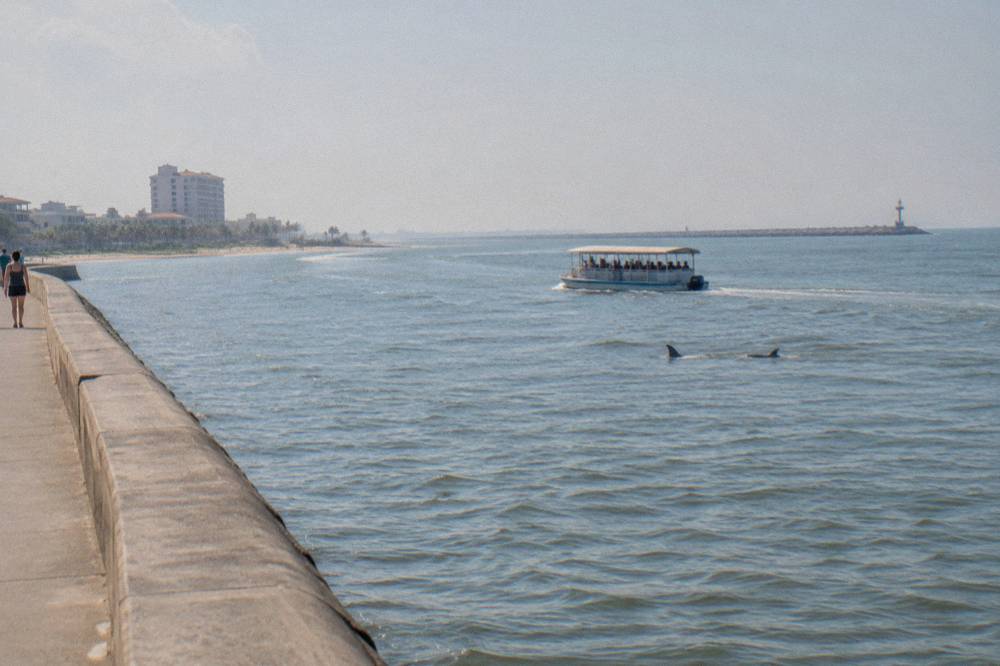
There is one more layer worth knowing. The law also protects the person. A wild bottlenose dolphin is an animal weighing several hundred pounds with sharp teeth and a strong tail fluke, and a habituated dolphin that expects food from people can become aggressive when the food does not appear. The injuries documented in human-dolphin interactions elsewhere, mostly involving fed animals, are the reason NOAA's guidance addresses swimmer safety as directly as animal welfare. Neither side of the encounter benefits from contact.
If the goal is simply to be near these animals, a lawful cruise does that job well, and the naturalist-led option from Pier 21 is the one that pairs dolphin watching with a guide who explains the biology as you go.
The Dolphins Of Galveston Bay: The Numbers Behind The Rule
Galveston Bay's dolphins are common bottlenose dolphins, the only cetacean species observed in the bay, and the population is substantial: NOAA's best abundance estimate for the Galveston Bay, East Bay and Trinity Bay stock is 842 animals, with a minimum estimate of 787. The Galveston Bay Dolphin Research Program has cataloged more than 1,000 individuals by dorsal fin photo identification. If you want to learn more about how these animals behave and where you're most likely to see them from shore or by boat, our guide to Galveston Bay's bottlenose dolphins covers all of that in detail.
Those figures come from serious science. The NOAA stock assessment used winter photo-identification capture-recapture surveys, and the research program's catalog, built from monthly surveys since 2016, distinguishes resident animals from transients by which individuals reappear across seasons. In the upper bay alone, surveys identified 442 distinct dolphins, with roughly 43 percent behaving as year-round or seasonal residents. A population that size, living in an industrialized harbor crossed by a shipping channel, is exactly the kind of community that distance rules are designed to protect.
The program's recent field year gives a sense of scale. In 2025 its researchers completed 39 boat-based surveys, recorded data on 249 dolphin groups and counted 2,487 individual dolphins across the year, while completing their 300th survey overall. That is a small research fleet observing a large and active population, and the data feeds directly into the federal management decisions that set the rules this guide describes.
None of this makes the animals fragile in the way the word is usually used. A wild dolphin population of this size in a working harbor is a conservation success story. But it is a success that depends on the animals keeping their distance from people, and every swimmer who closes that gap undoes a little of what the researchers and the law have built. Our guide to the bottlenose dolphins of Galveston Bay goes deeper into the biology if you want the full picture.
The Lawful Way To Get Close: A Guided Dolphin Cruise
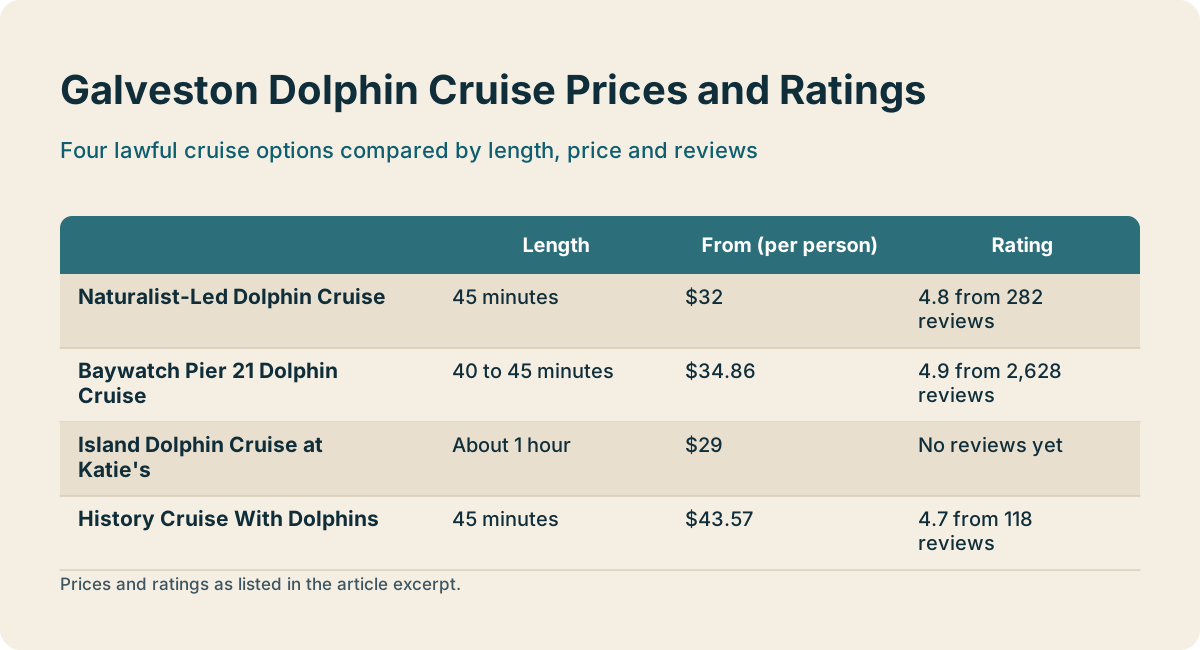
A guided dolphin cruise is the legal close encounter, and in Galveston it is a mature, well-reviewed category: the naturalist-led cruise from Pier 21 runs about 45 minutes from $32 per person with a 4.8 rating from 282 reviews, and the flagship Baywatch Pier 21 cruise runs 40 to 45 minutes from $34.86 per person with a 4.9 rating from 2,628 reviews. Both include free cancellation.
The reason a cruise counts as getting close is that the dolphins come to the boat. Bow riding, the behavior in which dolphins surf the pressure wave at a vessel's front, is a documented and voluntary behavior in Galveston Bay, and it is the same behavior that makes the crossing on the state ferry a reliable free sighting spot. A boat moving at tour speed in the harbor channel is interesting to dolphins in a way a swimmer never is, and the animals approach on their own terms, stay as long as they like and leave when they choose. Every element of that interaction is lawful observation.
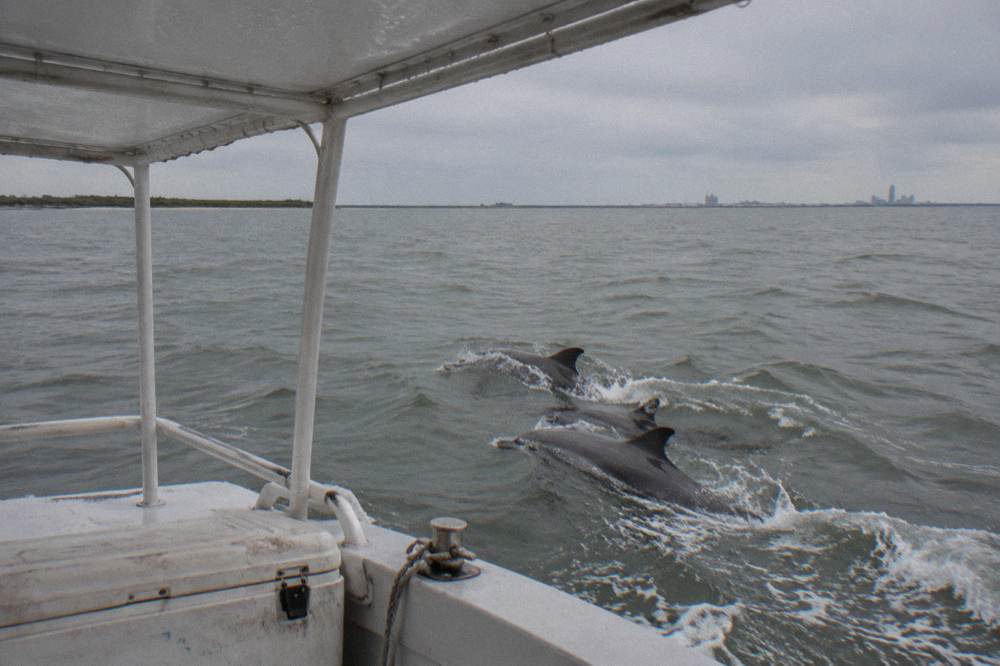
The naturalist-led cruise is the pick for visitors whose interest runs past the sighting itself. A captain and a naturalist share the work, the boat has an on-board restroom, and the listing notes wheelchair accessibility with advance notice, which is worth confirming when you book. At about 45 minutes from $32 per person, it is the strongest combination of price, guide quality and accessibility on the roster.
The same operator runs a history-focused variant that spends its 45 minutes on Galveston's maritime past with dolphins as a running sideshow, rated 4.7 from 118 reviews and priced from $43.57 per person, with a restroom on board. And a separate operator, Island Tours of Galveston, runs a one-hour cruise from a check-in trailer outside Katie's Seafood House on Wharf Road, from $29 per person, which is the lowest entry price in the category; that listing has no reviews yet, so there is no rating to report.
| Cruise | Length | From (per person) | Rating | What it adds |
|---|---|---|---|---|
| Naturalist-Led Dolphin Cruise | 45 minutes | $32 | 4.8 from 282 reviews | Captain plus naturalist, restroom, accessible with notice |
| Baywatch Pier 21 Dolphin Cruise | 40 to 45 minutes | $34.86 | 4.9 from 2,628 reviews | The flagship harbor cruise, biggest review pool |
| Island Dolphin Cruise at Katie's | About 1 hour | $29 | No reviews yet | Longest ride, lowest price, separate operator |
| History Cruise With Dolphins | 45 minutes | $43.57 | 4.7 from 118 reviews | Harbor history narration and restroom included |
None of these cruises promises a sighting, and that honesty is itself a sign of a lawful operation. Wild dolphins move on their own schedule, and the harbor's tour captains are candid that they find dolphins on the overwhelming majority of runs but never on all of them. Our article on whether dolphin tours guarantee sightings covers exactly what operators can and cannot promise.
Is It Safe To Swim With Dolphins While Pregnant? The Myth, Answered
The pregnancy question circulates because captive dolphin-encounter programs abroad have marketed swims for expectant mothers, sometimes claiming therapeutic effects. No such claim survives contact with United States law or with the scientific record: swimming with wild dolphins is illegal here regardless of pregnancy, and no medical benefit from dolphin contact has been established by the research community. The lawful answer is a boat cruise.
The myth deserves a careful answer because people arrive at it honestly. Dolphin-assisted therapy has been promoted for decades, and some of that promotion specifically targeted pregnant women, with claims about the animals' echolocation or sounds. The scientific literature has not supported a therapeutic effect, and reviews of the field have repeatedly found that the studies behind the claims are small, poorly controlled and unpublished in rigorous form. This guide makes no medical claim in either direction beyond that: the research has not established a benefit.
What can be said firmly is that the legal situation is unambiguous. A pregnant visitor to Galveston cannot lawfully swim with wild dolphins, and no local operator could offer it even if demand existed. The practical alternative is also the better one for an expectant mother planning a Galveston trip: a seated, covered cruise with a restroom on board, a 45-minute runtime and free cancellation if the day turns rough. The naturalist-led cruise checks every one of those boxes, and the listing describes wheelchair accessibility with advance notice, which suggests boarding can be managed with care.
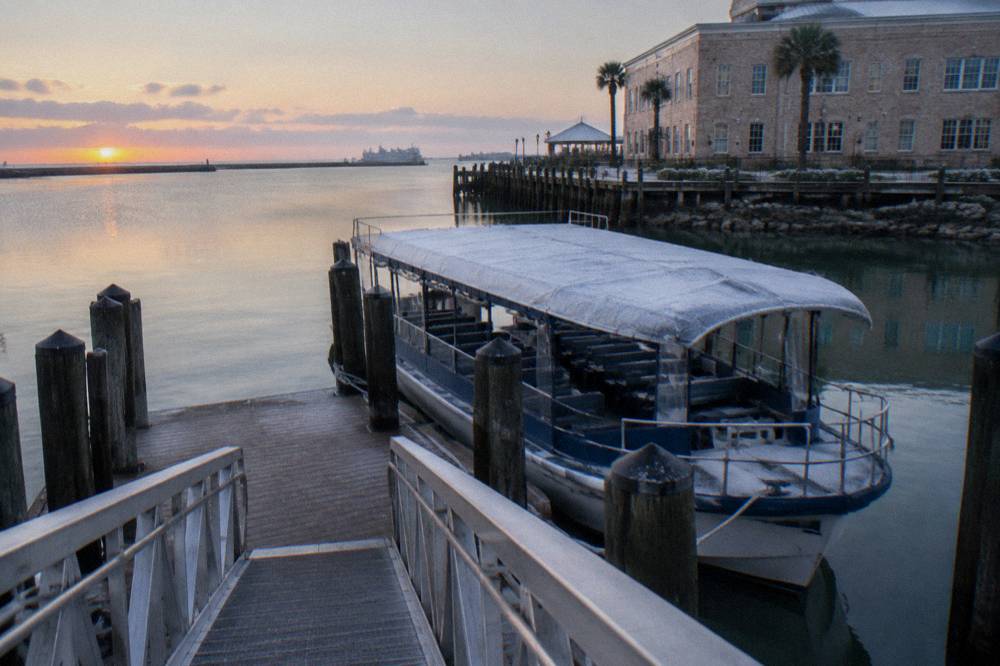
There is also a straightforward safety point that applies to everyone. Open-water swimming in later pregnancy is a question for a doctor, and a wild dolphin is nothing if not unpredictable. A boat ride with handrails, shade and a short runtime removes nearly all of the variables. Visitors planning a trip around a pregnancy may also find our guide to what to wear on a dolphin boat tour useful, since sun and spray are the real discomforts on the water.
Free And Legal Ways To Watch Dolphins From Shore Or Water
The cheapest lawful dolphin watching in Galveston costs nothing: the state ferry between Galveston and Bolivar is toll-free, runs around the clock, and dolphins frequently ride its wake. Seawolf Park on Pelican Island and the bay side of Bolivar Peninsula are reliable shore spots, and the Seawall jetties produce early-morning sightings. Paddlers must still keep 50 yards.
The ferry deserves its reputation. The Texas Department of Transportation operates the Galveston-Port Bolivar route as a free service, with one vessel running overnight and additional boats added through the day, and the roughly 20-minute crossing crosses the channel where dolphins feed and travel. Passenger reports and the ferry's own social account note sightings often enough that regular riders treat a dolphin escort as a normal feature of the ride. No sighting is ever guaranteed with wild animals, but the ferry lane is about as reliable as free viewing gets anywhere on the Texas coast. Our full guide to the Galveston to Bolivar ferry covers schedules, parking and what to expect at the terminals.
Shore viewing works because the dolphins come to fixed geography. Seawolf Park on Pelican Island sits beside the ship channel, and observers there report sightings so consistently that researchers use the site for land-based monitoring. The bay side of the Bolivar Peninsula, especially near elevated decks and kayak launches, offers better feeding action than the surf side. Early morning on an incoming tide is the pattern that repeats across all of these spots, which matches what the research data shows about when the animals feed.
| Free viewing spot | What you watch from | Why dolphins show up | Best timing |
|---|---|---|---|
| Galveston to Bolivar ferry | Deck of a free state ferry | Dolphins ride the wake in the channel | Daytime crossings, any tide |
| Seawolf Park, Pelican Island | Pier and shoreline beside the ship channel | Feeding and travel corridor | Early morning, incoming tide |
| Bolivar Peninsula bay side | Elevated decks and shoreline | Calmer feeding water than the surf side | Early morning and late afternoon |
| Seawall jetties and piers | Rocks and pier rails near passes | Dolphins patrol the jetty edges | First hours after sunrise |
Paddling deserves its own word of caution. A kayak or paddleboard is a wonderful, quiet way to be on the water, and the small-group sea kayak tour of the harbor, limited to five participants and booked one to two weeks ahead at $266 per person, is the structured version. But the 50-yard rule applies to paddlers exactly as it applies to motorboats, and a kayak is slow enough that a curious dolphin will close the distance itself if it wants to. The correct response is to hold position and let the animal pass, not to paddle toward it.
The same principle governs every free spot: let the dolphins control the encounter. A viewer who stays put, keeps noise down and lets the animals pass on their own terms is watching legally, whether from a ferry rail, a fishing pier or a beach chair. Our roundup of free things to do in Galveston collects the full list of no-cost viewing locations.
How To Plan A Responsible Dolphin Trip To Galveston
Planning around the law is simple: book a viewing cruise or pick a shore spot, time the trip for early morning or late afternoon in the warmer months, and keep every interaction passive. Booking a day ahead is usually enough for the harbor cruises, though weekend and holiday sailings fill first. Free cancellation on the major listings makes a tentative booking low-risk.
The timing advice comes from the sighting data rather than from marketing. Dolphin activity in the bay runs higher roughly May through October, and within any given day the first hours after sunrise and the late afternoon are the most productive, especially when the tide is moving rather than slack. A cruise booked for a summer morning hits all three patterns at once. Winter trips still see dolphins, since the population is resident year-round, but the animals concentrate in the lower bay and channel mouths in the cool months, which is one reason the harbor routes stay productive in every season. Our guide to the best time to see dolphins in Galveston breaks the seasons down in detail.
Booking logistics on this island are mild. The harbor cruises run multiple departures a day from two locations, Pier 21 on the harbor side and the trailer outside Katie's Seafood House on Wharf Road, and the practical advice is to reserve ahead for a weekend and check in at the kiosk 30 minutes before departure for the Pier 21 sailings. If your dates are tied to a cruise ship departure, our guide to the day before your sailing addresses the timing question directly, since a 45-minute harbor cruise slots neatly into an embarkation eve.
One last planning note on the law itself. Nothing in this guide's legal summary requires a visitor to become an expert on the Marine Mammal Protection Act. The working rule is a single sentence: watch, never pursue, never feed, never touch. Every captain, naturalist and kayak guide on the island operates inside that sentence already, so the easiest way to stay legal is simply to follow the tour. For the broader picture of what the island offers around the dolphins, our overview of things to do on Galveston Island is the place to start, and the homepage comparison on Galveston Dolphin Tours sorts the cruise options by question rather than by operator.
Common Questions About Swimming With Dolphins In Galveston
Can you swim with dolphins in Galveston, Texas?
No. The Marine Mammal Protection Act prohibits swimming with, feeding, touching or chasing wild dolphins in United States waters, and NOAA authorizes no recreational swim programs. No wild swim-with-dolphin experience exists in Galveston.
How close can you legally get to a wild dolphin?
NOAA's guidance asks viewers to stay at least 50 yards from dolphins when viewing from watercraft, about half a football field, and in some locations the minimum is 100 yards. From shore you may watch from any distance the dolphins themselves choose to keep.
Is it illegal to feed a dolphin in Texas?
Yes. Feeding wild dolphins is illegal under federal law everywhere in United States waters, including Texas. It is one of the most heavily enforced provisions because fed dolphins change their foraging behavior and begin approaching boats.
Are there captive dolphin swim programs in Galveston?
No. Galveston has no captive dolphin facility and no swim-with program of any kind. The island's dolphin experiences are all wild-viewing cruises and shore spots.
Is it safe to swim with dolphins while pregnant?
The question is moot in Galveston because swimming with wild dolphins is illegal regardless of pregnancy. No medical benefit from dolphin contact has been established by research. A covered cruise with a restroom on board is the practical alternative.
What is the best legal way to see dolphins in Galveston?
A guided harbor cruise. The naturalist-led cruise from Pier 21 runs about 45 minutes from $32 per person, rated 4.8 from 282 reviews, and the free Galveston to Bolivar ferry is a reliable no-cost option.