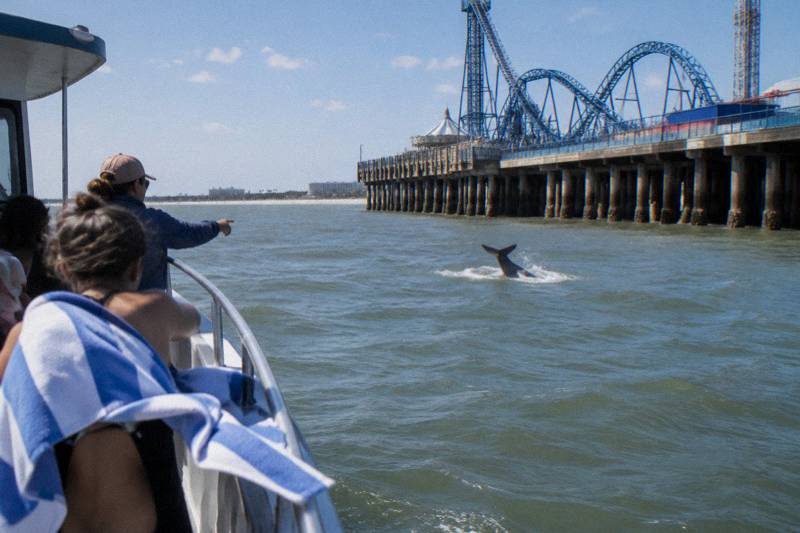
Are There Gators In Galveston Bay?
Alligators are freshwater and brackish animals that live in the marshes and bayous near Galveston, not the open salty bay. Here is what actually lives in the water, and how to see it safely.
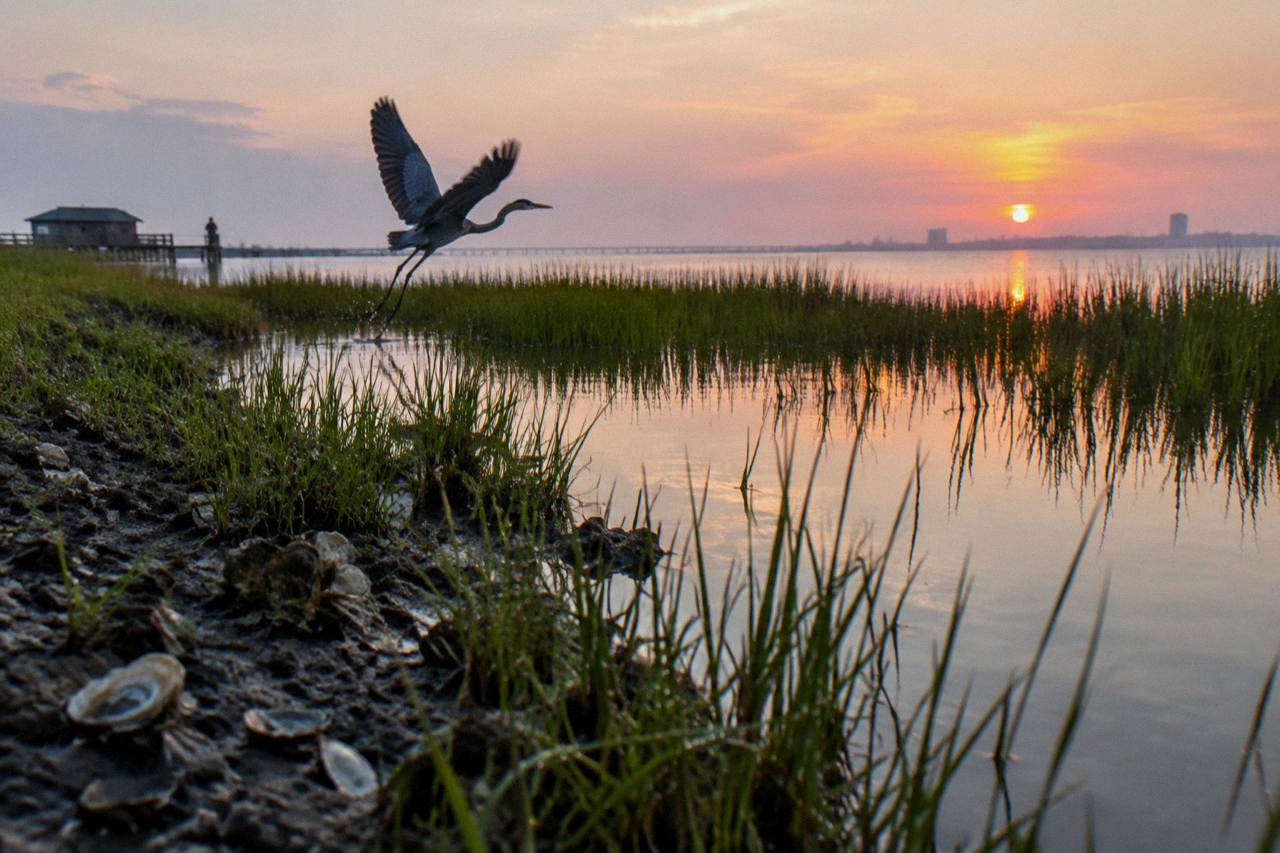
Alligators are a freshwater and brackish water animal, and the places they thrive around Galveston are the marshes, bayous, and drainage ditches inland of the island, not the open bay itself. Texas Parks and Wildlife describes American alligators as residents of freshwater and brackish habitat across the Texas coast, and the salty, open water of Galveston Bay is simply not where they spend their time. The animal you are far more likely to meet on the water here is the common bottlenose dolphin, the only cetacean species observed in the bay, with a resident stock NOAA estimates at 842 individuals. So the short answer to the question is: not really in the bay, but yes in the wetlands a short drive away, and the boat ride you are probably planning is a dolphin cruise, not a gator hunt.
Are There Gators In Galveston Bay?
Alligators are rare in the open, salty water of Galveston Bay itself, because they are a freshwater and brackish species that prefers the marshes, bayous, and ponds on the mainland side of the island. An occasional wanderer shows up in brackish canals near the coast, but the bay's resident large wildlife is the bottlenose dolphin, not the alligator.
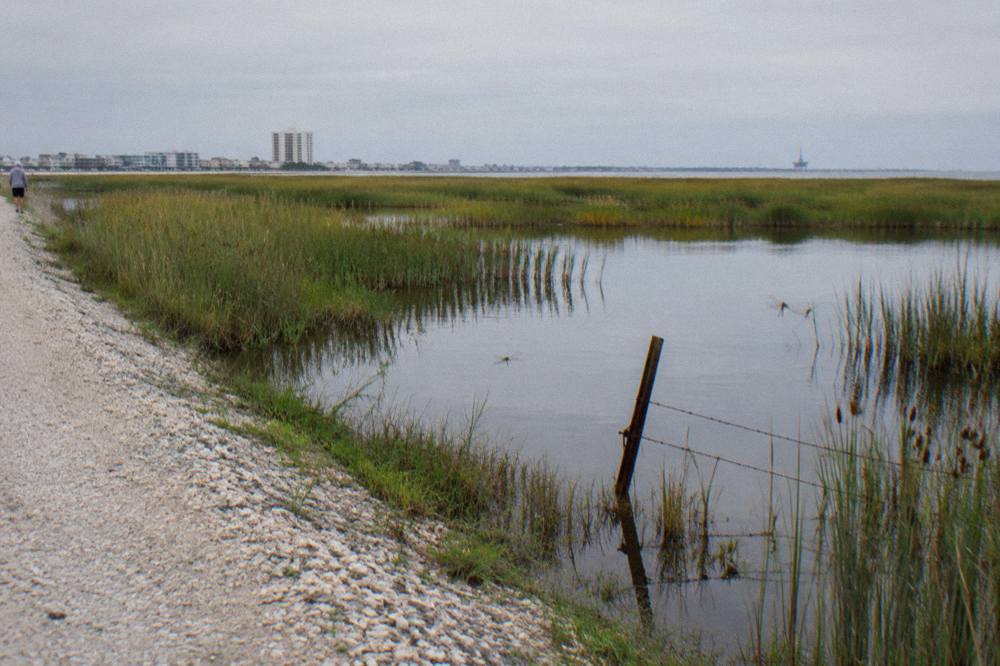
That distinction matters, and it is worth being precise about it. The American alligator ranges across the Texas Gulf Coast, and its strongholds are freshwater marsh, swamp, bayou, and pond habitat: places like the coastal wildlife refuges and river bottoms north and west of Galveston Island. The Galveston area sits at the mouth of a large estuary where freshwater from the Trinity and San Jacinto rivers mixes with Gulf salt water, so salinity shifts with rainfall, tide, and season. After heavy inland rain, brackish pockets near the bay's edges can briefly suit a wandering gator. The open bay, the harbor channel, and the ferry lane are another story: that water stays salty enough that alligators are rare there, and nobody publishes a reliable population count for the bay.
What the bay reliably holds instead is marine life built for salt water. The common bottlenose dolphin is the only cetacean species native to Texas bays and estuaries and the only one observed within Galveston Bay. The Galveston Bay Dolphin Research Program, a partnership involving the Galveston Bay Foundation and university researchers, has built a photo-identification catalog of over 1,000 individual dolphins from dorsal fin photographs taken across the bay. In 2025 alone, its crews ran 39 boat surveys, recorded data on 249 dolphin groups, and counted 2,487 dolphins in total, completing their 300th survey. That is the wildlife story of this body of water, and it is a big one.
So if your mental picture of a Galveston boat tour includes a scaly tail sliding off a mudbank, recalibrate. The classic trip here is a 45-minute dolphin cruise across the harbor, and the sightings people report are dorsal fins, bow-riding dolphins, pelicans, and the working waterfront of shrimp boats and ship traffic. If you want to compare the three most-booked versions of that ride, the selection below covers the naturalist-led cruise, the standard Pier 21 dolphin cruise, and the history-focused harbor cruise with dolphins.
Where Alligators Actually Live Around Galveston
Alligators around Galveston live in the freshwater and brackish marshes, bayous, sloughs, and farm ponds on the mainland north and west of the island, plus a few drainage canals and retention ponds in developed areas. Open salt water drives them off quickly, which is why the bay, the jetties, and the beach surf are gator-poor habitat.
The Texas coast is classic alligator country, but the geography sorts the species neatly. Mainland areas west toward San Luis Pass and north toward the mainland marshes hold the slow, vegetated, fresh-to-brackish water alligators need for nesting, basking, and hunting. The same historical photo-identification studies that tracked dolphins in western Galveston Bay were done by Texas A&M Galveston researchers in bay waters, and their subject was dolphins, because dolphins are what that water produces in volume. Alligators appear in the region's wetlands, river systems, and coastal refuges, and any specific count for the Galveston area is not something our verified sources provide, so we state the pattern without inventing numbers.
A few practical notes follow from that pattern. First, brackish canals and bayou mouths closest to the bay are the likeliest spots for a rare bay-side gator sighting, especially after big freshwater inflows. Second, retention ponds and drainage ditches in suburban parts of the mainland can hold small gators, which is standard for the Gulf Coast. Third, the beach, the Seawall, the harbor, and the ferry route are effectively alligator-free in practice, and the wildlife you will be watching there is birds, fish, and dolphins. Texas Parks and Wildlife is the authority on alligator questions in the state, and it asks people never to feed or harass any alligator they encounter, the same way NOAA asks boaters to keep their distance from dolphins.
If the wildlife you want to see from the water is the kind the bay actually holds, the naturalist-led cruise out of Pier 21 is the strongest match. It runs 45 minutes with a captain and a naturalist guide on board, from $32 per person, and the listing notes wheelchair access with advance notice. You can check the live price and times on its tour page before you commit.
Why The Open Bay Is Dolphin Territory, Not Gator Territory
Salinity is the dividing line. Alligators tolerate some salt water for short trips but cannot live in it, while bottlenose dolphins are permanent residents of the bay's salty channels and passes. The bay's dolphins are a studied population of hundreds, its alligators are occasional visitors from fresher water, and the two almost never share a scene.
The biology is straightforward. An alligator's salt glands are weak, so it drinks fresh water and spends most of its life in places where fresh or brackish water lets it regulate that balance. A bottlenose dolphin does the opposite: it lives in salt and brackish water, hunts fish along channels and passes, and thrives in exactly the environment Galveston Bay provides. The bay's dolphins patrol the Houston Ship Channel, the ferry lane, the harbor around Pier 21, and the passes between the jetties, following fish and shrimp boat activity. Researchers documenting the bay's dolphins note bow riding, fish tossing at the surface, mother-calf pairs, and dolphins following active shrimp trawlers for easy meals. None of that behavior belongs to an alligator, and none of it happens in the freshwater ponds where alligators do their hunting.
| Habitat Feature | Alligator Habitat | Bottlenose Dolphin Habitat |
|---|---|---|
| Water type | Freshwater and brackish marsh, bayou, pond | Salt and brackish bay, channel, pass, harbor |
| Salinity tolerance | Short saltwater trips only, cannot live in it | Lives in salt water year-round |
| Where near Galveston | Mainland marshes, bayous, retention ponds | Galveston Bay, harbor, ferry lane, jetties |
| Typical sighting | Rare wanderer near brackish canal mouths | Frequently reported on tours, ferry, and shore spots |
| Population data | No verified count for the Galveston area | NOAA stock estimate 842, GDRP catalog over 1,000 individuals |
| Best viewing | Wildlife refuges and wetlands inland | Dolphin cruises, the ferry, Seawolf Park |
That table is why a dolphin cruise is the safe, reliable wildlife view on the water in Galveston, and it is also why nobody sells a gator tour of the bay: there is nothing dependable to show. The Baywatch Dolphin Tours operation at Pier 21, locally owned and running since 2005, has built its whole business on the reliable presence of dolphins on a roughly 3-mile narrated harbor route, and its standard cruise carries a 4.9 rating from 2,628 reviews at from $34.86 per person for a 40 to 45 minute ride. Riders on the listing report dolphins, not alligators, and that is exactly what the biology predicts.
What You Actually See On The Water Around Galveston
A boat ride in Galveston typically delivers bottlenose dolphins, brown pelicans, gulls, herons, shrimp boats, cargo ships, and the historic harbor front, in that order of likelihood. Alligators are not part of the show on the bay, and the animals people remember are the dolphin pods that ride the wake and the birds that follow the boats.
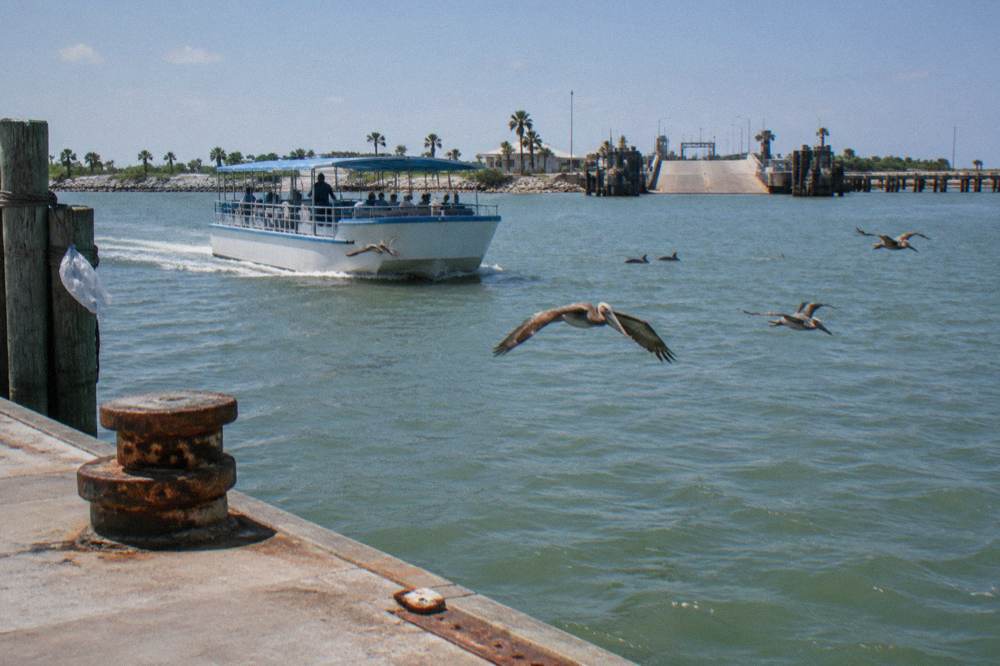
The harbor cruise experience is richer than most first-time visitors expect. The water around Pier 21 is a working harbor: shrimp boats come and go, cargo ships slide down the channel, and the ferry crosses to Bolivar in the distance. Overhead and alongside, the bird life is constant, with pelicans diving near the boats and gulls working the wakes. In the water, dolphins are the stars, and the behavior researchers document in the bay is the behavior tour passengers see: bow riding, leaping, social splashing, and fish tossing. Mother-calf pairs show up in the bay's seasonal data, and summer and fall bring more activity overall.
Sightings are never guaranteed, because these are wild animals, but they are very likely on the harbor routes, and tour reviews back that up. Timing helps: early morning and late afternoon, on moving tides, tend to concentrate feeding activity, and the warmer months from roughly May to October bring more dolphins into the bay's upper reaches. If your schedule is flexible, our guide to the best time to see dolphins in Galveston breaks down the seasonality in detail.
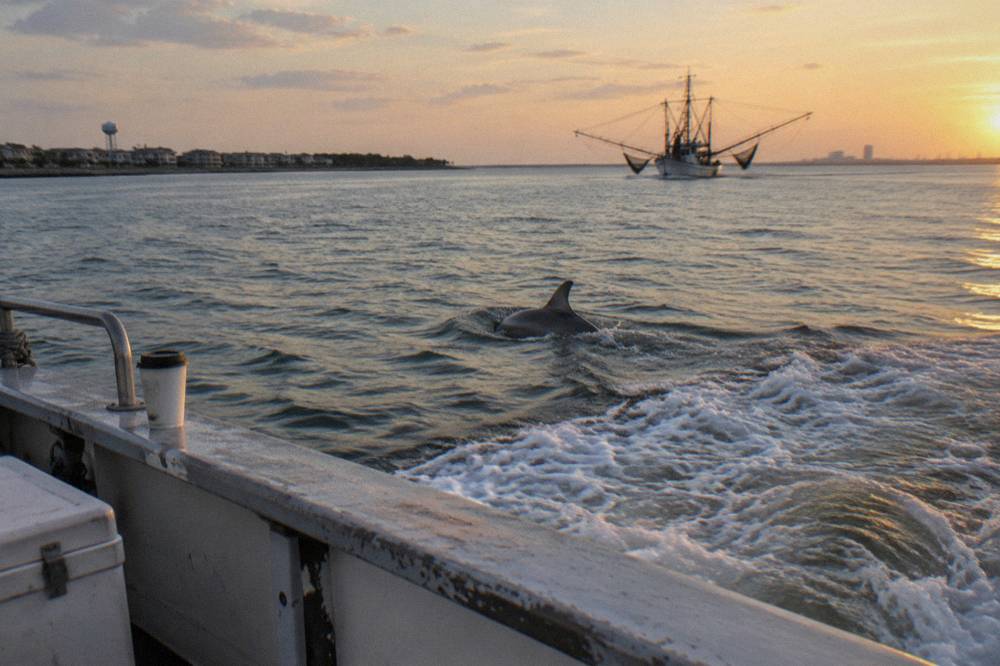
For visitors who want history with their wildlife, the 45-minute history cruise with dolphins is a good fit: it carries harbor narration and an on-board restroom, from $43.57 per person, rated 4.7 from 118 reviews. It is the same Pier 21 meeting point, so the logistics stay simple.
Free And Low-Cost Ways To Watch Galveston Wildlife
You do not need a paid tour to see the bay's wildlife. The Galveston to Bolivar ferry is a toll-free state service where dolphins are commonly seen riding the wake, and Seawolf Park on Pelican Island is one of the most reliable shore spots for dolphin watching on the upper coast. Both are free or cheap and both deliver dolphins, not gators.
The ferry deserves its reputation. It is operated by the Texas Department of Transportation as a toll-free service, running 24 hours a day, year-round, weather permitting, across a 2.7-mile channel crossing that takes about 18 to 20 minutes dock to dock. Pedestrians ride free, vehicles ride free, and parking at the terminals is free while you ride. Dolphins commonly escort the ferry along its lane, riding the wake alongside the pelicans, and the official ferry account and passenger reports note sightings often, though as always with wild animals, nothing is promised. One vessel runs overnight with more added from 6:30 a.m. onward as traffic builds, up to five in summer and holiday periods.
Seawolf Park is the other standout. Sitting on Pelican Island right by the channel, it is a spot where dolphins are frequently observed from shore, and researchers running land-based monitoring from the park report dolphins there reliably. The pattern is simple: where the channel funnels fish, the dolphins follow, and the park's location next to ship and ferry traffic puts you above that water. Our guide to Seawolf Park and Pelican Island dolphin watching covers what to expect from the rail.
For the full free-option picture, including the ferry in detail, see our Galveston to Bolivar ferry guide. The ferry is the single best free wildlife ride on the upper Texas coast, and it pairs nicely with a paid cruise: the ferry gives you the wide channel view, while a Pier 21 cruise gets you closer to the harbor's resident pods with a guide narrating what you see.
Safety Around Texas Water: Gators, Dolphins, And The Rules
Both animals come with the same rule: keep your distance and never feed them. NOAA asks boaters to stay at least 50 yards from dolphins and makes swimming with or feeding wild dolphins illegal under federal law, while Texas authorities say the same about alligators in fresh and brackish water. Watching from a boat or from shore is the safe, legal way.
The dolphin rules are federal and specific. NOAA's marine life viewing guidance says to always stay at least 50 yards from dolphins when viewing from watercraft, about half a football field, and never to feed one, because feeding is harmful and illegal. Swimming with, touching, chasing, or closely interacting with wild dolphins is prohibited under the Marine Mammal Protection Act, and NOAA does not support or authorize attempting to swim with them anywhere in United States waters, including Texas. Our longer article on swimming with dolphins in Galveston covers the details, but the short version is that the only legal dolphin encounter here is the watched-from-a-boat kind.
The alligator rules are state-level and equally firm. Texas Parks and Wildlife asks people not to feed alligators, because a fed gator loses its fear of people and becomes a dangerous animal, and it asks anyone who spots one in an unexpected place to leave it alone and report it rather than approach it. Gators in developed areas, including retention ponds and drainage ditches on the mainland, are the ones that generate headlines, and the cause is almost always someone feeding them. The odds of a dangerous alligator encounter in Galveston's open bay or harbor are effectively nil, because that is not their habitat; the odds on a marsh boardwalk inland are higher, and the rule there is distance.
The practical safety picture for a visitor on the water is therefore short. Take a licensed tour boat or the state ferry, both of which keep you at lawful distances automatically. Do not feed any wildlife, from gulls to dolphins. Keep children close on any pier or boardwalk, which is good practice everywhere on the coast. And if you are curious what a day on the water actually involves, our piece on what to expect on a dolphin watching cruise walks through boarding, check-in, and the ride itself.
Planning Your Wildlife Day In Galveston
A realistic wildlife day pairs one paid boat trip with one or two free viewing spots: a 45-minute dolphin cruise from Pier 21, a free ferry crossing, and a stop at Seawolf Park or the Seawall jetties. Prices for the paid boat cruises run from $29 to $43.57 per person on this site's roster, and every listed tour carries free cancellation.
Budget-wise, the roster on this site gives you clean endpoints. The least expensive boat option is the 1-hour Island Dolphin Tours cruise from Katie's Seafood House at from $29 per person, a separate operator from Baywatch. The naturalist-led cruise runs from $32, the standard Pier 21 dolphin cruise from $34.86, the one-hour history cruise from $40, and the 45-minute history cruise with dolphins from $43.57. Add the free ferry and the near-free shore spots and a family can build a full wildlife day for the price of a single admission elsewhere.
| Option | Cost | Time | Wildlife You Are Watching | Notes |
|---|---|---|---|---|
| Naturalist-led dolphin cruise | From $32 per person | 45 minutes | Dolphins, harbor birds | Captain plus naturalist guide, wheelchair accessible with advance notice |
| Pier 21 dolphin cruise | From $34.86 per person | 40 to 45 minutes | Dolphins, harbor birds | Rated 4.9 from 2,628 reviews, group max 39 |
| History cruise with dolphins | From $43.57 per person | 45 minutes | Dolphins, historic harbor | Narration, on-board restroom |
| Island dolphin cruise | From $29 per person | About 1 hour | Dolphins, harbor life | Checks in at a trailer by Katie's Seafood House, group max 49 |
| Galveston to Bolivar ferry | Free | About 18 to 20 minutes each way | Dolphins in the wake, pelicans | Toll-free TxDOT service, runs 24 hours |
| Seawolf Park | Park admission, check the site | Any length | Dolphins from shore, ships | One of the most reliable shore spots on the upper coast |
Timing matters more than spending. Early morning and late afternoon are the most active periods for dolphin feeding on moving tides, and warmer months bring more dolphins into the bay. Booking ahead helps on weekends and cruise-ship days, when the Harborside area fills up, and our guide to Pier 21 parking and boarding covers the arrival logistics, including the 30-minute-early check-in the Pier 21 kiosk asks for.
The site's Galveston Dolphin Tours comparison page also lays out the three-question picker if you are torn between the cruise options, and it is the fastest way to match a trip to your group's pace.
Common Questions About Gators In Galveston Bay
Are there gators in Galveston Bay?
Alligators are rare in the open, salty water of Galveston Bay. They are a freshwater and brackish species that lives in the marshes, bayous, and ponds on the mainland around the island. An occasional wanderer appears near brackish canal mouths, but the bay's resident large wildlife is the bottlenose dolphin, with a NOAA stock estimate of 842 for the Galveston Bay, East Bay, and Trinity Bay stock.
Could I see an alligator anywhere on Galveston Island?
It is unlikely but not impossible in brackish canals, ditches, and pond edges, especially on the mainland side or after heavy rain. The beach, the Seawall, the harbor, and the ferry lane are effectively alligator-free habitat. If you do spot one, leave it alone, never feed it, and report it to Texas Parks and Wildlife rather than approach it.
What animals will I actually see on a Galveston boat tour?
Most likely bottlenose dolphins, frequently reported on the harbor routes, plus brown pelicans, gulls, herons, shrimp boats, and ship traffic. Dolphins bow-ride, leap, and follow shrimp trawlers in the bay, and mother-calf pairs appear in the seasonal data. Sightings are very likely but never guaranteed, because these are wild animals.
Is it safe to swim in the water around Galveston?
Swimming in the bay and harbor is not part of any tour here, and swimming with wild dolphins is illegal under federal law. NOAA asks boaters to stay at least 50 yards from dolphins and never to feed them. The safe way to see the bay's wildlife is from a tour boat, the ferry, or shore spots like Seawolf Park.
What is the cheapest way to see dolphins in Galveston?
The Galveston to Bolivar ferry is a toll-free state service where dolphins commonly ride the wake, so it costs nothing. Paid boat options on this site's roster start at $29 per person for a 1-hour cruise, and the naturalist-led 45-minute cruise runs from $32. All listed tours carry free cancellation.
Do any Galveston tours combine wildlife and history?
Yes. The 45-minute history cruise with dolphins runs harbor narration with dolphin watching from $43.57 per person, and a one-hour version runs from $40. Both depart from the Pier 21 kiosk in front of the Harbor House Hotel, and both include the same harbor waters where dolphins are frequently reported.