Which Beach Has The Most Dolphins?
No single Galveston beach owns the dolphins. Here is where shore sightings are most reliable, from Seawolf Park to the Bolivar bay side, and when a boat gets you closer.
Which Beach Has The Most Dolphins?
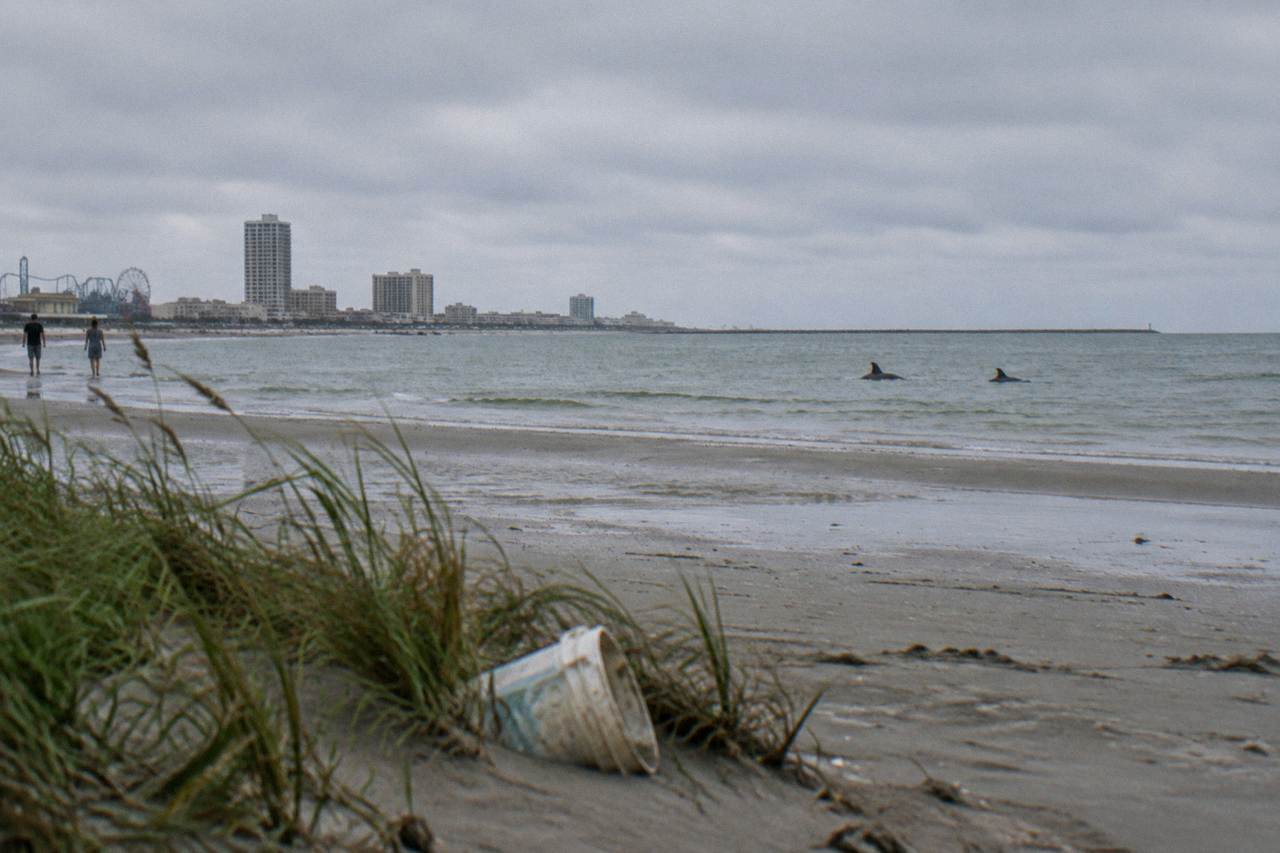
No single beach in Galveston has the most dolphins, because dolphins in Galveston Bay do not organize themselves around beaches at all. They follow food, tides and deep water, which means the reliable shore sightings come from spots beside channels and passes rather than from the open Gulf sand. Locals who watch dolphins from land head to Seawolf Park on Pelican Island, the bay side of the Bolivar Peninsula, and the jetties and piers along the Seawall, and those three places outperform any named swimming beach by a wide margin.
That answer surprises people who expect a ranking like a list of attractions. The honest version is more useful. Galveston's bottlenose dolphins are resident animals, cataloged by the hundreds in the bay system, and they show up year-round wherever bait fish gather. This article walks through why beaches are the wrong frame, which shore spots actually produce, what the free ferry ride offers, and when a boat tour is simply the better tool for the job.
Which Beach Has The Most Dolphins?
None of Galveston's swimming beaches reliably holds the most dolphins, and any list claiming one does is guessing. The dependable shore sightings come from three places that are not really beaches: Seawolf Park on Pelican Island, the bay-side shoreline of the Bolivar Peninsula, and the jetties and fishing piers along the Seawall. All three sit next to channels where dolphins feed, which is the single factor that matters.
The reason is geography. Galveston Island faces the Gulf on one side and Galveston Bay on the other, and the dolphins live mostly in the bay, the harbor and the ship channels. The Gulf-facing beach, the long sandy stretch most visitors picture when they hear the word beach, is the least productive dolphin shoreline on the island. The bay side, with its channels, passes and working waterfront, is where the animals spend their time.
Researchers back this up. The Galveston Bay Dolphin Research Program has cataloged more than 1,000 individual dolphins by dorsal fin photographs in inshore bay waters, and its surveys concentrate on the upper bay, the Houston Ship Channel and the harbor approaches, exactly the areas next to the best shore watching. A NOAA stock assessment put the Galveston Bay, East Bay and Trinity Bay stock at a best estimate of 842 animals. Those dolphins are not scattered evenly along the sand. They are clustered where the fish are, and the fish are clustered where the water moves.
So the question worth asking is not which beach but which shoreline. A visitor standing at Seawolf Park looking over the ship channel has a better chance of a sighting in twenty minutes than a visitor sitting on the open beach all afternoon. The rest of this article explains each spot, when to go, and how a short boat ride changes the math entirely.
Why No Galveston Beach Owns The Dolphins
Dolphins follow prey, tides and deep channels, none of which respect beach boundaries, so no beach can hold a resident pod the way a reef holds fish. What looks like a good dolphin beach is usually just a shoreline next to a channel, and the channel is doing the work. The animal to watch is the bottlenose dolphin, and its territory is the whole bay system, not one strip of sand.
Think of it from the dolphin's side. A bottlenose dolphin in Galveston Bay is hunting mullet, menhaden and other schooling fish, and those fish gather where currents concentrate plankton and where channels carve deeper, cooler water. The Galveston ship channel, the ferry lane between the island and Bolivar, and the harbor around Pier 21 are all high-traffic feeding zones. A dolphin might pass along the beach on Tuesday and be two miles up the bay on Wednesday. Shore watchers who understand this stop asking which beach and start asking which water.
The timing matters as much as the place. Sightings are possible in every month of the year, but activity runs higher roughly May through October, and within any given day the first hours after sunrise and the late afternoon are the most productive windows. Moving tides concentrate prey, so slack water at midday is the weakest period. A shoreline that produced three sightings at 7 a.m. can go quiet by noon without a single dolphin leaving the bay.
There is also a rule every shore watcher should know before picking a spot. NOAA's marine life viewing guidelines ask people to stay at least 50 yards from dolphins, about half a football field, and that distance applies to boats, kayaks and swimmers alike. Feeding wild dolphins is illegal under the Marine Mammal Protection Act. The shore spots described below work precisely because they let you watch without approaching, which is both the legal position and the better one.
Seawolf Park On Pelican Island: The Most Reliable Shore Spot
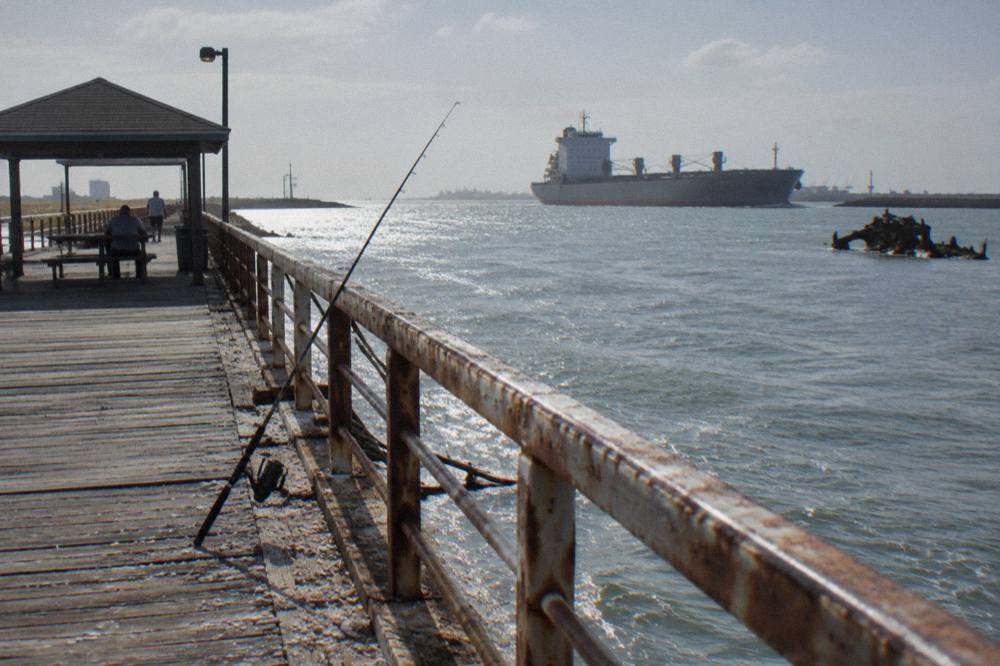
Seawolf Park on Pelican Island is the closest thing Galveston has to a dependable dolphin shore spot, because it sits directly beside the ship channel where dolphins feed and follow vessels. Monitoring notes from the area describe dolphins as appearing there, in effect, almost always. It is not a swimming beach, it is a park with a fishing pier over channel water, and that is exactly why it works.
The park sits on Pelican Island, reached by a short bridge off Harborside Drive, and its shoreline looks out over the channel that big ships, the ferry and harbor traffic all use. Dolphins patrol that channel for the same reason the ships do: it is the deep highway through the bay. Fish get pushed along its edges, and dolphins work those edges steadily. Visitors with binoculars or even just a patient eye regularly catch dorsal fins, feeding swirls and the occasional leap from the pier and shoreline.
What makes Seawolf Park better than a beach is the angle. Standing on an open beach, you look across a wide shelf of shallow water where dolphins may or may not travel. Standing at the park, you look straight down a concentrated corridor. The difference in sighting odds is dramatic, and it costs nothing but the drive. The park also offers the standard distractions of ships passing, pelicans working the water and the ferry crossing in the distance, which makes a quiet half hour easy to spend.
The practical advice is simple. Go early or go late, bring something to sit on, and scan the channel rather than the open bay. Mornings after sunrise, especially when the tide is moving, are the strongest windows. If the channel is busy with ship traffic, keep watching, because dolphins in this bay are known to follow working vessels and feed in their wakes. A longer treatment of the park, its history and its viewing angles is in the Seawolf Park dolphin watching guide.
The Bolivar Peninsula Bay Side
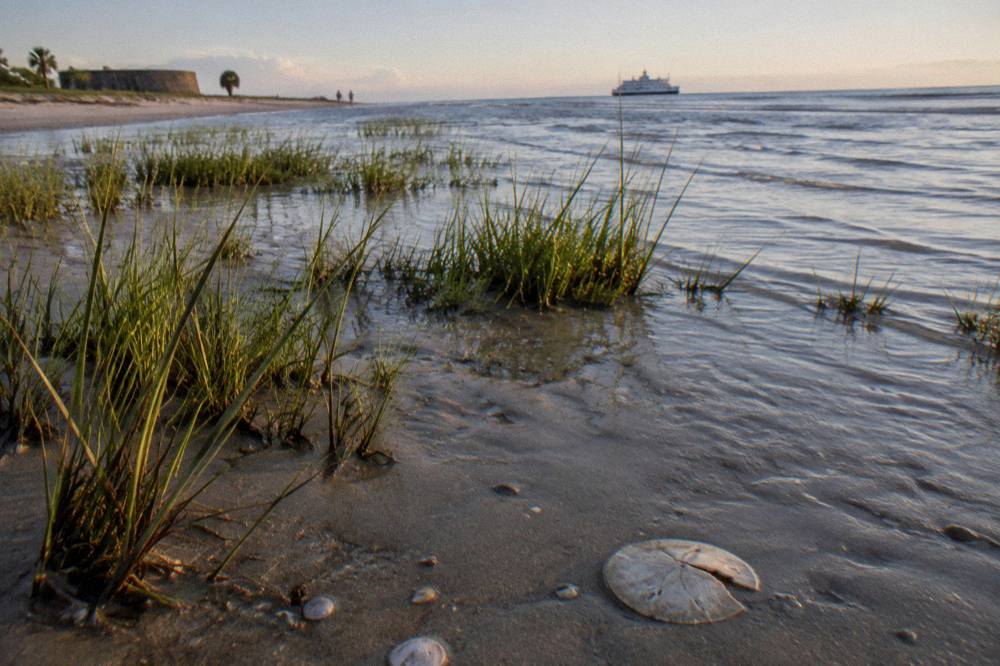
The bay side of the Bolivar Peninsula, the shoreline facing Galveston Bay rather than the open Gulf, produces more consistent dolphin sightings than the peninsula's Gulf-facing beach. The bay side has feeding flats, deeper channels close to shore and the ferry lane running past it, all of which attract dolphins. The Gulf side is a beautiful swimming beach and a poor dolphin spot.
Bolivar sits across the channel from Galveston Island, and its two shorelines could not be more different for wildlife. On the Gulf side, wide sand and surf face open water where dolphins pass but rarely linger. On the bay side, the water is calmer, the channels come closer to land, and bait fish gather in the shallows. That combination draws dolphins in to feed, and observers on elevated decks and along the bay shoreline report them regularly, especially in the warmer months.
The bay side also sits under the ferry lane. The Galveston to Bolivar ferry crosses roughly 2.7 miles of channel water on every run, and dolphins commonly ride its wake or escort the vessel, a recurring and well-documented behavior on that route. Shore watchers on the Bolivar side can effectively watch the ferry lane work for them, scanning each crossing for the fins that often travel alongside. It is not guaranteed, no wild sighting ever is, but it is one of the better free odds on the upper coast.
Getting there is part of the appeal. The ferry itself is a toll-free service operated by TxDOT, running 24 hours a day year-round with the crossing taking about 18 to 20 minutes, and pedestrians ride free just as vehicles do. That makes a Bolivar bay-side watching session a zero-cost trip: ride the ferry as a walk-on, watch the channel on the way over, then watch from the far shore. The full logistics, including the free terminal parking and how the vessels cycle, are covered in the Galveston to Bolivar ferry guide.
Timing advice for Bolivar mirrors the rest of the bay. Early morning on an incoming tide is the premium slot, and the warmer months from May to October raise the overall activity level. Bring binoculars if you have them, because the bay side gives you long sightlines over feeding water, and distant fins are easy to miss with the naked eye.
Seawall Jetties And Piers
The jetties and piers along Galveston's Seawall, particularly near the channel entrances and the 29th Street jetty area, give the island's best shore sightings on the Gulf side, because dolphins patrol the jetty lines hunting the fish that gather around the rocks. The open beach between the jetties is far less productive. The rocks, not the sand, are the attraction.
Jetties are artificial structure, and structure concentrates food. Bait fish hold along the rocks, current sweeps plankton past the jetty tips, and dolphins work those edges the way they work channel edges elsewhere in the bay. Early morning is when this shows best, before boat traffic scatters the bait and before the beach crowds arrive. A quiet jetty at sunrise can produce a half hour of steady dorsal fins a hundred yards off the rocks.
The piers along the Seawall work on the same principle. Any pier that extends over deeper water, especially near passes and channel approaches, puts you over the corridor dolphins actually use. The pattern to remember is that the dolphins are not interested in the beach itself, they are interested in the transition zones, where shallow water meets deep, where rocks meet current, and where boats and ferries stir up feeding opportunities.
One caution belongs here. The temptation when a dolphin surfaces close to a jetty is to move toward it, and that instinct is the wrong one both legally and practically. NOAA asks everyone to stay at least 50 yards back from dolphins, and the viewing guidelines are explicit that approaching, chasing or feeding wild dolphins is harassment under federal law. The whole appeal of jetty watching is that the dolphins come to the structure on their own terms. Let them. More on the rules, and on why no operator can promise a sighting, is in the piece on dolphin tour sighting guarantees.
The Free Ferry Ride: A Dolphin Cruise That Costs Nothing
The Galveston to Bolivar ferry is the best free dolphin watching in the area, because it crosses the channel where dolphins feed and regularly picks up wake-riding escorts on the way. It is a toll-free TxDOT service, running around the clock, about 18 to 20 minutes each way. As a deliberate dolphin strategy, riding it in the early morning or late afternoon, ideally as a walk-on, beats sitting on any beach.
The ferry's value is that it puts you on channel water without a ticket price. Dolphins in this bay are documented followers of vessel wakes, and the ferry lane is a documented, recurring spot for that behavior. Passenger reports and the ferry's own social channels note sightings alongside the crossing, often with pelicans working the same water. Nothing about it is guaranteed, the animals are wild, but the odds per minute of watching are among the best on the upper Texas coast at a cost of zero dollars.
A few logistics make the free ride work better. One vessel runs overnight, a second typically enters service at 6:30 a.m., and more vessels are added as traffic builds through the day, which means departures come roughly every 15 to 20 minutes at busy times with no fixed timetable. Walk-on passengers skip the vehicle line entirely, which matters on summer weekends when car queues can stretch past an hour. Free parking is available in the lots on both sides while you ride. Severe weather can reduce or stop service, and TxDOT announces those changes, so a rough forecast is the one thing that can sink the plan.
The smart play is to combine the ferry with the Bolivar bay side described above. Ride over as a walk-on, watch the channel from the upper deck on the crossing, spend an hour on the far shoreline, and ride back. Two channel crossings plus an hour of shore watching is a genuinely strong free itinerary, and it answers the original question in the most practical way possible: the place with the most dolphins is the channel, and the ferry is the cheapest way to be on it.
When Shore Watching Beats A Boat, And When It Does Not
Shore watching wins on price and flexibility, and a boat wins on proximity, angle and consistency, so the choice depends on how much the sighting matters to your trip. A 45-minute harbor cruise puts you inside the feeding zone with a crew that knows where the dolphins are that day, while a shoreline gives you a free, unhurried chance. For a visitor with one morning in Galveston, the boat is the stronger bet.
The honest comparison looks like this:
| Factor | Shore watching (Seawolf, Bolivar bay side, jetties) | Harbor dolphin cruise |
|---|---|---|
| Cost | Free | From $29 to $43.57 per person on the current listings |
| Time needed | An hour or more of patience | 40 to 45 minutes on the water |
| Distance to dolphins | Often 50 yards or more | Closer, while the vessel holds legal distance |
| Best time of day | Early morning or late afternoon | Same windows, but the crew adapts |
| Sighting odds | Good at the right spots, never certain | Very likely in the harbor, never guaranteed |
| What else you get | Ships, birds, ferry crossings | Narration of the harbor and its history |
The featured option on this site is the Baywatch Pier 21 cruise, a 45-minute loop out of Galveston Harbor rated 4.9 from 2,628 reviews, from $34.86 per person, with free cancellation. It departs from the kiosk in front of the Harbor House Hotel at Pier 21, and check-in is 30 minutes before departure. The harbor it works is the same water the shore spots look at, but from inside it, and that difference is the entire product. If seeing dolphins is the point of your morning rather than a nice bonus, that is the tool.
The naturalist-led version of the same harbor run, also from Pier 21, adds a guide who explains what the dolphins are doing, from $32 per person with a 4.8 rating from 282 reviews. It is wheelchair accessible with advance notice, which no shoreline in this article can claim. There is also a one-hour historic harbor tour from the same operator, rated 4.9 from 9 reviews at from $40 per person, which leans into Galveston's maritime history with dolphins named as a possible sighting rather than the focus. Check availability on whichever fits, and read the live listing for current times.
For a different angle entirely, a small-group sea kayak tour paddles Galveston Harbor over four hours, limited to five participants, from $266 per person, and it must be booked one to two weeks ahead. The listing describes dolphins as an if-you-are-lucky element, which is refreshingly honest, and the 50-yard NOAA distance rule applies to paddlers with particular force. It is not a dolphin tour, it is a harbor tour where dolphins are a possibility, and the price reflects the small group and the long water time rather than a sighting promise.
Putting The Shore Spots Head To Head
Ranked by realistic sighting odds per hour of watching, the order runs Seawolf Park first, the Bolivar bay side with a ferry crossing second, the Seawall jetties third, and the open Gulf beaches a distant last. All three top spots share one feature: they sit beside channel water where dolphins feed. None of them is a swimming beach, and that is the whole lesson of the question.
Here is the comparison in one table:
| Shore spot | What you watch | Sighting reliability | Cost | Best window |
|---|---|---|---|---|
| Seawolf Park, Pelican Island | Ship channel from pier and shoreline | Very frequent, described as near-constant | Park entry, minimal | Early morning, moving tide |
| Bolivar Peninsula bay side | Feeding flats and the ferry lane | Consistent, stronger May to October | Free | Early morning, incoming tide |
| Seawall jetties and piers | Jetty edges and channel approaches | Regular at the right hour | Free | Sunrise, before crowds |
| Galveston Gulf beaches | Open shallow water | Occasional pass-bys only | Free | Any, but low odds |
The pattern in that table should now look familiar. Every high-reliability row is a shoreline next to concentrated water, and the low row is the wide shallow shelf people actually swim on. If a friend asks which beach has the most dolphins, the useful answer is to redirect them to the channel. A visitor with a car, an early alarm and a little patience can hit Seawolf Park at sunrise, ride the ferry mid-morning and finish at a Seawall jetty before lunch, three of the best free viewing positions on the island in one loop.
For planning a whole trip around this, the broader context is in the best time to see dolphins in Galveston guide, and the full set of free options, ferry included, is gathered in the free things to do in Galveston roundup. Between those two pages and this one, the shore strategy is fully covered.
Common Questions About Dolphin Beaches
Which beach has the most dolphins?
No Galveston beach reliably holds the most dolphins. The dependable shore sightings come from Seawolf Park on Pelican Island, the bay side of the Bolivar Peninsula, and the Seawall jetties and piers, all of which sit beside channel water where dolphins feed.
Can you see dolphins from the Galveston Seawall?
Yes, especially near the jetties and piers where the rocks meet deeper water. Dolphins patrol those edges for bait fish, and early morning before the crowds is the best time. The open sandy stretches of the Seawall produce far fewer sightings than the jetty areas.
Is the Galveston to Bolivar ferry really free?
Yes. The ferry is a toll-free TxDOT service operating 24 hours a day, year-round, weather permitting. Pedestrians and vehicles both ride free, parking at the terminals is free while you ride, and dolphins are commonly seen from the crossing, often riding the wake.
What time of day is best for seeing dolphins from shore?
The first hours after sunrise and the late afternoon are the most reliable windows, and a moving tide concentrates prey and improves the odds. Sightings are possible year-round, with higher activity roughly May through October.
How close can you get to dolphins in Galveston?
NOAA guidelines ask everyone to stay at least 50 yards from dolphins, about half a football field, and feeding or attempting to swim with wild dolphins is illegal under the Marine Mammal Protection Act. Watching from a pier, a shoreline or a tour boat that holds its distance is the right way to do it.
Is a boat tour better than watching from the beach?
A boat puts you inside the harbor feeding zone with a crew that tracks where the dolphins are that day, so it is the stronger choice if a sighting matters to your trip. Shore watching is free and can be very good at the right spots, but it demands more patience and the animals are usually farther away.
The short version of everything above: the question has no beach answer, and the channel answer is a good one. Seawolf Park, the Bolivar bay side and the Seawall jetties give the best free odds, the ferry doubles as a free channel crossing, and a 45-minute harbor cruise from Galveston Dolphin Tours' featured listing closes the distance when the sighting is the point of the day.